
The exclusion on your general liability is the reason this exists.
Contractors pollution liability covers bodily injury, property damage and clean-up caused by a pollutant released by your work: the claims a general liability policy excludes by default.
Tell us the situation.
One licensed human replies the same business day — not five agents, not an auto-responder. If the policy you have is already the right one, we will tell you.
We use this to quote and service your insurance, and we do not sell it or pass it to lead networks. Privacy policy.
Send us what you have. We’ll tell you if it’s right.
Your current policy paperwork, a renewal notice, or nothing at all. A licensed agent reads it and replies the same business day.
What contractors pollution liability actually covers.
Chemical drift and overspray
Damage caused when a herbicide or pesticide lands somewhere it was not meant to.
Without it — A spray that drifts onto a neighbor’s ornamentals, vegetable garden or koi pond is a property damage claim your GL excluded before you opened the truck.
Run-off and soil contamination
Fertiliser, fuel or chemical reaching soil, storm drains or groundwater.
Without it — Clean-up is ordered by a regulator, priced by a remediation contractor, and owed whether or not anyone sued you.
Fuel and fluid spills
Hydraulic, diesel and oil releases from equipment on a customer’s property.
Without it — A split hydraulic line on a paver driveway is a clean-up bill, and the pollution exclusion reaches it too.
Clean-up costs
The remediation itself, which is not third-party damages and is separately excluded.
Without it — Even where liability is admitted, the cost of putting the ground back is the part nobody budgeted for.
Where contractors pollution liability shows up.
- Contractor
A vented refrigerant charge, a fuel spill or disturbed soil is a clean-up bill, and the pollution exclusion on your general liability reaches all three.
- Landscaping & Grounds Maintenance
Herbicide drift onto a neighboring garden, fertiliser run-off into a storm drain, or a hydraulic line split on a paver driveway are all excluded by the pollution wording on a standard general liability policy.
- Tree Service & Arborist
Hydraulic and fuel releases from a bucket truck or grinder on a customer’s property are clean-up claims a general liability policy excludes.
- Pesticide & Herbicide Application
Drift, overspray and run-off are the losses this trade actually produces, and the pollution exclusion on a standard policy was written to remove exactly them.
- Irrigation & Sprinkler Contractors
Backflow into a potable supply and fuel or hydraulic release during trenching are contamination claims general liability excludes.
- Janitorial & Cleaning
A chemical spill, a fume complaint that empties a floor, or the wrong product on the wrong surface is excluded by the pollution wording on a standard policy.
- Directional Boring
A struck sewer main or a drilling-fluid frac-out is a contamination claim, and general liability excludes the clean-up that follows it.
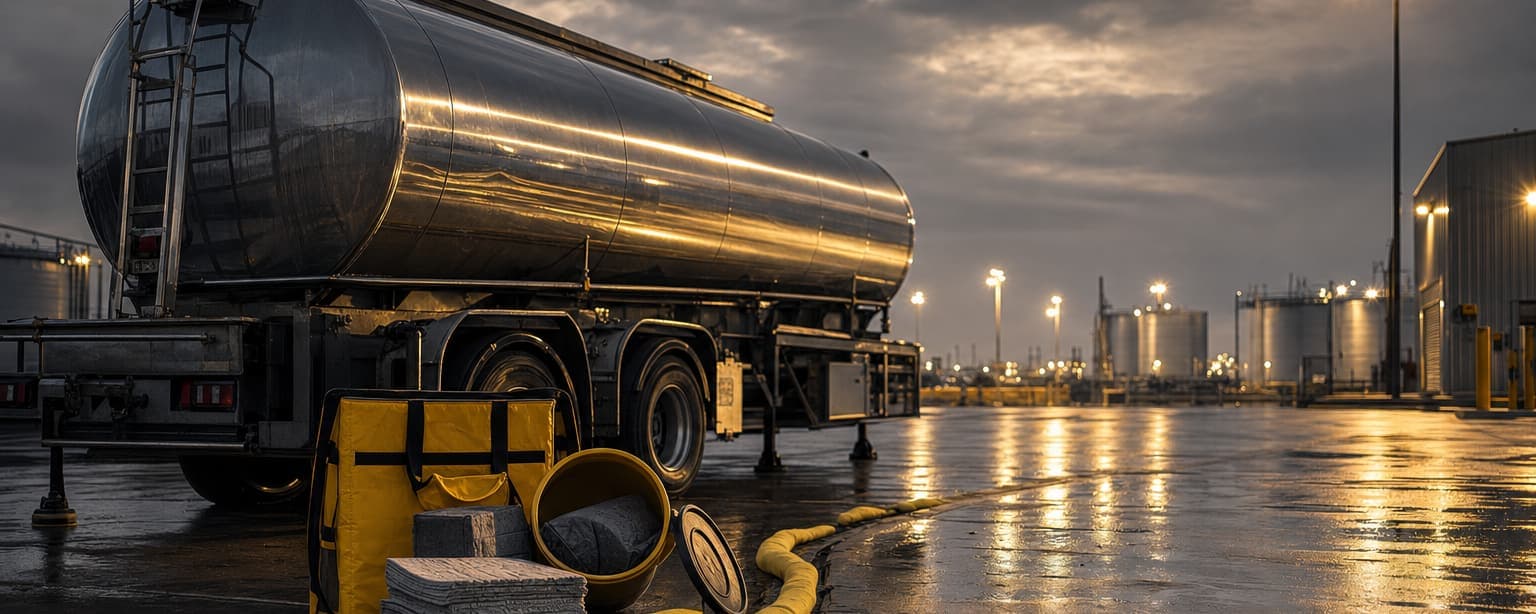
- Tanker & Hazmat
A rollover that releases product is a clean-up bill owed to a regulator, and standard liability wording excludes it.
- Dump Truck & Aggregate Hauling
Hauling contaminated spoil, or spilling material into a watercourse, is a clean-up claim liability excludes.
- Hardscape & Retaining Walls
Disturbed soil, silt run-off into a storm drain and fuel spills on a customer’s property are excluded by general liability.
- Pressure & Soft Washing
Run-off carrying detergent, chlorine or removed coating into a storm drain is a pollution claim general liability excludes.
- Roofing Contractors
Tear-off can disturb asbestos, and hot tar and solvent are releases a general liability policy excludes.
- Electrical Contractors
Oil-filled gear, PCB-era transformers and burned insulation are a clean-up bill, and the pollution exclusion reaches all three.
- Plumbing Contractors
Sewer, septic and grease work is a contamination claim the moment it escapes, and the general liability pollution exclusion is written to catch exactly that.
- HVAC Contractors
Refrigerant released during service is a pollution event under the exclusion your general liability policy already carries, so the base policy is the wrong place to look for it.
- Painting Contractors
Solvents, strippers and blast media are pollutants when they reach soil, a drain or the air, and the general liability exclusion reaches them.
- Concrete Contractors
Washout and slurry are strongly alkaline, and reaching a storm drain makes them a reportable discharge rather than a mess.
- Crane & Rigging Contractors
A hydraulic burst on a finished surface or into a drain is a pollution claim before it is a property one.
- Excavation & Grading Contractors
Disturbed contaminated soil, a struck fuel line or dewatering discharge is a clean-up obligation, and the GL pollution exclusion reaches all three.
- Drywall & Interior Finish Contractors
Silica and joint compound dust are respirable contaminants, and the pollution exclusion is written broadly enough to reach a dust claim.
- Masonry Contractors
Silica from cutting and grinding is a respirable contaminant that the general liability pollution exclusion is written broadly enough to reach.
- Flooring Contractors
Solvent adhesives and finishes release fumes into occupied premises, and a fume claim runs straight into the pollution exclusion.
- Auto Body & Collision Shops
Paint waste, solvents and the booth filters. General liability carries a pollution exclusion that reaches all of them.
- Auto Detailing, Ceramic Coating & Tint
Runoff from a mobile wash into a storm drain. General liability carries a pollution exclusion.
- Tire Shops
Scrap tire storage and the runoff from a tire fire, both excluded on general liability.
- Commercial Landlords
Excluded from property and liability alike. Worth buying on the sites with that history rather than as a matter of course.
- Laboratories
Property and liability policies both exclude pollution.
- Car Washes
Both property and liability policies exclude pollution.
- Laundromats & Dry Cleaners
Historic solvent contamination is a large and specifically excluded liability.
- Dry Cleaners
Excluded from property and general liability alike, and the largest liability in the sector by a wide margin.
- Farms & Ranches
Pollution is excluded from property and liability alike.
- Marinas & Boat Dealers
Pollution is excluded from property and liability, and fuel docks spill.
- Land Trusts and Conservation Organizations
General liability excludes pollution almost entirely, and a donated parcel can carry a history nobody disclosed.
- Community Action Agencies, Head Start and Weatherization
General liability usually excludes pollution, which is exactly what disturbing old paint or insulation produces.
- Auto Repair Shops
Waste oil, solvents, refrigerant and the tank under the yard. The pollution exclusion on a GL policy reaches all of it.
What clients with contractors pollution liability ask us.
Does my general liability already cover a chemical spill?
Almost certainly not. The standard ISO general liability form carries a pollution exclusion, and most carriers that will write a chemical applicator attach a total pollution exclusion on top of it, which is broader still. Drift, overspray, run-off and contamination are the exact events those endorsements were written to remove. The fix is either a buy-back endorsement on the GL or a separate pollution policy, and which one you need depends on how much of your revenue is spraying.
I only spray a little. Do I still need it?
The exclusion does not scale with how often you spray. It applies to every application. A single drift claim on a neighboring property does not become smaller because chemical work is ten per cent of your revenue. What changes with volume is the price and how hard the risk is to place, not whether the gap is there.
Is this the same as environmental liability?
Broadly the same family, different form. "Contractors pollution liability" is written around work you perform at somebody else’s site, which is the landscaper, applicator and excavation shape of the problem. Site pollution and storage tank policies cover premises you own. Ask which form is being quoted: the words are used loosely and the coverage is not.
Commercial insurance is 96% of what we do — it is not a department here, it is the whole business. Not ready to talk? The guides answer the questions this page raises in more depth. Already insured with us and need a certificate or a policy change? Ask the service team rather than starting a quote — it is faster and it goes to the people whose job it is. We also write home and auto, which is usually cheaper alongside the business policy than apart from it.
Handed a lease, a vendor packet or a client contract with insurance requirements? Paste it into the COI Requirements Decoder to see what each one means for your business, or read what the requirements mean.