
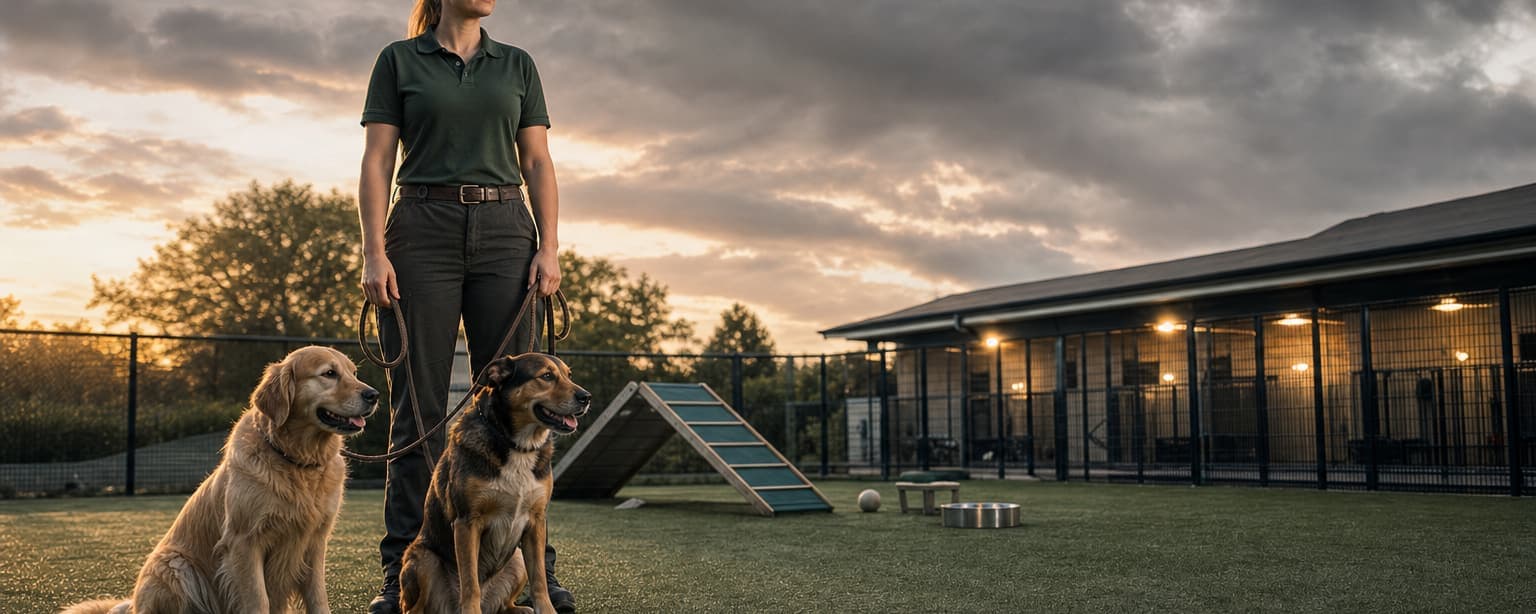
The animals in your care are property in your care.
Business insurance for veterinary clinics, groomers, boarding kennels, daycares and trainers. We close the care, custody and control gap that leaves the animals uncovered. Not pet health plans.
Tell us the situation.
One licensed human replies the same business day — not five agents, not an auto-responder. If the policy you have is already the right one, we will tell you.
We use this to quote and service your insurance, and we do not sell it or pass it to lead networks. Privacy policy.
Send us what you have. We’ll tell you if it’s right.
Your current policy paperwork, a renewal notice, or nothing at all. A licensed agent reads it and replies the same business day.
What pet services and veterinary businesses actually need.
General liability
Third-party bodily injury and property damage. It is the line nearly every contract names by default.
Without it — Bites, scratches and premises injuries to clients, and the exclusion that removes the animals themselves.
Professional liability
Covers the advice, the drawing, the diagnosis. The work itself, rather than someone getting hurt on your premises.
Without it — Veterinary and grooming work is judged as professional service, which a standard business policy does not cover.
Commercial property
Buildings and contents, valued at what it costs to rebuild today rather than what you paid.
Without it — Kennels, surgical and grooming equipment replace at today’s prices, and a boarding facility runs overnight without staff on site.
Workers compensation
Required in almost every state the moment you have employees. Priced on payroll and class code, which is why the class code is worth arguing about.
Without it — Handling injuries are the highest-frequency loss in the class, and bites to staff are routine rather than exceptional.
Commercial auto
Vehicles the business owns and the people who drive them for work.
Without it — Mobile grooming and transport put the animals and the vehicle on the road together.
Business owners policy
General liability and property packaged together. Cheaper than buying them separately when you qualify, and most small businesses do.
Without it — Property and liability package more cheaply than they buy separately.
Businesses like this one, with their own page.
Every one of these is written for that specific operation — the coverages it needs, the questions underwriters ask it, and what it usually gets wrong.
- Boarding Kennels
A boarding kennel holds animals that belong to other people, and the claim a kennel actually gets is about one of those animals: injured in a fight, sick after a stay, escaped through a gate, or dead in a kennel fire. A standard general liability policy treats those animals as property in your care and excludes them. Kennel insurance adds animal bailee coverage for exactly that, alongside liability for bites and for people on the premises, property for the building and runs, and workers compensation for staff who handle dogs all day. We place it for boarding kennels, daycare, cattery and boarding combinations, and kennels that also groom or train.
- Dog Trainers
A dog trainer works with animals whose owners have already found them difficult, in other people's homes, in parks and in a facility, and the claims follow the animal: a bite to a client or a passer-by, a dog that got loose, a dog injured or lost while in the trainer's care. General liability for the bite, care custody and control for the dog itself, and a facility policy for trainers with premises are the pieces, and the application asks first whether you take aggressive dogs. We place them for private trainers, group class instructors, board-and-train facilities and daycare operators who train.
What the insurance company will ask about your pet services and veterinary business
We read the applications the markets use for businesses in this field and pulled out what they actually ask. Have these answers ready and a quote takes a day instead of a week, because nobody has to come back to you for the missing piece.
About the business
- What services do you provide (boarding, day care, grooming, training, or other)?
- How long have you been in business and at your current location?
- How many employees do you have?
- Do you sell any products under your own label?
How you operate
- How many pets do you have on site on an average day?
- How many kennels or compartments do you have?
- Are all pets monitored in common areas?
- Are all play yards and play areas fenced?
- If you transport animals, are they tethered or caged during transport?
Safety and controls
- Do you have functioning fire extinguishers on site?
- Do you have functioning smoke and heat detectors in all areas?
- For any building built before 1978, does it have aluminum wiring or knob and tube wiring?
Your history
- Have you had any property or liability losses in the past three years?
- Has your insurance coverage been canceled or non-renewed in the past three years?
Money and people
- What coverage limits do you want for pet liability (starting at $100,000 per incident)?
- What coverage limit do you want for pets themselves ($1,000 to $10,000)?
Have these ready
- Description of what your business does and how you operate
- Your loss history for the past three years (claims you or your current insurer know about)
- Information about anyone else with a financial interest in your business
You answer what you can; a licensed agent fills the rest with you.
What our pet services and veterinary clients ask us.
Do you sell pet insurance?
Not the kind most people mean. Pet insurance usually means a health plan that reimburses an owner for their own animal’s vet bills, and we do not write that. Try Trupanion, Healthy Paws or Nationwide. What we insure is the business on the other side of the counter: the clinic, the groomer, the boarding kennel, the daycare, the trainer. If you own or run one of those, this is the right page. If you are looking for coverage for your own dog or cat, it is not, and we would rather say so than take your details.
What is the care, custody and control exclusion?
It is the clause that removes coverage for property you are looking after rather than property you own, and to an insurer, the animals are the property. It is why general liability will pay a client who trips in your reception and will not pay for the dog injured in your kennel. Closing that gap is a deliberate endorsement, not something a standard policy includes.
Do groomers need professional liability, or is general liability enough?
Both, for different claims. General liability answers when a client is hurt; professional liability answers when the work itself causes harm: a clipper injury, a reaction to a product, a handling decision that went wrong. Those are the claims groomers actually see, and general liability was never meant to cover them.
We board animals overnight with nobody on site. Is that a problem?
It is an underwriting question rather than a decline, and worth answering carefully. Fire, escape and overnight medical emergencies are what carriers price, so monitoring, alarms, staffing rotas and your emergency vet arrangement all move the number. Have those documented before you shop.
What does a pet services and veterinary insurance application ask for?
The applications for pet services and veterinary businesses ask about 4 things above all: what services do you provide (boarding, day care, grooming, training, or other); how many pets do you have on site on an average day; do you have functioning fire extinguishers on site; have you had any property or liability losses in the past three years. Have description of what your business does and how you operate and your loss history for the past three years (claims you or your current insurer know about) ready and a quote takes a day instead of a week.
Commercial insurance is 96% of what we do — it is not a department here, it is the whole business. Not ready to talk? The guides answer the questions this page raises in more depth. Already insured with us and need a certificate or a policy change? Ask the service team rather than starting a quote — it is faster and it goes to the people whose job it is. We also write home and auto, which is usually cheaper alongside the business policy than apart from it.
Handed a lease, a vendor packet or a client contract with insurance requirements? Paste it into the COI Requirements Decoder to see what each one means for your business, or read what the requirements mean.