
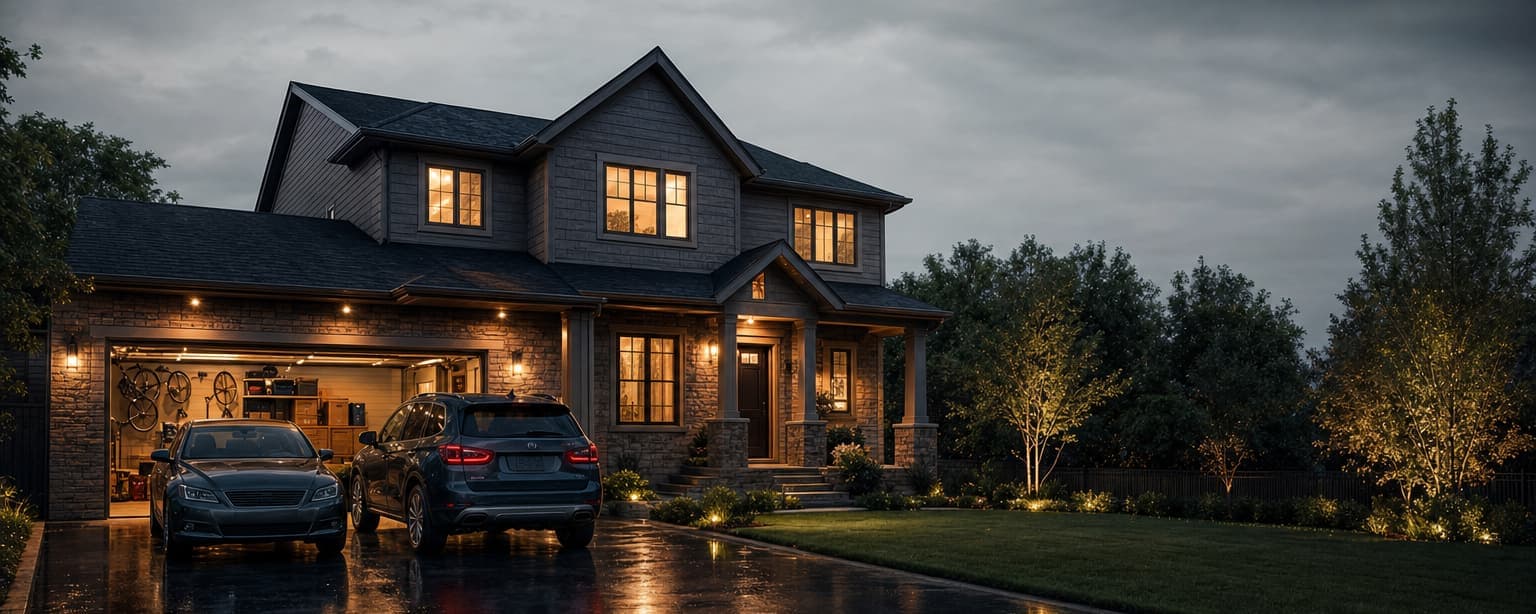
If a direct writer already said yes, take it. This desk is for when they said no.
Home, auto, landlord and life coverage placed through an independent agency, written for the risks the direct writers decline: vacant and seasonal homes, high-value properties, rental portfolios, classic cars and drivers with a lapse.
Tell us the situation.
One licensed human replies the same business day — not five agents, not an auto-responder. If the policy you have is already the right one, we will tell you.
We use this to quote and service your insurance, and we do not sell it or pass it to lead networks. Privacy policy.
Send us what you have. We’ll tell you if it’s right.
Your current policy paperwork, a renewal notice, or nothing at all. A licensed agent reads it and replies the same business day.
What personal insurance actually covers.
Home insurance
Houses, including the ones a direct writer’s system will not quote.
Without it — A declination usually means the surplus lines market, and that needs a broker.
High-value home insurance
Homes above the standard carriers’ value ceiling.
Without it — A standard policy underinsures the rebuild and excludes the contents that matter.
Vacant home insurance
A property nobody is living in, whether for probate, renovation or a sale.
Without it — A standard homeowners policy voids at 30 or 60 days vacant, usually unnoticed.
Secondary & seasonal home insurance
Second homes, holiday homes and properties empty for part of the year.
Without it — Occupancy is a policy condition, and a second home fails it by definition.
Landlord insurance
Rental property, from one unit to a portfolio.
Without it — A homeowners policy excludes tenant occupancy and pays nothing for lost rent.
Condo insurance
The half of a condo the association’s master policy does not cover.
Without it — Owners discover the master policy stops at the drywall during a claim.
Mobile & manufactured home insurance
Manufactured, modular and park-model homes.
Without it — Most standard homeowners carriers will not write them at all.
Auto insurance
Personal vehicles, including records with a lapse, a ticket or a claim.
Without it — A gap in coverage puts you in the high-risk tier at every direct writer at once.
Classic & collector car insurance
Agreed-value coverage for cars a standard policy values as scrap.
Without it — Actual cash value on a restored car pays a fraction of what it took to build.
Motorcycle insurance
Road bikes, cruisers and touring machines.
Without it — An auto policy does not extend to a motorcycle.
Off-road vehicle insurance
ATVs, UTVs, side-by-sides, dirt bikes and snowmobiles.
Without it — Homeowners coverage for these stops at the edge of your own property.
Renters insurance
Contents and liability for a tenant.
Without it — The landlord’s policy covers the building and nothing you own.
Home & auto bundled
Both policies with one carrier, for the multi-policy discount.
Without it — Split policies usually cost more and leave a gap where they meet.
Life insurance
Term and permanent coverage, personally owned.
Without it — A mortgage and an income both outlive the person earning it.
Child life insurance
A small policy on a child, locking in insurability for life.
Without it — A diagnosis in childhood can close the door on coverage permanently.
What clients with personal insurance ask us.
Will you beat my current price?
Often, but that is not what this desk is for and we would rather say so. If GEICO or State Farm has already quoted you and you are a clean risk in a standard house, they are usually hard to beat on price and you should take it. We earn our keep on the accounts their systems decline or misprice — a vacant property, a home above their value ceiling, a rental portfolio, a restored car, a driver with a lapse — where the choice is not between two prices but between a policy and none.
Do you handle personal and business insurance together?
Yes, and it is the most common reason a commercial client asks. The advantage is not the discount, it is that one person can see both sides: a contractor’s personal umbrella sitting over a commercial auto exposure, a home office that the homeowners policy quietly excludes, a vehicle titled personally but used for the business and therefore uninsured on both policies. Those gaps only show up when the same broker reads both.
What makes a home hard to insure?
In practice: vacancy, age of roof, prior claims, wildfire or coastal exposure, a knob-and-tube or Federal Pacific electrical panel, an older oil tank, a pool without a fence, a dog on the breed list, and value above roughly $1M where the standard market thins out. Any one of these can produce a declination from a direct writer without a reason being given, which is usually the point at which somebody calls us.
How do I know what my household actually needs?
Start with the Family Plan Check. It takes about two minutes and returns a will-or-trust answer, a life insurance range with the arithmetic beside it, an umbrella limit with the reason, and a short list of things to check on your home and auto policies. A licensed agent can then quote the lot from your answers.
Guides on personal insurance.
Commercial insurance is 96% of what we do — it is not a department here, it is the whole business. Not ready to talk? The guides answer the questions this page raises in more depth. Already insured with us and need a certificate or a policy change? Ask the service team rather than starting a quote — it is faster and it goes to the people whose job it is. We also write home and auto, which is usually cheaper alongside the business policy than apart from it.