
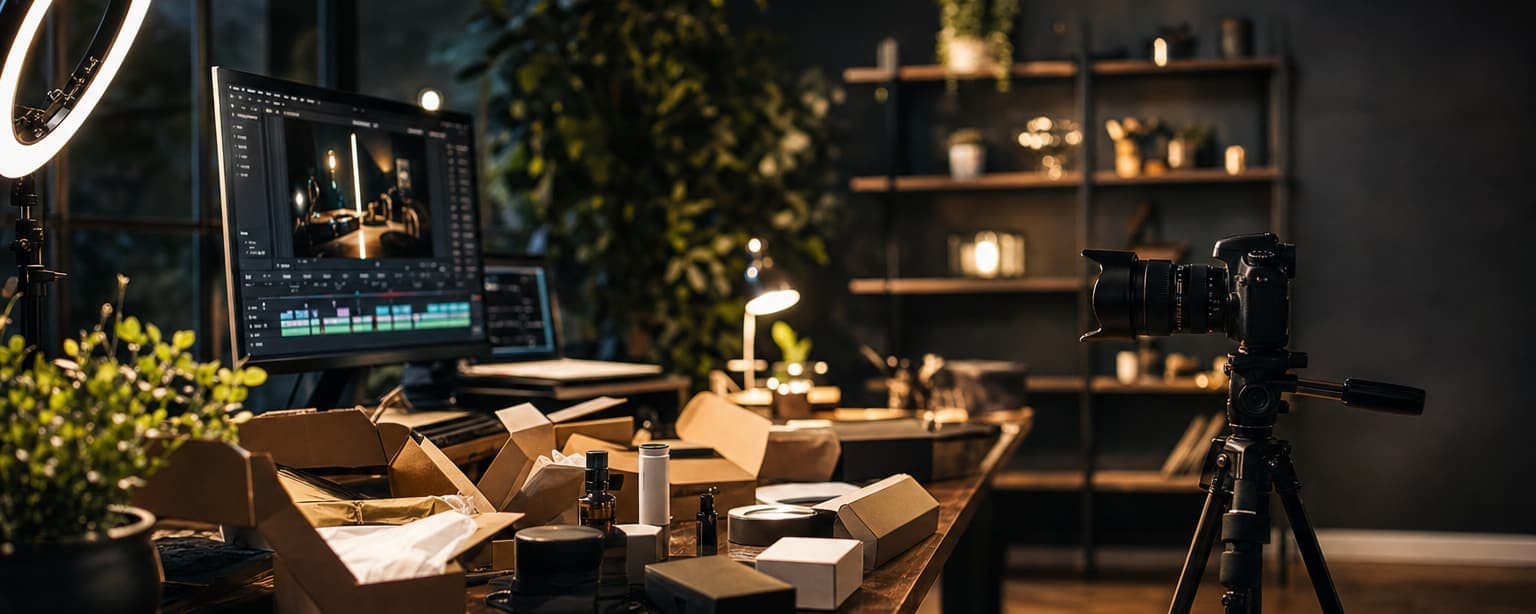
Your gear is covered at home, which is the one place it never is.Founded by an Emmy-nominated television editor.
Most creators are insured on a homeowners policy that covers a camera in a closet, not one on a shoot. We write coverage that travels with the gear, drone included, and issues the certificate a brand wants by Friday. Send us your gear list and we will tell you what it costs.
Tell us the situation.
One licensed human replies the same business day — not five agents, not an auto-responder. If the policy you have is already the right one, we will tell you.
We use this to quote and service your insurance, and we do not sell it or pass it to lead networks. Privacy policy.
We were editing television long before we were insuring it.
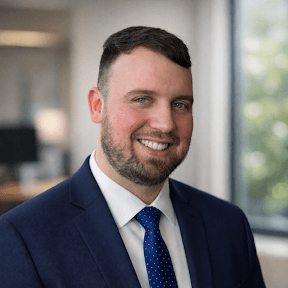
Kevin Kelsey
Founder | Principal Agent
IATSE Local 700 member
Boring’s founder, Kevin Kelsey, edited television for fifteen years before he sold a policy. He was Emmy-nominated for The Muppets Mayhem, cut Shark Tank, Big Brother, Dancing with the Stars and Wheel of Fortune, and handled compliance and risk for some of Hollywood’s largest production companies. So the person building your coverage has been on a crew list, dealt with the permit offices, and met network and streamer requirements from the production side, rather than working from a rate manual. He also builds post-production software. Baton is the board episodic post teams use to track every episode, and B/side is a video editor for people who cut together. He holds a number of patents on that software. So he knows the post side of a production as a vendor to it. We insure productions from Los Angeles to Atlanta, New York and Toronto, with worldwide and foreign production coverage.
The work is placed with the markets that actually write film, television and live entertainment — Zurich through ISC Entertainment (formerly Abacus), Philadelphia Insurance Companies, Take1 and Alive Risk — rather than with a general small-business carrier asked to try.
Send us what you have. We’ll tell you if it’s right.
Your current policy paperwork, a renewal notice, or nothing at all. A licensed agent reads it and replies the same business day.
What content creator businesses actually need.
Inland marine & equipment
Tools, equipment and property in transit. It picks up exactly where commercial property stops, which is the moment the item leaves the building.
Without it — Cameras, lenses, lighting, audio, gimbals and laptops travel to every shoot and are not covered by a property policy once they leave your address.
General liability
Third-party bodily injury and property damage. It is the line nearly every contract names by default.
Without it — A brand deal, a venue, a location owner or a film office will ask for a certificate before you work, and there is no certificate without a policy.
Media liability
Covers claims arising from what you publish (defamation, copyright and trademark infringement, invasion of privacy and misuse of a person’s likeness) on an annual policy for creators, podcasters, publishers and authors.
Without it — Copyright, defamation and right-of-publicity claims come from the content itself, and a licensing deal with a streamer specifies the limit before anyone signs.
Cyber & tech E&O
Breach response, ransomware and the notification costs that follow. Technology errors and omissions sits on the same policy and covers the software or service itself failing a client, which is the half most tech companies find out about too late.
Without it — The channel is the business, and an account takeover is the one income loss a policy will actually pay for.
Drone liability and hullUnmanned aircraft
Liability for injury or damage caused by the aircraft, and the aircraft itself, written on rather than assumed.
Without it — General liability excludes aircraft by name, so an unendorsed drone flight is uninsured from the moment it leaves the ground.
Hired & non-owned auto
Covers vehicles the business does not own but its people drive on the job: rentals, and employees running errands in their own cars. Their personal auto policy will not cover a business trip, and the claim lands on the business. Pricing depends entirely on HOW it is bought: as an endorsement on a general liability policy we write, HNOA often costs a few hundred dollars; as a stand-alone (monoline) policy it runs $2,500 to $5,000, and association practitioner programs (CPH, CM&F and similar) generally cannot take the endorsement, so "add HNOA to my existing policy for $300-$800" is usually not a real option. A package carrying GL, professional liability and HNOA together is typically cheaper than the monoline.
Without it — An editor or assistant driving to a shoot in their own car is a claim against the business, not against their personal policy alone.
Workers compensation
Required in almost every state the moment you have employees. Priced on payroll and class code, which is why the class code is worth arguing about.
Without it — The first editor or assistant makes you an employer, and a one-person company in California that a brand or production wants a certificate from is written as a ghost policy.
Product liability for merch
Bodily injury or property damage from a product carrying your name: a candle, a supplement, a print-on-demand hoodie.
Without it — The print-on-demand vendor’s policy protects the vendor. It is rarely required, and it is sometimes bundled with general liability when it is.
Umbrella & excess liability
Extra limit stacked above general liability, auto and employers liability. Usually the cheapest million dollars on the policy.
Without it — A network, a streamer or a national brand will specify limits above primary in the agreement, and the umbrella is how those are met.
The claims we actually see.
Ordered by how often we see them, not by how dramatic they are. Each one names the coverage that answers it — and the policy people wrongly assume already does.
Most common
Camera, lenses, drone or laptop stolen from the car, a rental house or a location
Covered by Equipment (inland marine)
A business property policy covers gear at your address, and homeowners or renters insurance caps business property at a few thousand dollars and usually excludes it away from home altogether.
Common
A letter from a lawyer: copyright, a face you did not clear, something you said about a person or a product
Covered by Media liability
General liability sold to a media business almost always excludes claims arising from the content you publish, which is the business.
Common
Someone tripped over a cable, a light stand fell, a location got damaged
Covered by General liability
Nothing covers it until a policy exists, and the venue or brand that asked for a certificate will not wait for one to be bound.
Less common, severe
The account was taken over, the videos deleted and a ransom demanded
Covered by Cyber liability
The platform does not reimburse a hack, and the income lost while the channel is dark is only insurable under cyber coverage bought beforehand.
Less common, severe
The drone hit a person, a car or a window
Covered by Unmanned aircraft liability
General liability excludes aircraft, and a drone is an aircraft. It has to be written on, and the exposure is a lot bigger than most operators realize.
The page for what your channel actually does.
A monetized channel, a podcast, a real-estate video business and a photographer who also shoots video are not the same risk, and the policy that fits one is wrong for the next. Each of these is written and priced differently, so each gets its own page.
- YouTubers
We insure YouTubers and monetized channels: the gear on location, the drone, the trip abroad, the first editor, and the media liability a streamer asks for before it licenses your content.
- Farm & Ranch YouTubers
We insure farm, ranch, homestead and outdoor channels that film around livestock and machinery. The policy that matters most is media liability with copycat coverage, because general liability for a creator excludes a viewer who imitates a video, and it often excludes animals on set as well.
- Podcasts
Publishing every week brings defamation, copyright and licensing claims. We insure podcasts against those, plus the guests and audiences on your premises, the gear, and what a streamer asks for before it licenses the show.
- Journalists & Local News
We insure independent journalists, freelance reporters, local and civic news sites, newsletter writers and YouTube or Facebook news channels with media liability. It is the policy that defends a defamation, privacy or copyright claim over what you publish. When the person suing is a public official, the defense bill is usually the real cost, and the policy is built to pay it.
- Camera Equipment
We insure camera equipment wherever it actually is, in the car, on location, on a plane, in a rental house’s hands or under a drone, written as inland marine rather than the property policy that stops at your front door.
- Videographers
We insure videographers and video production businesses: the gear on location, the certificate every venue asks for, the drone your general liability excludes, and the footage that cannot be reshot.
- Media Liability
Media liability insurance covers claims arising from what you publish: defamation, copyright and trademark infringement, invasion of privacy and misuse of someone’s likeness — on an annual policy for creators, podcasters, publishers, authors and agencies. It is the coverage a streamer or brand asks for before a licensing deal is signed.
- Drone Operators
A standard policy carves your drone out as aircraft. We put the liability back, add hull coverage for the airframe, and handle the privacy exposure that comes with a camera in the air.
- Photographers & Videographers
The claim nobody expects is losing the images. We cover that, the gear, and the venue certificate you cannot shoot without.
- Loan-Out Companies
A loan-out is the single-member company that lends your services to a production, and productions increasingly will not engage one without its own workers compensation. We set that up.
- Recording Studios
We build studio policies around the gear you own, the instruments clients leave in the room, and recordings that have enormous value and no replacement cost.
- Media Errors & Omissions
Media errors and omissions covers claims arising from the content itself: copyright, trademark, defamation and rights clearance. Every distributor and streamer requires it before accepting delivery.
What the insurance company will ask about your content creator business
We read 3 applications the markets use for this kind of business and pulled out what they actually ask. Have these answers ready and a quote takes a day instead of a week, because nobody has to come back to you for the missing piece.
About the business
- What types of skiing trips do you offer (backcountry, heli-skiing, snow-cat, other)?
- How many clients do you take per year and how many days does each group typically ski?
- What elevations and terrain do you operate in?
- Are you a member of any professional ski guide organizations?
How you operate
- How do you decide when conditions are too unsafe or unskiable to run a trip?
- How do you update guides on current snow conditions between trips?
- What's your weather forecasting source and do you maintain your own weather records?
- Do you use snowmobiles or snow-cats to access terrain?
- Do you have lower-angle terrain available for bad weather days?
Safety and controls
- What are your protocols for finding and rescuing someone buried in an avalanche?
- Do you carry avalanche dogs or have access to them?
- How do you train clients to use avalanche transceivers?
- What's in each guide's pack?
- How often do you maintain and test avalanche transceivers?
Your history
- Have you had any incidents, claims, lawsuits or losses related to your ski guiding business?
- Have you ever been convicted of any crime?
- Do you currently have insurance with another company?
Money and people
- How much do you expect to earn annually from guided trips?
- What are the ages and experience levels of your guides?
Have these ready
- Your guide roster with each guide's age, experience, and resume for key staff
- Your avalanche transceiver maintenance records and schedule
- Your client release and acknowledgement of risk form
- All brochures and promotional materials showing how you market your trips
- Your previous insurance information if you have current or past coverage
You answer what you can; a licensed agent fills the rest with you.
What our content creator clients ask us.
What is the difference between a content creator and an influencer, and does it change the insurance?
A creator is paid for the content: ad revenue, licensing, subscriptions, a production fee. An influencer is paid for the audience, because a brand pays to be in front of it. Most channels are both. The label changes nothing about the gear or the general liability, but it changes the media liability side: an influencer is making advertising claims about someone else’s product under endorsement rules, and a creator licensing a series to a streamer is delivering content to a contract with an insurance clause in it. Tell us which deals you actually have, because the policy is built around the contracts rather than the job title.
Does my homeowners or renters policy cover my camera gear and my channel?
Not usefully. Homeowners and renters policies cap business property at a small amount, often a few thousand dollars, and most exclude business property away from the home entirely, which is where the gear is on every shoot. They also exclude business liability, so a guest who trips over your light stand at a location is not covered either. Gear is written on an equipment policy that follows it anywhere, and the liability goes on a general liability policy in the business’s name.
A brand deal or a venue is asking for a certificate of insurance. What do they mean, and how fast can I get one?
They want proof that a general liability policy exists, usually a million per occurrence, with themselves named as an additional insured. A certificate is issued from an existing policy in minutes; the policy itself takes a day or two to bind for a straightforward channel. Read the exact wording they sent rather than a summary, because additional insured status is an endorsement on the policy and certificates get rejected over precisely that. If a film office or a city permit is involved, the requirements are more specific and we have written them up.
Is my income insured if the channel is demonetized, banned or buried by an algorithm change?
No, and anyone telling you otherwise is selling something that will not pay. There is no market for lost income from a platform decision: demonetization, a policy strike, a ban, a change in what gets recommended. We checked before writing this. The one income loss that is insurable is a hack: if the account is taken over, the videos deleted and a ransom demanded, cyber coverage pays the response, the rebuild and the income lost while the channel is dark. A creator we have seen quoted elsewhere with a small per-day hack benefit is being sold a sublimited version of that same coverage. The protection against a platform decision is not a policy; it is not having one platform.
I am a one-person S-corp or loan-out in California. Do I need workers compensation?
If a brand, a production or a platform deal wants a certificate from your entity, yes, and it is written as a ghost policy, a workers compensation policy with no payroll on it, priced at the minimum, that exists so the certificate can. It satisfies the requirement without you paying to insure yourself as your own employee. The moment you hire a first editor or assistant, even part-time, the policy becomes a real one rated on their payroll, and the difference between a contractor and an employee is decided by the state, not by what the invoice says.
Does general liability cover something I said in a video?
Almost never for a media business. General liability includes a small amount of personal and advertising injury coverage, and the carriers that write channels exclude it for anyone whose business is publishing, because otherwise every defamation and copyright claim in the country would be a general liability claim. What you said, what you showed, whose song or face was in it: that is media liability, a separate policy with its own limit and a retroactive date.
How do influencers and creators get health insurance?
The same three ways everyone self-employed does: the state or federal marketplace as an individual, a spouse’s plan, or — once the business has at least one employee besides the owner — a small group plan, which is usually the best coverage per dollar and is deductible to the company. A creator with an editor on payroll can often set up group health for two people. We write it, and it is a separate conversation from the business policies on this page.
I am on TikTok or Instagram, or I stream on Twitch. Is any of this different?
The platform changes almost nothing; the deals do. A short-form creator with brand deals has the same gear, the same liability at a shoot and the same advertising exposure as a YouTuber. A streamer has less gear on the move and more time live, so the media side is about what gets said unscripted and the cyber side is about the account. What decides the policy is where the money comes from and what the contracts require, so bring the deal terms rather than the follower count.
What does content creator insurance cost?
A range, and the honest answer is that four things drive it. Revenue and payroll set the general liability price. Carriers rate it on payroll, or on your annual production costs, never on views. The value of the gear sets the equipment price. A drone, worldwide travel and merch each add a piece. And media liability is priced on what the contracts demand: a channel with no licensing deal buys a modest limit, and a channel a streamer wants to license buys a large one. A small channel with a modest kit can be insured for less than a month of a decent brand deal; a company doing real money with drones and foreign shoots is a proper commercial account. Send the revenue, the gear list and the contracts and you get a number rather than a bracket.
I use AI to write scripts, make thumbnails or generate clips. Does that change my insurance?
It changes what your media liability policy has to say. AI-written text is where defamation now comes from, an AI image or clip is where a copyright claim comes from, and a generated face or voice is a right-of-publicity claim in a growing number of states. Since January 2026 a policy can carry a generative-AI exclusion that removes all three. Tell the carrier which tools you use and ask for affirmative AI wording; on the creator policies we place it is usually available and rarely expensive.
What does a content creator insurance application ask for?
The applications for content creator businesses ask about 4 things above all: what types of skiing trips do you offer (backcountry, heli-skiing, snow-cat, other); how do you decide when conditions are too unsafe or unskiable to run a trip; what are your protocols for finding and rescuing someone buried in an avalanche; have you had any incidents, claims, lawsuits or losses related to your ski guiding business. Have your guide roster with each guide's age, experience, and resume for key staff and your avalanche transceiver maintenance records and schedule ready and a quote takes a day instead of a week.
Commercial insurance is 96% of what we do — it is not a department here, it is the whole business. Not ready to talk? The guides answer the questions this page raises in more depth. Already insured with us and need a certificate or a policy change? Ask the service team rather than starting a quote — it is faster and it goes to the people whose job it is. We also write home and auto, which is usually cheaper alongside the business policy than apart from it.
Handed a lease, a vendor packet or a client contract with insurance requirements? Paste it into the COI Requirements Decoder to see what each one means for your business, or read what the requirements mean.