
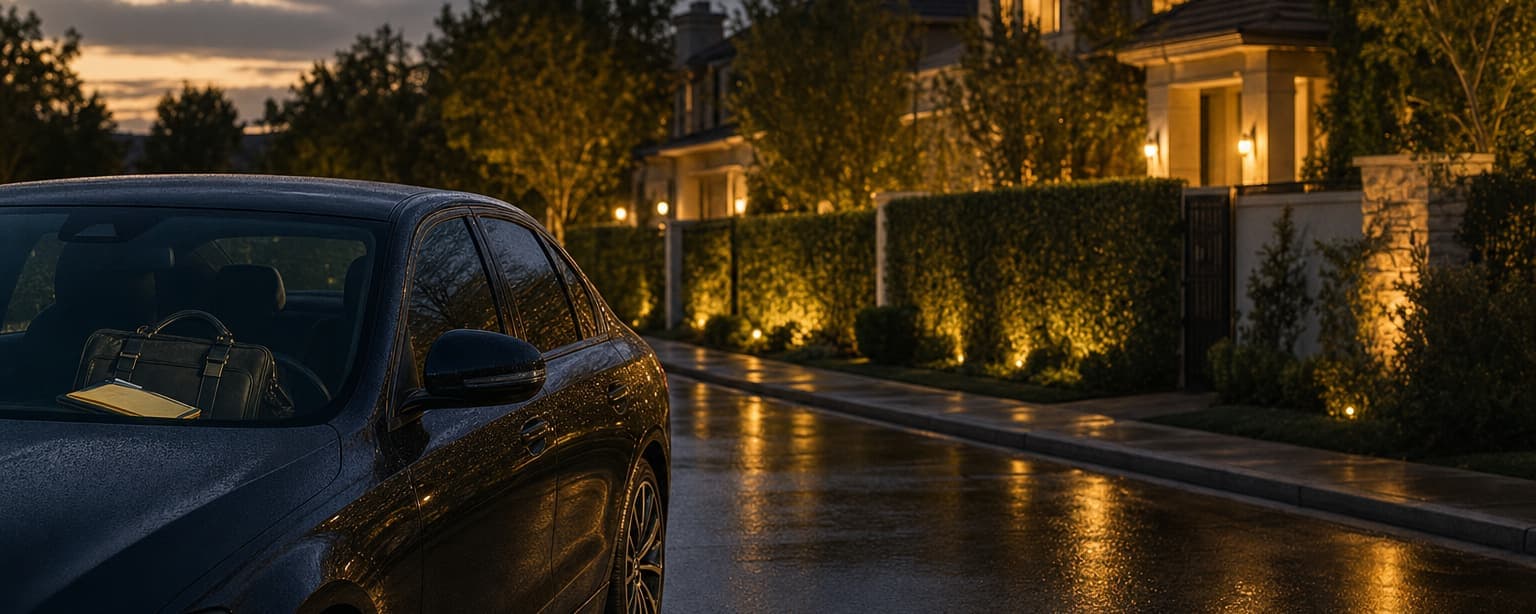
Your employee’s personal policy will not cover a work trip. Yours is the one that gets sued.
Hired and non-owned auto covers vehicles the business does not own but its people drive on the job, meaning rentals and employees running errands in their own cars.
Tell us the situation.
One licensed human replies the same business day — not five agents, not an auto-responder. If the policy you have is already the right one, we will tell you.
We use this to quote and service your insurance, and we do not sell it or pass it to lead networks. Privacy policy.
Send us what you have. We’ll tell you if it’s right.
Your current policy paperwork, a renewal notice, or nothing at all. A licensed agent reads it and replies the same business day.
What hired and non-owned auto actually covers.
Non-owned autos
Liability arising when an employee drives their own car for business.
Without it — Their personal insurer declines the business trip and the business is named in the suit regardless.
Hired autos
Vehicles rented or borrowed in the business’s name.
Without it — A rental counter waiver is not liability coverage, and the gap shows after an at-fault accident.
Where hired and non-owned auto shows up.
- Home Health Agency
The caregiver’s personal auto policy defends the caregiver. The agency is named anyway, and has nothing responding.
- Restaurant
Delivery drivers in their own cars leave the restaurant named in the suit with nothing responding: the exposure that makes delivery hard to place at all.
- Assisted Living & Residential Care
Staff driving residents to appointments in their own cars leaves the facility named and nothing responding.
- Farm Truck
A custom harvester or a neighbor's truck moving your crop is a vehicle you do not own doing your work, and it is outside the farm auto policy unless this is on it.
- Hot Shot Trucking
Hot shot operators routinely use a personal pickup for errands between loads, which is exactly the gap this closes.
- Box Truck & Straight Truck
Rented or borrowed trucks used to cover a peak are not on your schedule.
- Last Mile & Delivery Contractors
Rented vans and any personal vehicle used for the work are outside the owned schedule.
- Public Auto & Passenger Transport
Owner-drivers and vehicles brought in to cover peaks sit outside the owned schedule.
- Taxi & Rideshare Fleets
Vehicles brought in by drivers, or leased out to them, sit outside the owned schedule without it.
- Limousine Service
The dispatcher’s name is on the booking. When the affiliate’s vehicle crashes, the suit names the company the client hired.
- Party Bus Operators
The client booked you. When the borrowed bus crashes, the suit names you.
- Black Car & Chauffeur Service
The corporate client contracted with you. When the affiliate’s car crashes in another city, you are the name on the suit.
- Charter Bus & Motorcoach
The school signed with you. When the farmed-out coach crashes, the district’s lawyer names the company on the contract.
- Allied Health & Therapy Practices
Staff driving their own cars between homes, schools and clinics are uninsured for the business use the moment their personal insurer learns of it.
- Regional Center Vendors
Staff using personal cars to transport or visit consumers are unprotected without it.
- Speech Therapy Practices
Therapists driving their own cars between campuses and homes are on business use their personal insurer did not agree to.
- Occupational Therapy Practices
Home-visiting therapists drive their own cars to clients all day.
- Play & Behavioral Therapy
In-home behavioral staff drive their own cars to clients continuously.
- Concierge & Private Duty Nursing
Nurses drive their own cars between clients, hotels and surgical centers.
- Moving & Storage Companies
Rented trucks and staff vehicles used on a busy weekend are not covered by the fleet policy that lists your own units.
- Staffing & Temporary Employment Agencies
Staff using their own vehicles between assignments create an exposure no fleet policy lists.
- IT & Tech Consulting
Consultants driving their own cars to client sites are the classic uncovered claim: the business exposure personal auto quietly refuses.
- Equipment Rental Companies
A rented box truck for a busy weekend is still your vehicle exposure, and most venues ask for auto liability on the certificate.
- Content Creators & Influencers
An editor or assistant driving to a shoot in their own car is a claim against the business, not against their personal policy alone.
- YouTubers
The crew car, the editor’s car, the rental at the airport, driven on the channel’s business, claimed against the channel.
- Farm & Ranch YouTubers
The truck, the trailer and the rental driven to a shoot on the channel’s business, claimed against the channel and not only against the driver.
- Videographers
A second shooter driving to the venue in their own car is your liability on the way, and the personal policy on that car was not rated for it.
- Nonprofits
The most under-bought coverage in the sector: volunteers drive constantly, their personal policies exclude it, and the organization is the deep pocket.
- Couriers & Last-Mile Delivery
The most common structure in this trade and the most common gap.
- House Cleaning & Maid Services
Personal auto excludes business use, and this is business use all day.
- Delivery Restaurants
The single coverage that makes delivery hard to place at all, and the one most standard carriers will not attach once you disclose it.
- Pizza Shops & Delivery
Brand requirements in this trade run well above $1M, and a policy that stops short is a breach of the agreement as well as a gap.
- Churches & Religious Organizations
Personal auto policies exclude the trip, and the congregation is the party with assets.
- Animal Shelters & Rescues
Transport is constant, personal policies exclude the trip, and the organization is the defendant.
- Food Banks & Pantries
Collection and delivery runs are constant, and personal auto policies exclude them.
- Youth Sports Leagues
Team travel is the highest-severity thing a league does, and it is done in private cars.
- Thrift Stores & Charity Retail
Collection and delivery is constant in charity retail, and personal policies exclude it.
- Hospice Agencies
The driver’s personal policy is primary and limited; the agency is the party with assets and the one that gets sued.
- Medicaid Waiver Providers
The driver’s personal policy answers for the driver. Your agency is named in the suit and has nothing responding.
- Home Care Agencies
The agency is named in the suit and the caregiver’s personal policy defends only the caregiver.
- Respite Care Providers
The personal auto insurer learns the trip was paid work, and the agency is named with nothing responding.
- Sober Living Homes
The house is named in the suit and the driver’s personal policy defends only the driver.
- Mental Health Clinics and Facilities
The employee’s personal policy answers first and runs out fast. The clinic is the defendant with the assets.
- Domestic Violence Shelters
Transport happens daily, often at night and under stress, and the agency is the defendant if it goes wrong.
- IV Therapy & Wellness Infusion
The exposure that grows fastest as a mobile service scales, and the one least often bought.
- Valet Parking
The customer’s own auto policy insures the customer. It was not written to defend your business for what your employee did behind the wheel, and their insurer will look for you.
What clients with hired and non-owned auto ask us.
We have no company vehicles. Do we still need this?
If anyone ever drives for work — a bank run, a supply collection, a delivery, a client visit — then yes. Owning no vehicles is precisely the situation this line is written for. It is inexpensive because it sits excess of the driver’s own policy, and it is the coverage most often missing from a business that believes it has no auto exposure.
Does it cover delivery drivers?
It covers the business’s liability when they cause an accident, which is the exposure that gets the restaurant named. It does not repair the driver’s own car and it is not a substitute for them carrying their own insurance. Food delivery in particular is underwritten carefully and is a common reason a restaurant is declined, so declare it up front.
Guides on hired and non-owned auto.
- Does personal auto cover business use?A personal auto policy covers ordinary business errands in a car, pickup or van, at personal limits. Livery, ride-share and larger vehicles are excluded, and the business needs its own auto coverage when a contract or the exposure goes beyond that.
- Does a rental truck include cargo insurance?A commercial truck rental covers liability and damage to the truck but not the freight inside it. We quote what Penske and Ryder require when you bring your own insurance, why hired auto counts and non-trucking liability does not, and where cargo coverage has to come from.
Commercial insurance is 96% of what we do — it is not a department here, it is the whole business. Not ready to talk? The guides answer the questions this page raises in more depth. Already insured with us and need a certificate or a policy change? Ask the service team rather than starting a quote — it is faster and it goes to the people whose job it is. We also write home and auto, which is usually cheaper alongside the business policy than apart from it.
Handed a lease, a vendor packet or a client contract with insurance requirements? Paste it into the COI Requirements Decoder to see what each one means for your business, or read what the requirements mean.