
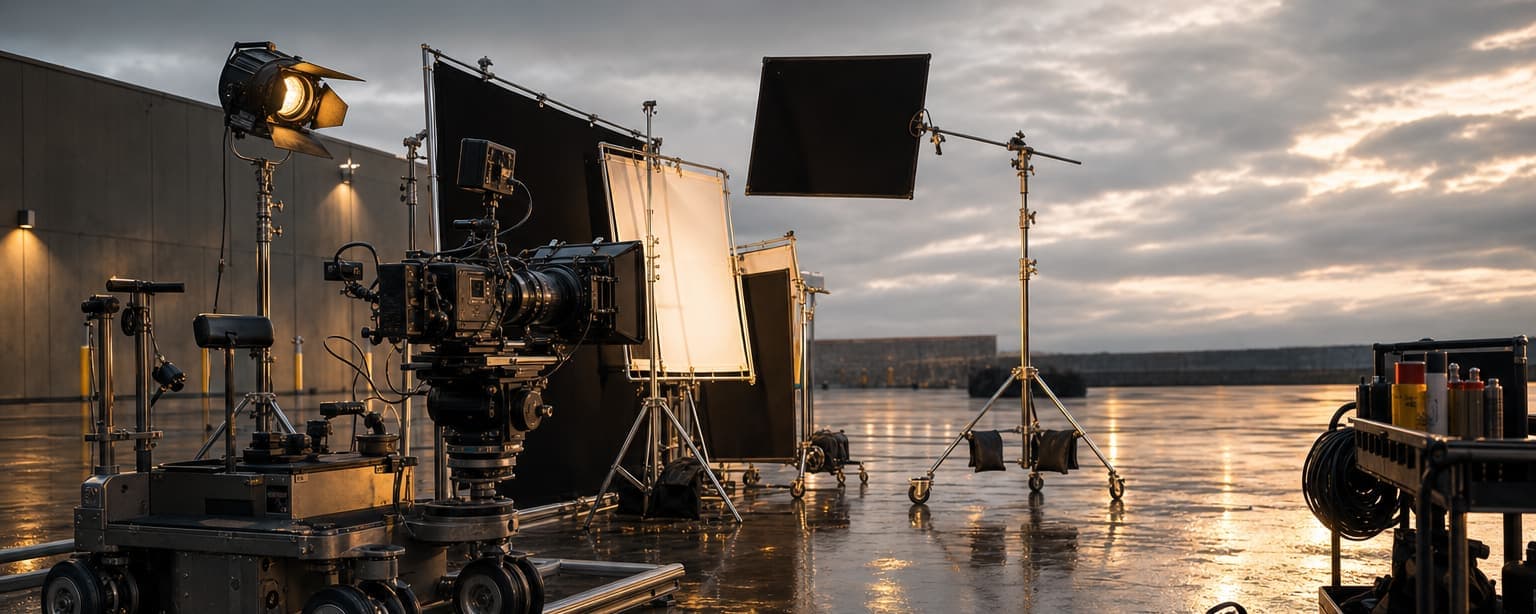
One policy for the year, not a new one for every project.Founded by an Emmy-nominated television editor.
An annual production package, often called DICE, covers every production a company shoots in the policy year under a single renewable policy, with individual productions scheduled onto it.
Tell us the situation.
One licensed human replies the same business day — not five agents, not an auto-responder. If the policy you have is already the right one, we will tell you.
We use this to quote and service your insurance, and we do not sell it or pass it to lead networks. Privacy policy.
We were editing television long before we were insuring it.

Kevin Kelsey
Founder | Principal Agent
IATSE Local 700 member
Boring’s founder, Kevin Kelsey, edited television for fifteen years before he sold a policy. He was Emmy-nominated for The Muppets Mayhem, cut Shark Tank, Big Brother, Dancing with the Stars and Wheel of Fortune, and handled compliance and risk for some of Hollywood’s largest production companies. So the person building your coverage has been on a crew list, dealt with the permit offices, and met network and streamer requirements from the production side, rather than working from a rate manual. He also builds post-production software. Manifest Post is the board episodic post teams use to track every episode, and B/side is a video editor for people who cut together. He holds a number of patents on that software. So he knows the post side of a production as a vendor to it. We insure productions from Los Angeles to Atlanta, New York and Toronto, with worldwide and foreign production coverage.
The work is placed with the markets that actually write film, television and live entertainment — Zurich through ISC Entertainment (formerly Abacus), Philadelphia Insurance Companies, Take1 and Alive Risk — rather than with a general small-business carrier asked to try.
Send us what you have. We’ll tell you if it’s right.
Your current policy paperwork, a renewal notice, or nothing at all. A licensed agent reads it and replies the same business day.
What production package actually covers.
Rented and miscellaneous equipment
Cameras, lenses, lighting, grip and sound rented in for the shoot, on location and in transit.
Without it — The rental order is your liability from the moment you sign for it, and the rental house checks the certificate before releasing anything.
Owned equipment
Gear the production company owns rather than rents, scheduled separately from rented equipment.
Without it — A separate line on the schedule, and frequently excluded on packages bought by companies that rent everything. Check it if you have started buying gear.
Props, sets and wardrobe
Constructed sets, dressing, props, costumes and continuity items, including in storage between shoot days.
Without it — A build lost overnight is a reshoot rather than a replacement, and it is its own limit rather than part of equipment.
Rented furs, jewelry, art and antiques
High-value hired items used on camera, which carry their own sub-limit or are excluded outright.
Without it — Routinely excluded by default. If the art department is hiring a real painting or real jewelry, this has to be added before the day.
Negative film, videotape and digitized image
Loss or corruption of the footage itself — cards, drives, files — and the cost of reshooting what is gone.
Without it — The most valuable thing on the production is the material already shot, and no property policy treats data that way.
Faulty stock, camera and processing
Footage lost to a defective sensor, a bad card, a mis-set camera or a processing failure, as opposed to the media being destroyed.
Without it — A separate coverage from negative film, usually with a percentage deductible, and there is a broad form worth asking about.
Library stock
Previously shot footage held in your library and used in the production.
Without it — Excluded as standard. Relevant to anyone cutting archive or house footage into new work.
Extra expense
The additional cost of completing the production after an insured interruption, held crew, rebooked locations, extended rentals.
Without it — The loss is rarely the damaged item. It is the day the whole unit stood still because of it.
Third party property damage
Damage to property in your care while filming on it: the location itself, not just the neighbor’s fence.
Without it — General liability excludes property in your care, custody or control, which describes every location you shoot in.
Office contents, EDP and valuable papers
The production office: contents, computers and drives, accounts receivable, valuable papers and records, money and securities.
Without it — Each is its own line and each is commonly excluded. A production company with a real office is usually carrying none of them.
Hired and non-owned auto physical damage
Damage to the vehicles you rent — cube trucks, cargo vans, picture cars — with an aggregate and a per-vehicle limit.
Without it — Separate from auto liability and constantly confused with it: liability pays the other party, this pays for the truck you rented.
Cast
Extra expense, essential person, covered person extensions with and without sickness, and family bereavement, each a separate election.
Without it — Cast is a group of coverages rather than one, and on many packages every element is excluded until a production is scheduled with a medical questionnaire.
Animals
Death, illness or injury of animals working on the production, and the extra expense of the delay it causes.
Without it — Excluded by default. Handlers and the humane monitor will both ask for evidence of it.
General liability
Aggregate and per-occurrence limits, products and completed operations, personal and advertising injury, fire legal and medical payments.
Without it — No permit, no stage access, no gear released. It decides whether the production happens at all.
Blanket additional insured, city certificates and waivers
The endorsements that make your certificate acceptable to a location, a studio, a municipality or a permit office.
Without it — City and special certificates are a separate election from blanket additional insured, and a film office rejects a certificate on the wording rather than the limit.
Abuse and molestation
Allegations arising on the production, including supplemental coverage for an alleged participant.
Without it — Excluded from general liability and excluded by default on most packages. It matters most on productions with minors.
Employee benefits liability
Errors in administering crew benefits: enrollments missed, elections mishandled.
Without it — A small line, excluded as standard, and relevant once you have staff rather than only crew.
Hired and non-owned auto liability
Liability when crew drive rented vehicles or their own cars on production business.
Without it — Personal auto policies exclude the business trip, and a production runs on people driving.
Stunt buyback
Hazardous action bought back onto the policy scene by scene, priced per production and declared with dates and detail.
Without it — Base forms exclude stunts, effects, aircraft, watercraft and precision driving. Undeclared hazardous action is uninsured hazardous action.
Excess liability
A separate policy sitting above the package, at the limits studios, networks and city permits actually name.
Without it — Frequently written by a different carrier with different dates from the package underneath it, worth checking they line up.
Workers compensation
Crew injury, at production class rates, in every state you shoot in, including day players and short-term hires.
Without it — Not part of an inland marine and liability package and easily assumed to be. It can be arranged alongside, and often is not.
Media errors and omissions
Copyright, trademark, defamation, rights clearance and privacy claims arising from the content itself.
Without it — Bought separately from the package, and no distributor or streamer accepts delivery without it.
Completion bond
A financing guarantee that the picture will be delivered, required by lenders and some equity above a budget threshold.
Without it — Not insurance and not part of a package: a separate product, arranged separately, and asked about here constantly.
Where production package shows up.
- Film & Entertainment
One renewable policy across every production in the year, instead of starting from nothing on each project.
- Television Production
An annual package written for a slate is the right structure for a company shooting continuously rather than once.
- Music Video Production
An annual package beats per-project coverage the moment you shoot more than a couple a year.
- Feature Films
The core form: equipment, sets, props, extra expense and the perils that stop a shoot.
- Advertising Agencies
An office policy does not travel to a location shoot, and the rental house and the location both ask for their own certificate.
What clients with production package ask us.
Half my schedule says “Excluded”. Is that normal?
Yes, and it is the most important thing to understand about a production package. A package is a menu, not a bundle: the schedule lists every coverage the form is capable of carrying, and each line is separately elected, separately limited and separately priced.
Which limit do the rental houses actually care about?
Miscellaneous rented equipment, and it is the one to get right before anything else. It is the coverage a rental house looks for on your certificate before releasing gear, they set the limit rather than you, and the number they want is often considerably higher than a producer expects: a modest camera and lighting order is easily into six figures at replacement value, and houses tend to require a limit that covers the whole order rather than the item most likely to break.
What is hired and non-owned physical damage, and why do people struggle to place it?
It covers damage to vehicles the production rents or borrows — the cube truck, the cargo van, the picture car — as opposed to liability, which pays the other party when you hit them. Producers routinely assume one policy does both and it does not: they are separate elections with separate limits, and a package can carry auto liability with the physical damage side excluded entirely.
Does a production package include workers comp?
No. A package is inland marine and liability, usually with auto alongside, and workers compensation is a separate policy, which catches producers out constantly, because the package is presented as the film insurance and it looks comprehensive.
How are stunts and hazardous action added?
Scene by scene, in advance, with real detail. The base form excludes hazardous activity, and a stunt buyback puts a specific piece of action back on the policy, declared with what it is, how many scenes, how many vehicles or performers, and on which dates. Precision driving, aerial work, watercraft, fire and pyrotechnics, firearms and animal action are each their own conversation, and each is priced individually across the liability, auto and inland marine sections rather than once.
Annual package or short-term policy?
If you shoot once, a short-term policy is right. If you shoot regularly, the annual package is usually cheaper than the third short-term policy and considerably faster: new productions are added to the existing policy rather than underwritten from scratch, which matters when a job comes in on Thursday for a Monday shoot.
What is DICE?
It stands for documentary, industrial, commercial and educational: the historical name for the annual multi-production form, still used by carriers even though the productions it covers now are far broader than those four categories.
Commercial insurance is 96% of what we do — it is not a department here, it is the whole business. Not ready to talk? The guides answer the questions this page raises in more depth. Already insured with us and need a certificate or a policy change? Ask the service team rather than starting a quote — it is faster and it goes to the people whose job it is. We also write home and auto, which is usually cheaper alongside the business policy than apart from it.
Handed a lease, a vendor packet or a client contract with insurance requirements? Paste it into the COI Requirements Decoder to see what each one means for your business, or read what the requirements mean.