
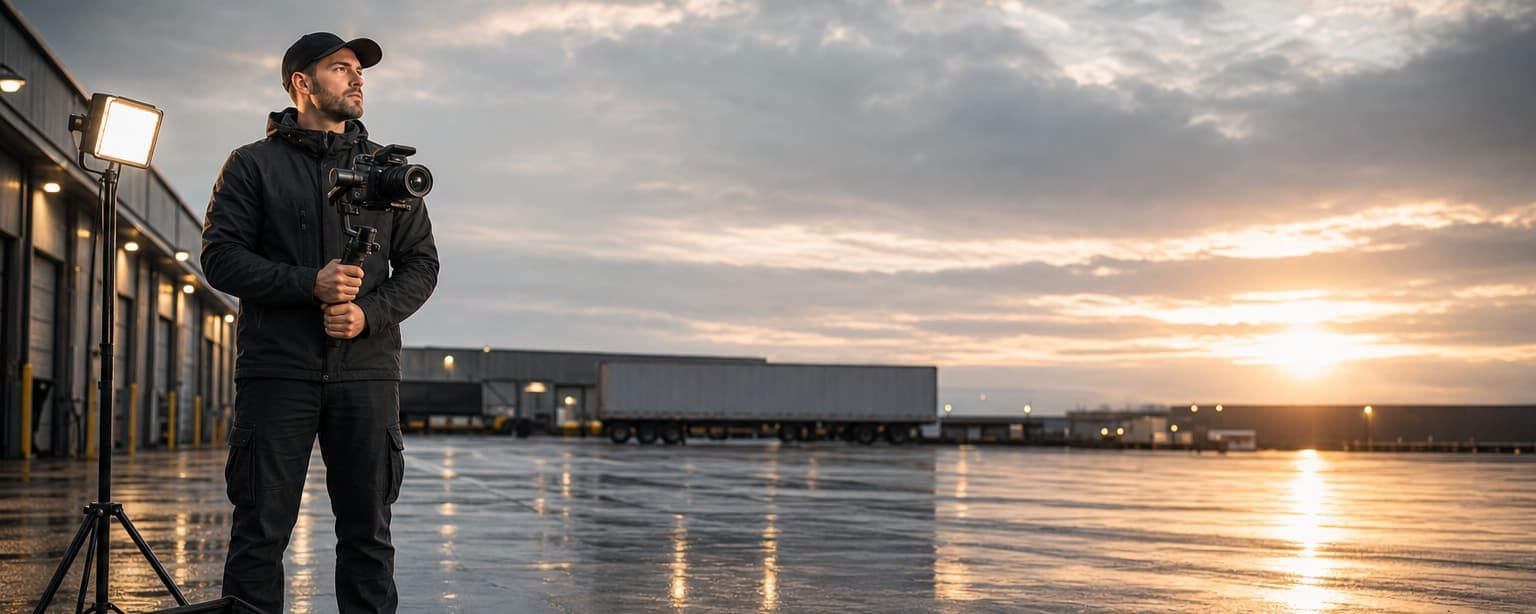
The venue wants a certificate, the client wants the drone shot, and the rental house wants you to carry the camera.Founded by an Emmy-nominated television editor.
We insure videographers and video production businesses: the gear on location, the certificate every venue asks for, the drone your general liability excludes, and the footage that cannot be reshot.
Tell us the situation.
One licensed human replies the same business day — not five agents, not an auto-responder. If the policy you have is already the right one, we will tell you.
We use this to quote and service your insurance, and we do not sell it or pass it to lead networks. Privacy policy.
We were editing television long before we were insuring it.

Kevin Kelsey
Founder | Principal Agent
IATSE Local 700 member
Boring’s founder, Kevin Kelsey, edited television for fifteen years before he sold a policy. He was Emmy-nominated for The Muppets Mayhem, cut Shark Tank, Big Brother, Dancing with the Stars and Wheel of Fortune, and handled compliance and risk for some of Hollywood’s largest production companies. So the person building your coverage has been on a crew list, dealt with the permit offices, and met network and streamer requirements from the production side, rather than working from a rate manual. He also builds post-production software. Baton is the board episodic post teams use to track every episode, and B/side is a video editor for people who cut together. He holds a number of patents on that software. So he knows the post side of a production as a vendor to it. We insure productions from Los Angeles to Atlanta, New York and Toronto, with worldwide and foreign production coverage.
The work is placed with the markets that actually write film, television and live entertainment — Zurich through ISC Entertainment (formerly Abacus), Philadelphia Insurance Companies, Take1 and Alive Risk — rather than with a general small-business carrier asked to try.
Send us what you have. We’ll tell you if it’s right.
Your current policy paperwork, a renewal notice, or nothing at all. A licensed agent reads it and replies the same business day.
What videographer businesses actually need.
General liability
Third-party bodily injury and property damage. It is the line nearly every contract names by default.
Without it — Almost every venue, brokerage and location will not let you set up without a certificate, and a light stand or a cable is a real way to hurt a guest.
Equipment on location (inland marine)
Cameras, cinema lenses, gimbals, lighting, audio, monitors and drives, anywhere you take them and in transit.
Without it — A business property policy covers gear at your address, which is where a videographer’s gear never is.
Professional liability
Covers the advice, the drawing, the diagnosis. The work itself, rather than someone getting hurt on your premises.
Without it — The card fails, the drive dies before backup, the ceremony was one take: the claim is the fee and what the day was worth, not the cost of a card.
Drone liability and hull
Injury and property damage caused by the aircraft, and physical damage to the airframe, gimbal and camera under it.
Without it — General liability excludes aircraft and a drone is an aircraft, so the shot every real-estate client asks for is uninsured until it is placed separately.
Rented and borrowed gear
The cinema glass, the second body and the lighting package hired for one job, which the rental agreement makes yours to replace.
Without it — The rental house’s insurance covers the rental house; the agreement you signed puts the full replacement value on you.
Media liability
Claims about the content itself — a music cue you did not clear, a face in the background, something said in the interview — once the piece is published or licensed.
Without it — General liability excludes what you publish, and a brand or a streamer will ask for this before they accept delivery.
Hired & non-owned auto
Covers vehicles the business does not own but its people drive on the job: rentals, and employees running errands in their own cars. Their personal auto policy will not cover a business trip, and the claim lands on the business. Pricing depends entirely on HOW it is bought: as an endorsement on a general liability policy we write, HNOA often costs a few hundred dollars; as a stand-alone (monoline) policy it runs $2,500 to $5,000, and association practitioner programs (CPH, CM&F and similar) generally cannot take the endorsement, so "add HNOA to my existing policy for $300-$800" is usually not a real option. A package carrying GL, professional liability and HNOA together is typically cheaper than the monoline.
Without it — A second shooter driving to the venue in their own car is your liability on the way, and the personal policy on that car was not rated for it.
Workers compensation
Required in almost every state the moment you have employees. Priced on payroll and class code, which is why the class code is worth arguing about.
Without it — The first editor or second shooter you pay is the moment the state expects a policy, and a loan-out in California is a company that employs you.
The claims we actually see.
Ordered by how often we see them, not by how dramatic they are. Each one names the coverage that answers it — and the policy people wrongly assume already does.
Most common
Footage lost before it was delivered: a failed card, a dead drive, a stolen laptop
Covered by Professional liability
An equipment policy pays for the card. Nothing on a property policy pays for what was on it, and the client’s claim is for the day that cannot be reshot.
Most common
Gear stolen from the car between locations
Covered by Equipment on location (inland marine), subject to the theft conditions
Auto insurance covers the vehicle and not its contents, and the equipment form may require the car to be locked and the gear out of sight, so read that wording before you need it.
Common
A guest trips over a cable or a light stand goes over at an event
Covered by General liability
The venue’s policy covers the venue. Its site agreement makes you responsible for what your equipment does, which is why it wanted a certificate naming it as an additional insured.
Common
Rented cinema glass or a lighting package damaged on the job
Covered by Rented and borrowed equipment
A policy that only schedules what you own answers none of a rental agreement, and the rental house will invoice replacement at their price, not yours.
Less common, severe
A drone hits a car, a window or a person on a listing shoot
Covered by Unmanned aircraft liability, with hull for the drone itself
General liability excludes aircraft. Most people who fly for work assume the risk is the drone, and it is the thing the drone hits.
What the insurance company will ask about your videographer business
We read 5 applications the markets use for this kind of business and pulled out what they actually ask. Have these answers ready and a quote takes a day instead of a week, because nobody has to come back to you for the missing piece.
About the business
- How would you describe what your production company does
- When did you start this business
- What type of business structure do you have (sole owner, partnership, corporation, or LLC)
- What is your owner's name and title
- How many productions do you make in a typical year
How you operate
- What is the highest budget for any single production
- Do you use written contracts with independent contractors and freelancers
- Do your contractors have to carry their own insurance, and if so, what are the minimum amounts
- What is your experience level in this business, in years
- Who are your five largest clients, and what did you pay them or charge them
Safety and controls
- Do you review all content for copyright, trademark, and legal clearance before airing or distribution
- Do you get written releases from people whose names or likenesses appear in your productions
- What do you do to make sure independent contractors produce quality work
- How do you handle and respond to complaints from clients
Your history
- Has your company changed names, merged with another company, or been acquired in the past five years
- Do you have any previous insurance claims from the past three years
- Who was your last insurance company and what was your policy number
Money and people
- What is the total production budget for all your current projects
- Do you encrypt your laptops, phones, backup drives, and other devices that hold company or client information
- Do you accept credit card payments, and if so, how many transactions per month
Have these ready
- Your previous insurance loss runs (claims history from the past three years from your current or former insurer)
- Your most recent audited annual financial statement
- Written contracts you use with independent contractors and freelancers
- Information about your five largest clients including contract amounts and length of agreements
You answer what you can; a licensed agent fills the rest with you.
What our videographer clients ask us.
Where do I get short-term or one-day videographer insurance?
It exists, and it is worth being honest about what it does. A one-day or short-term policy buys a general liability certificate for a specific date and location, which satisfies a venue that asked for one. It does not cover your gear, it does not cover the footage, it rarely covers a drone, and it does not name you on anything the day after. If you shoot for money more than a few times a year, an annual policy is usually cheaper by the third job and covers the things a one-day certificate never will. If you genuinely have one wedding and no plans, buy the day and know what you bought.
What does freelance videographer insurance cost?
A range, and the drivers are worth knowing because they are things you control. General liability is rated on the size of the business, and under the standard basis that means payroll, though some carriers use your annual gross production costs instead — so a one-person operation is at the bottom of the scale. Equipment coverage is priced on the value scheduled and the territory. A drone, worldwide travel or a media liability requirement from a client each add a line. A sole freelancer with a modest kit and no drone is one of the cheaper businesses to insure; the same person with a drone, a second shooter and a listing in another country is a different quote, and the difference is the exposure, not the label.
Is my drone covered?
Not by anything you already have. General liability excludes aircraft, a drone is an aircraft, and most equipment forms exclude it as well, so the shot every real-estate client asks for is uninsured on both policies until it is placed on purpose. We write unmanned aircraft liability and physical damage together, and the exposure is a lot bigger than people realize: the drone is a few thousand dollars, and what it hits on the way down is the claim. If you fly commercially you also need a remote pilot certificate, which the carrier will ask to see.
What happens if I lose the wedding footage?
That is a professional liability claim, and it is the coverage wedding videographers most often do not carry. A corrupted card, a drive that dies before the backup, a laptop stolen with the only copy — the ceremony cannot be repeated, and the claim is not limited to refunding the fee. Insurers ask about your workflow for exactly this reason: dual card slots, an on-site copy before you leave and an off-site copy that night is both good practice and a better application. The gear policy pays for the card; only professional liability answers for what was on it.
A real-estate brokerage wants to be an additional insured. What does that mean?
That their insurer wants your policy to defend them if your work on a listing produces a claim, such as a drone through a neighbor’s window, a guest at a twilight shoot tripping on a cable. Additional insured status is an endorsement to your general liability, not a line on a certificate, and brokerages reject certificates over precisely that distinction. Get the exact wording they require, including whether they want it on a blanket basis for every listing rather than one at a time, and expect them to ask about the drone specifically. Most now do.
Does it cover gear I rent for a shoot?
Only if the policy is written to include rented and borrowed equipment, which is a separate line from the gear you own. A rental house’s agreement makes you responsible for full replacement from the moment you sign, and their insurance covers them and not you. Ask for a standing blanket limit sized to the biggest kit you would pull for a job, or a scheduled amount for a specific one, and bring the rental agreement when you ask: the replacement value in it is the number the policy needs to carry.
Do I need a permit and a certificate to film on a street in Los Angeles or New York?
For anything beyond a person with a handheld camera, usually yes, and the permit office will ask for a certificate of insurance naming the city before it issues one. Los Angeles handles it through FilmLA; New York through the Mayor’s Office of Media and Entertainment, which issues an optional permit for handheld work and a required one for anything with equipment on the sidewalk. The general liability limit the city wants is stated in the permit conditions, and a policy bought the week you apply is how most small crews end up here. Do it before the shoot is scheduled rather than the week of.
Photographer or videographer: is it the same policy?
Largely, and if you do both you buy one. The shape is identical: equipment coverage for the gear, general liability for the venue certificate, professional liability for the images or the footage you cannot recreate. What video adds is the drone on most listing and event jobs, rented cinema glass and lighting on the bigger ones, a second shooter or an editor sooner, and a deliverable that gets published or licensed, which is where media liability enters, and where a brand or a streamer will ask for it before they accept the piece. Tell us which of those apply and the policy is written once for the whole business.
Clients are asking me to use AI in edits and deliverables. Am I covered if the output infringes?
Under a media liability policy that covers AI affirmatively, yes; under general liability alone, no, and under a media form with a 2026 generative-AI exclusion, also no. The claim is the same whether a frame was shot or generated. A rights holder says it copies their work, and the defense costs are the loss. Keep the prompts and the source material for each deliverable, use paid tiers whose terms permit commercial use, and put the AI wording on the policy before the first AI deliverable ships.
What does a videographer insurance application ask for?
The applications for videographer businesses ask about 4 things above all: how would you describe what your production company does; what is the highest budget for any single production; do you review all content for copyright, trademark, and legal clearance before airing or distribution; has your company changed names, merged with another company, or been acquired in the past five years. Have your previous insurance loss runs (claims history from the past three years from your current or former insurer) and your most recent audited annual financial statement ready and a quote takes a day instead of a week.
Commercial insurance is 96% of what we do — it is not a department here, it is the whole business. Not ready to talk? The guides answer the questions this page raises in more depth. Already insured with us and need a certificate or a policy change? Ask the service team rather than starting a quote — it is faster and it goes to the people whose job it is. We also write home and auto, which is usually cheaper alongside the business policy than apart from it.
Handed a lease, a vendor packet or a client contract with insurance requirements? Paste it into the COI Requirements Decoder to see what each one means for your business, or read what the requirements mean.