
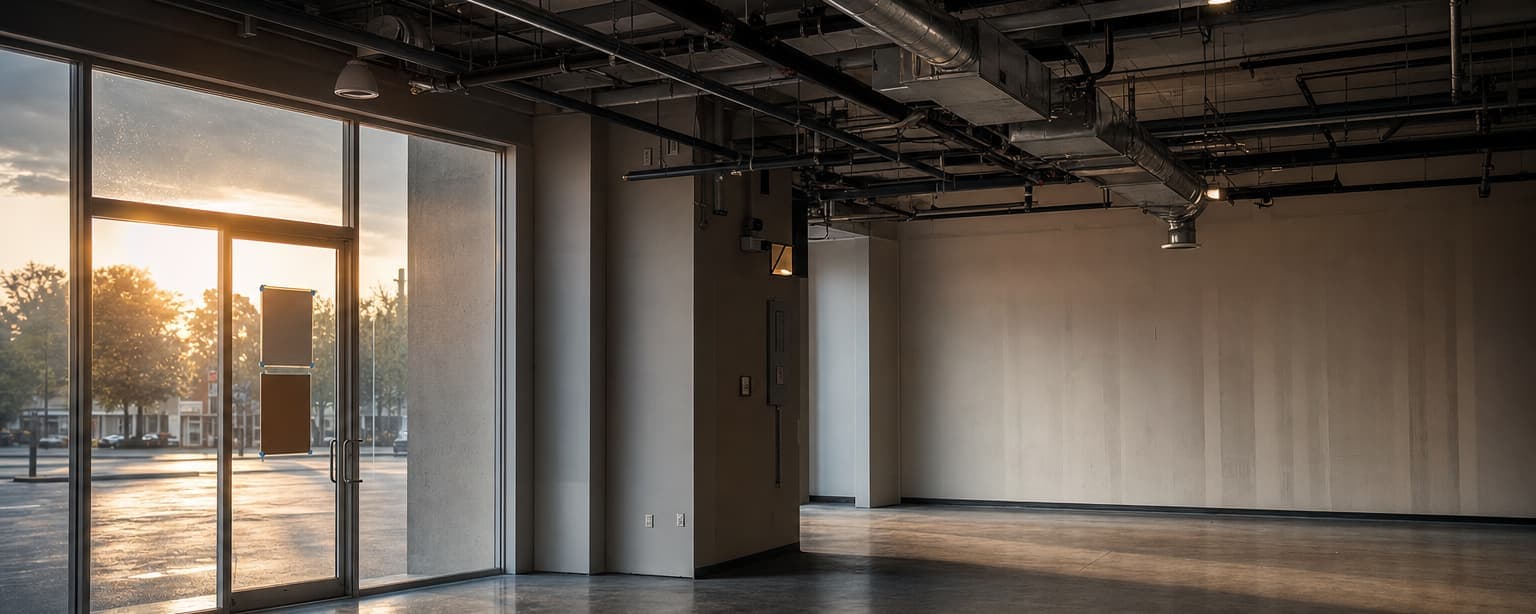
You do not occupy the building, so you are rated differently for it.
Lessor’s Risk Only is how a commercial landlord is classified: liability for a building you own and someone else operates from, where your exposure is the structure and the common parts rather than the business inside.
Tell us the situation.
One licensed human replies the same business day — not five agents, not an auto-responder. If the policy you have is already the right one, we will tell you.
We use this to quote and service your insurance, and we do not sell it or pass it to lead networks. Privacy policy.
Send us what you have. We’ll tell you if it’s right.
Your current policy paperwork, a renewal notice, or nothing at all. A licensed agent reads it and replies the same business day.
What lessor’s risk actually covers.
Premises liability
Injury on the parts of the property you control: lobbies, stairs, lots, roofs, structure.
Without it — The areas a landlord retains are where landlord claims happen.
The building
The structure itself, at a limit that reflects rebuilding it rather than its market value.
Without it — A property valued on what it sold for is underinsured on the day it burns.
Loss of rents
The rent that stops arriving while the building is untenantable.
Without it — The mortgage does not pause because the building did.
Tenant requirements
The certificates, additional insured status and waivers your leases oblige tenants to carry.
Without it — An uninsured tenant’s claim lands on the landlord’s policy by default.
Umbrella
Excess limits above the primary, which most institutional leases and lenders require.
Without it — A single serious injury exhausts a primary limit quickly.
Commercial earthquake
Shake damage to the structure, written separately with a deductible set as a percentage of the building value rather than a dollar figure.
Without it — Every commercial property form excludes earth movement, so a building without a quake limit is simply uninsured for it.
Commercial flood
Rising water and storm surge: the NFIP up to its commercial maximum, and private or excess flood above it.
Without it — Excluded by the property policy, and the NFIP building maximum stops well short of what most commercial buildings cost to rebuild.
Active shooter / deadly weapon
A standalone policy: liability, crisis response, victim counseling, PR and lost rents after an attack on the property.
Without it — Terrorism coverage only answers a certified act, general liability carries an assault and battery exclusion, and the negligent-security suit names the owner of the building.
Where lessor’s risk shows up.
- Commercial Landlords
You are named in a tenant’s accident whether or not it was your fault.
- Mixed-Use Property
Shared stairs and entrances belong to the landlord.
- Chubb
A building with tenants is a form question more than a price question, and this is a form that reads well.
What clients with lessor’s risk ask us.
What does “lessor’s risk only” actually mean?
It is a liability classification for a building you own and do not occupy. The tenant runs the business and you own the structure. The rating reflects that: you are priced on the building, the tenancy type and the square footage rather than on receipts or payroll. It matters because the exposure is genuinely narrower than an operating business, so being classified as an occupant when you are a lessor means paying for exposure you do not have.
Why does the tenant’s business type change my price?
Because what happens inside your building is what burns it down and who gets hurt in it. A landlord leasing to professional offices and one leasing to a restaurant or a machine shop are priced differently and correctly so: cooking, hot work, chemicals, alcohol and public foot traffic all drive both frequency and severity. It also means a tenant change mid-term is worth telling us about; a unit re-let from an accountant to a nail salon has changed the risk.
The tenant has their own insurance. Why do I need mine?
Because their policy covers their operations and their property, not your building, and because you get sued regardless of whose fault it turns out to be. Defense costs land on you from the first day. What their insurance does do is transfer risk back, which is why leases should require limits you have actually specified, additional insured status naming you, and a waiver of subrogation. Collect the certificate every year rather than at signing.
Isn’t an active shooter covered by the terrorism coverage?
Almost never, and this is the single most common misunderstanding about it. The federal terrorism program only responds to an act the Treasury Secretary has certified as an act of terrorism. Certification has a dollar threshold beneath which nothing qualifies, and a judgment about the nature of the act on top of that, and in practice no US mass shooting has ever been certified.
Would my general liability pick up the lawsuit?
Not reliably, because the suit is a negligent security claim and the form has an assault and battery exclusion in the way. The allegation against a landlord is not that you did it. It is that the lighting was poor, the door was propped, the camera was broken, the guard was cut, or a known problem went unaddressed.
Do I really need separate earthquake and flood?
If the building is exposed to either, yes, because the property policy excludes both and no amount of limit on the main policy changes that. Two things to understand before comparing prices. Earthquake deductibles are a percentage of the insured value rather than a fixed sum, so a 10% deductible on a $4M building is a $400,000 retention: the coverage is real, but it is for the loss that ends you rather than the one that annoys you.
How should I set the building limit?
On the cost to rebuild, not on what you paid or what it would sell for, since those include land and location, which do not burn. Under-insuring also triggers coinsurance: settle at less than the required percentage of value and the insurer pays a proportion of the loss even on a partial claim. That penalty catches owners on a small fire far more often than on a total loss.
What if I occupy the building myself?
Then this is not your classification. Lessor’s risk is for a building somebody else operates from; if you own the premises and work in them you carry a landlord’s exposures and a tenant’s at the same time — the structure and the lot, plus your own stock, equipment and business income — and you are rated differently for it.
Guides on lessor’s risk.
- What Moves an LRO PriceThe rating factors that are fixed, the four worth spending money on, and the panels and materials that close the market entirely.
- Requiring Tenant InsuranceThe lease clauses to insist on, why the requirement usually comes from your own carrier, and the enforcement failure that undoes all of it.
Commercial insurance is 96% of what we do — it is not a department here, it is the whole business. Not ready to talk? The guides answer the questions this page raises in more depth. Already insured with us and need a certificate or a policy change? Ask the service team rather than starting a quote — it is faster and it goes to the people whose job it is. We also write home and auto, which is usually cheaper alongside the business policy than apart from it.
Handed a lease, a vendor packet or a client contract with insurance requirements? Paste it into the COI Requirements Decoder to see what each one means for your business, or read what the requirements mean.