
A 15% deductible on a $4 million building is a $600,000 deductible.
Standard property policies exclude earthquake. We place it for commercial buildings, priced on construction and soil, and sold with percentage deductibles large enough to change the decision.
Tell us the situation.
One licensed human replies the same business day — not five agents, not an auto-responder. If the policy you have is already the right one, we will tell you.
We use this to quote and service your insurance, and we do not sell it or pass it to lead networks. Privacy policy.
Send us what you have. We’ll tell you if it’s right.
Your current policy paperwork, a renewal notice, or nothing at all. A licensed agent reads it and replies the same business day.
What commercial earthquake actually covers.
Building
Structural damage from shake, written as a separate policy or endorsement.
Without it — Excluded from every standard commercial property form.
Contents and equipment
Stock, plant and business personal property, often on a separate limit.
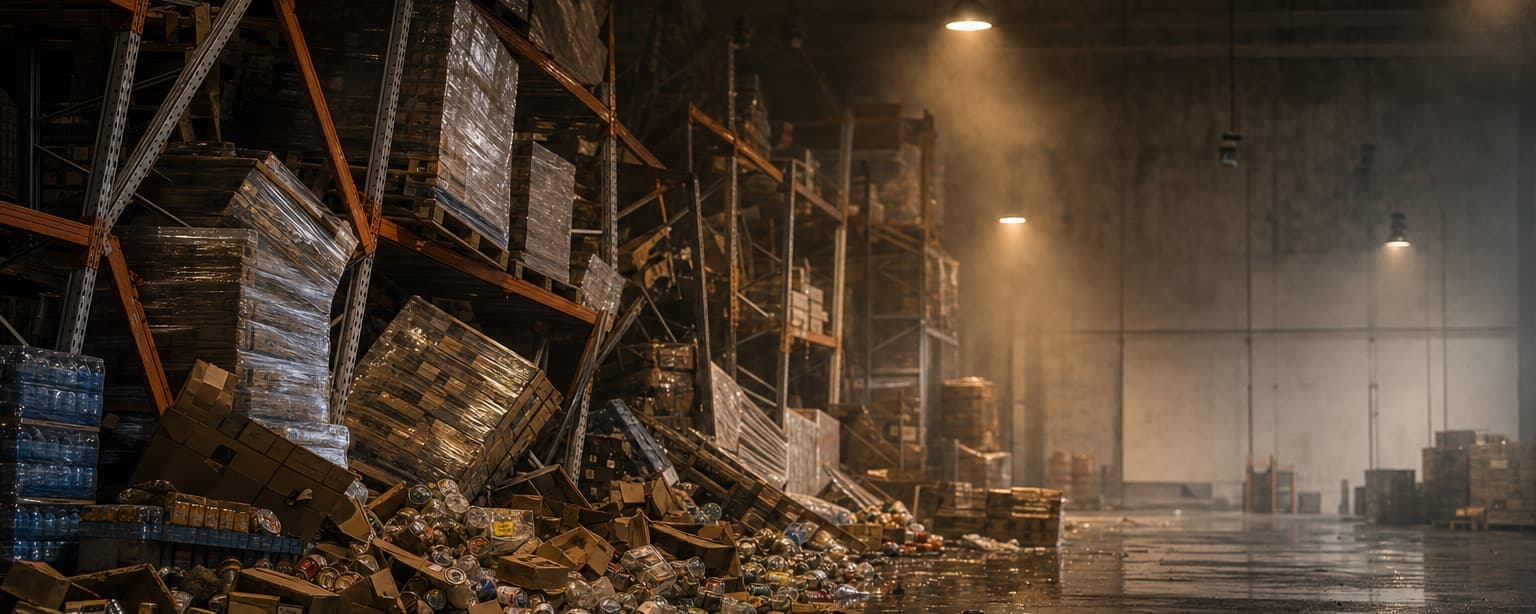
Without it — Unsecured racking and plant fail long before the structure does.
Business income
Income lost while the building is unusable, which can be many months.
Without it — Post-event contractor availability makes earthquake repairs slow.
Ordinance or law
The cost of rebuilding to current code, which a quake commonly triggers.
Without it — An older building damaged past a threshold must be brought up to code.
Where commercial earthquake shows up.
- Commercial Landlords
Every commercial property form excludes earth movement, so a building with no quake limit is simply uninsured for it.
- Vacation Rentals
Every property form excludes earth movement. On a coastal or mountain rental, the ones that let well, this is bought or it is uninsured.
What clients with commercial earthquake ask us.
Why is the deductible a percentage?
Because the peril is correlated — one event damages every insured building in a region at once — so insurers keep the frequent, smaller losses with the owner and cover the catastrophic tail. Deductibles commonly run from 5% to 15% or more of the insured value, and the number that matters is that percentage in dollars: 15% of a $4 million building is $600,000 before the policy pays anything. Work that out before deciding whether the coverage is worth buying, because for some owners it honestly is not.
What drives the price?
Construction, age and ground. Unreinforced masonry is the worst class and is close to uninsurable in some zones; soft-story buildings, parking or retail at ground level under residential, are the other well-known problem, and several California cities have mandated retrofits for exactly that reason. Then soil type and distance from known faults. A documented retrofit is one of the few things that meaningfully moves this pricing, and it needs paperwork.
Is ordinance or law the hidden cost?
Usually, and it is the reason earthquake claims run over. Once damage passes a percentage threshold set by the local jurisdiction, the whole building must be brought up to current code: seismic, accessibility, fire, energy — not just the damaged part. That upgrade is excluded from a standard property policy and needs ordinance or law coverage, in all three of its parts: the undamaged portion, demolition, and the increased cost of construction.
Can it be bought as a DIC instead?
Frequently, and in California that is the usual route. A difference in conditions policy written to add quake sits alongside the standard property policy rather than replacing it, which keeps the base coverage in the standard market and buys the catastrophe peril separately. It is worth quoting both ways: the DIC route is often cheaper and it also solves the FAIR Plan problem if the base policy has been pushed there.
Commercial insurance is 96% of what we do — it is not a department here, it is the whole business. Not ready to talk? The guides answer the questions this page raises in more depth. Already insured with us and need a certificate or a policy change? Ask the service team rather than starting a quote — it is faster and it goes to the people whose job it is. We also write home and auto, which is usually cheaper alongside the business policy than apart from it.
Handed a lease, a vendor packet or a client contract with insurance requirements? Paste it into the COI Requirements Decoder to see what each one means for your business, or read what the requirements mean.