
You own the building and you work in it, so you are the landlord and the tenant at once.
Building insurance for a company that owns its own premises: the structure, the rebuild cost that is not the purchase price, and the income that stops when the building does.
Tell us the situation.
One licensed human replies the same business day — not five agents, not an auto-responder. If the policy you have is already the right one, we will tell you.
We use this to quote and service your insurance, and we do not sell it or pass it to lead networks. Privacy policy.
Send us what you have. We’ll tell you if it’s right.
Your current policy paperwork, a renewal notice, or nothing at all. A licensed agent reads it and replies the same business day.
What building insurance actually covers.
The structure
The building itself, its roof, and everything permanently installed in it.
Without it — A fire becomes a rebuild funded out of your own money, on a building you still owe a mortgage on.
Ordinance or law
The cost of rebuilding to today’s code rather than to the standard the building was originally built to.
Without it — An older building is rebuilt to modern code by law and reimbursed to the old standard, and you fund the difference.
Business personal property
Your stock, equipment, furniture and tools: the tenant half of your own exposure.
Without it — The structure gets rebuilt and everything that made it usable is replaced at today’s prices, by you.
Business income
The business income that stops while the building is unusable, and the rent you are not collecting on any part of it you let.
Without it — An owner-occupier loses the premises and the revenue in the same fire, and the mortgage pauses for neither.
Equipment breakdown
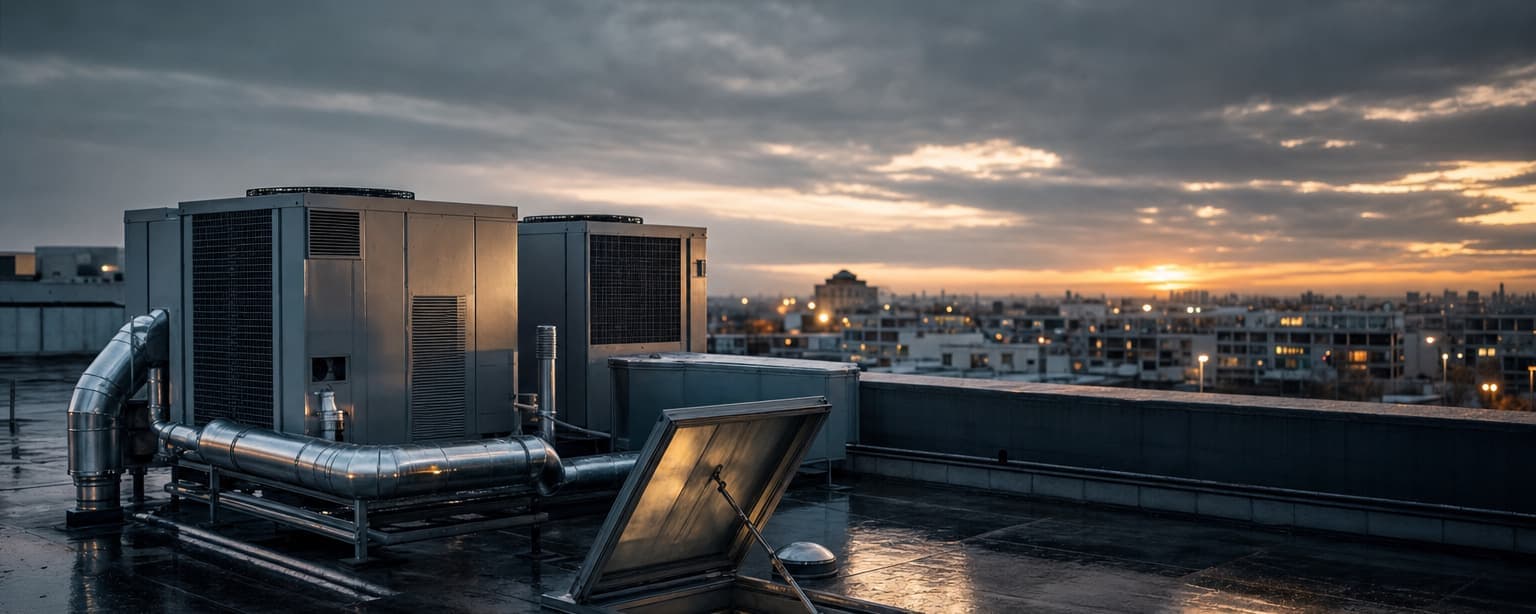
Boilers, HVAC, elevators and electrical plant, all yours to fix because there is no landlord to call.
Without it — A chiller failure in August is an emergency replacement at your cost and a closed business while it is fitted.
Premises liability
Injury on the parts of the property you control: the lot, the walkways, the stairs.
Without it — Owning the ground means the slip in the parking lot is yours whether or not your business caused it.
What clients with building insurance ask us.
What is building insurance?
We cover the structure you own, from walls and roof to floors and permanently installed fixtures, against fire, storm, water damage, theft and the other perils named on the form. It is one part of a commercial property policy rather than a separate product, and it is the part most often insured for the wrong number.
How much should I insure the building for?
What it costs to rebuild it, which is neither what you paid nor what it would sell for. Land does not burn and cannot be rebuilt, so a market value includes something the policy will never pay for, and in most of California the land is the larger half. Insure the cost of clearing the site and building it again at today’s labor and materials.
I own the building my business operates from. Is that different?
Yes, and it is the reason this page exists. You hold a landlord’s exposures and a tenant’s at the same time: the structure, the roof and the parking lot on one side, the stock, the equipment and the business income on the other. Policies get sold as one or the other, and the missing half is discovered at the claim.
What is coinsurance and why does it matter here?
A clause that penalizes you for insuring the building below a stated share of its value, usually 80% or 90%. It bites hardest on a partial loss: insure a $1M building for $600,000 against an 80% requirement and a $200,000 fire settles at around three quarters of it. It is tested at the date of loss rather than the date you bought, so construction inflation can put you in breach while you do nothing.
Does my mortgage lender require it?
Almost always, and they will want to be named as mortgagee so they are told before the policy can be cancelled. Their requirement is a floor rather than the right answer: a lender is protecting the loan balance, which is usually less than the cost of rebuilding, so a limit that satisfies the bank can still leave you well short.
What if I move out and lease the building to somebody else?
Tell us before you do, because the classification changes. A building you occupy and a building you let are rated differently and often sit with different carriers: you become a lessor’s risk, your tenants’ trades start deciding which insurers will look at you, and any gap between tenants raises a vacancy question that most policies answer badly.
Why is my wind or hail deductible a percentage?
Because in exposed territory insurers stopped selling a flat one for that peril. It is calculated on the insured value of the building rather than on the size of the claim, so multiply the percentage by the building limit before you buy and you will know the real figure: on a $2M building a 2% wind deductible is $40,000, which is not a number anybody wants to meet for the first time after a storm.
Commercial insurance is 96% of what we do — it is not a department here, it is the whole business. Not ready to talk? The guides answer the questions this page raises in more depth. Already insured with us and need a certificate or a policy change? Ask the service team rather than starting a quote — it is faster and it goes to the people whose job it is. We also write home and auto, which is usually cheaper alongside the business policy than apart from it.
Handed a lease, a vendor packet or a client contract with insurance requirements? Paste it into the COI Requirements Decoder to see what each one means for your business, or read what the requirements mean.