
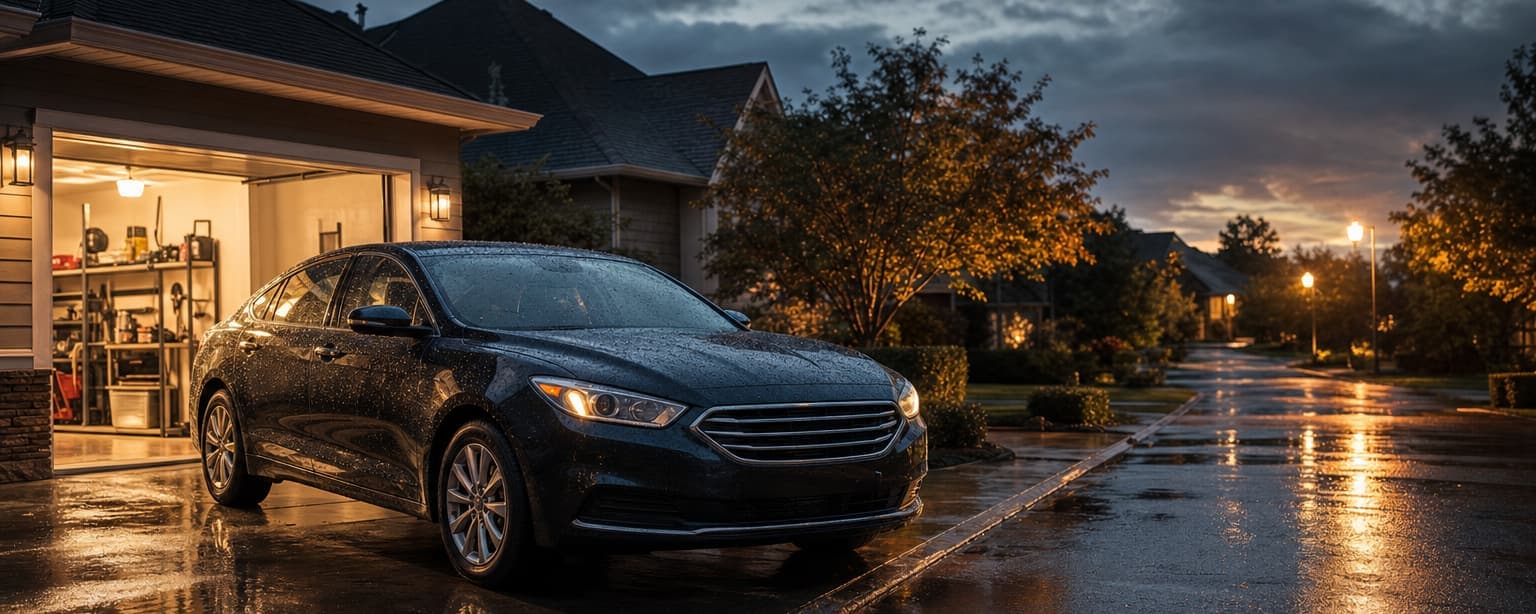
If your record is clean, the direct writers are hard to beat. If it is not, they are the problem.
We place personal auto across multiple carriers, which matters most where a direct writer has surcharged or declined you: a lapse in coverage, an at-fault claim, a DUI, an SR-22 filing, or a young driver.
Tell us the situation.
One licensed human replies the same business day — not five agents, not an auto-responder. If the policy you have is already the right one, we will tell you.
We use this to quote and service your insurance, and we do not sell it or pass it to lead networks. Privacy policy.
Send us what you have. We’ll tell you if it’s right.
Your current policy paperwork, a renewal notice, or nothing at all. A licensed agent reads it and replies the same business day.
What auto insurance actually covers.
Liability
Injury and damage you cause to other people, at the limits your assets need.
Without it — State minimum limits are exhausted by a single hospital stay, and the balance is yours.
Collision and comprehensive
Your own vehicle, in a crash and everything else.
Without it — A financed car without both leaves you paying a loan on a car you no longer have.
Uninsured and underinsured motorist
The other driver’s injury liability, when they have none or not enough.
Without it — Roughly one driver in eight is uninsured nationally, and their share of the bill becomes yours.
Where auto insurance shows up.
- GEICO Commercial
Keeping both with one carrier is usually cheaper than splitting them and is simpler at claim time.
What clients with auto insurance ask us.
I had a lapse in coverage. How bad is that?
Worse than most people expect, and it is the reason we see a lot of these. A gap of even a day moves you out of the preferred tier at most carriers, and several will not quote at all without continuous prior coverage, so a single missed payment can raise the price across the whole direct market simultaneously, which reads like a conspiracy and is just the same underwriting rule. It is also temporary: most carriers stop asking after six or twelve months of continuous coverage, so the priority is getting insured now rather than shopping for perfection.
Can you file an SR-22?
Yes. An SR-22 is not insurance, it is a certificate your insurer files with the state confirming you carry at least the minimum liability, usually after a DUI, a serious violation or driving uninsured. Not every carrier will file one, which is what makes it hard to buy directly. The filing typically has to stay in place for three years, and the thing to avoid is letting the policy lapse during it: the insurer notifies the state, and the suspension restarts.
Do I need higher limits or an umbrella with a teen driver?
Usually it is the moment to look. A teen driver has to be listed on the policy once licensed, and the Centers for Disease Control and Prevention reports that drivers 16 to 19 have a fatal crash rate per mile almost three times that of drivers 20 and older. The Family Plan Check says whether an umbrella fits your household and at what limit.
Also in this family
Commercial insurance is 96% of what we do — it is not a department here, it is the whole business. Not ready to talk? The guides answer the questions this page raises in more depth. Already insured with us and need a certificate or a policy change? Ask the service team rather than starting a quote — it is faster and it goes to the people whose job it is. We also write home and auto, which is usually cheaper alongside the business policy than apart from it.