
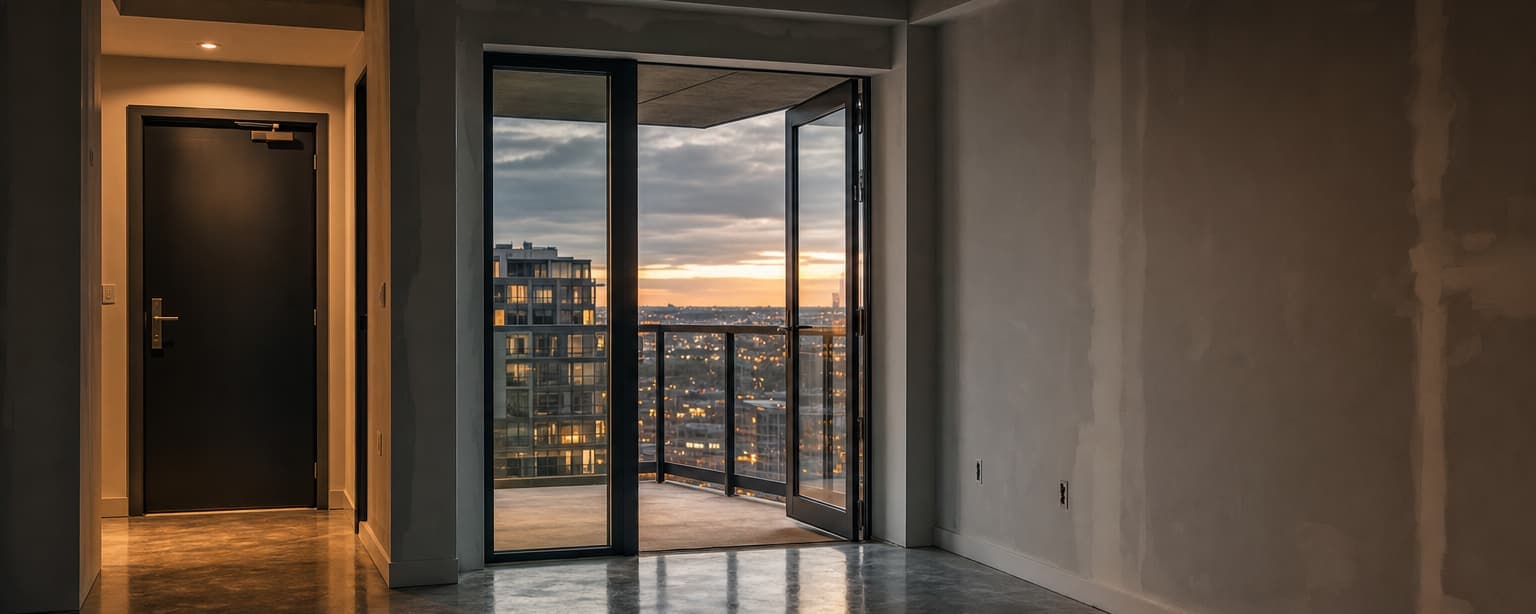
The association’s master policy usually stops at the drywall.
Condo owners coverage, written to fill the exact gap the association’s master policy leaves, which depends on whether that policy is bare walls, single entity or all-in, and most owners have never been told which.
Tell us the situation.
One licensed human replies the same business day — not five agents, not an auto-responder. If the policy you have is already the right one, we will tell you.
We use this to quote and service your insurance, and we do not sell it or pass it to lead networks. Privacy policy.
Send us what you have. We’ll tell you if it’s right.
Your current policy paperwork, a renewal notice, or nothing at all. A licensed agent reads it and replies the same business day.
What condo insurance actually covers.
Building property (walls-in)
Floors, cabinets, fixtures and improvements the master policy excludes.
Without it — A bare-walls master policy leaves everything inside the unit to the owner.
Loss assessment
Your share of a loss the association bills to all owners.
Without it — A large common-area claim is assessed per unit and is payable regardless.
Personal property and liability
Contents, and claims by people injured inside the unit.
Without it — The master policy covers the association’s liability, not yours.
What clients with condo insurance ask us.
How do I find out what the master policy covers?
Ask the association for the master policy declarations page and the by-laws, and read them together: the declarations say what is insured and the by-laws say who is responsible for it. The three common forms are bare walls (you own everything inward from the unfinished walls), single entity (original fixtures covered, your upgrades are not) and all-in (most fixtures covered). It changes what you need to buy by tens of thousands of dollars, and it can change at renewal without owners being told.
What is loss assessment and how much should I carry?
When a loss to the common areas exceeds the master policy — or falls inside its deductible, which for wind and water is now often a percentage running to six figures — the association divides the shortfall among the owners and bills it. That is a loss assessment, and it is payable whether or not you agree with it. Policies often include $1,000 as standard, which is close to meaningless; raising it to $25,000 or $50,000 usually costs very little and is the cheapest useful thing on a condo policy.
Commercial insurance is 96% of what we do — it is not a department here, it is the whole business. Not ready to talk? The guides answer the questions this page raises in more depth. Already insured with us and need a certificate or a policy change? Ask the service team rather than starting a quote — it is faster and it goes to the people whose job it is. We also write home and auto, which is usually cheaper alongside the business policy than apart from it.