
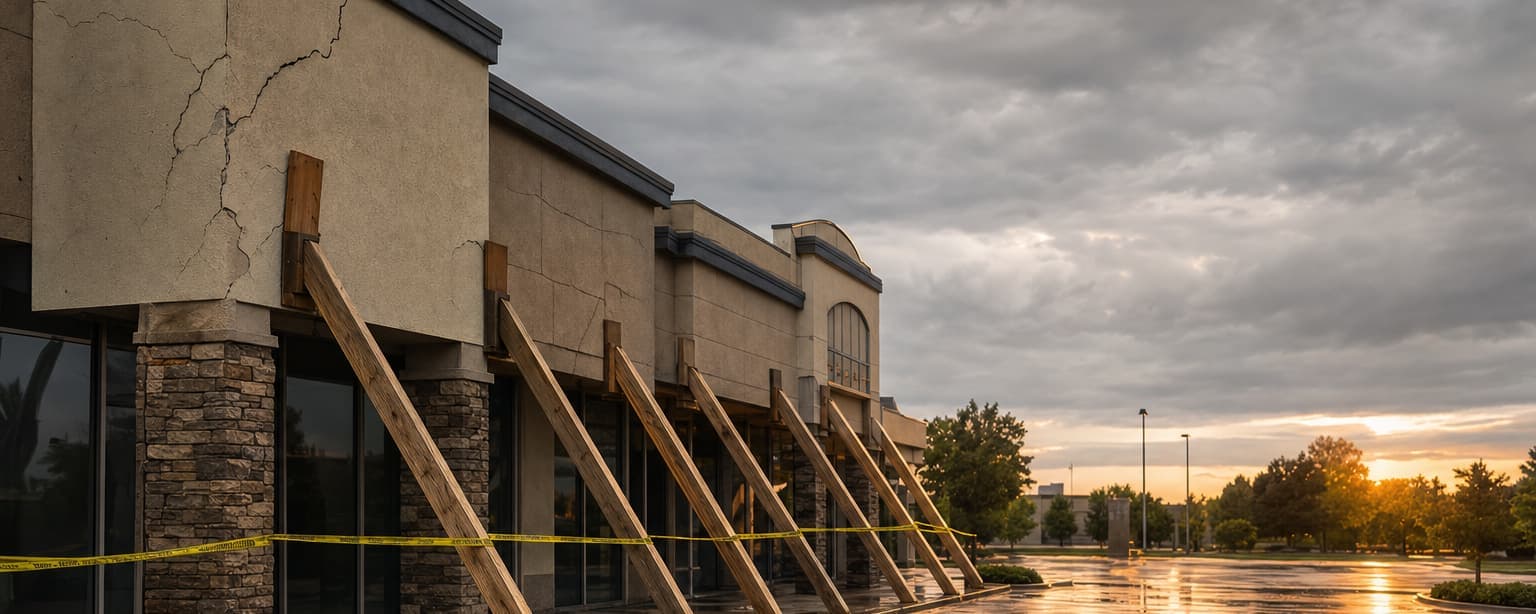
The policy that makes a FAIR Plan policy into an actual program.
A standalone form that fills what a restricted property policy leaves out — theft, water damage, liability and the broader perils — most often wrapped around a FAIR Plan or other last-resort placement.
Tell us the situation.
One licensed human replies the same business day — not five agents, not an auto-responder. If the policy you have is already the right one, we will tell you.
We use this to quote and service your insurance, and we do not sell it or pass it to lead networks. Privacy policy.
Send us what you have. We’ll tell you if it’s right.
Your current policy paperwork, a renewal notice, or nothing at all. A licensed agent reads it and replies the same business day.
What difference in conditions actually covers.
The perils the base policy omits
Everything outside the named perils on a restricted form, typically all risk of direct physical loss except what is excluded.
Without it — A FAIR Plan policy covers fire, lightning and internal explosion and stops.
Theft and vandalism
Burglary, theft and malicious damage, which last-resort policies exclude or charge extra for.
Without it — An empty or half-let building loses the peril it is most likely to suffer.
Water damage
Escape of water, plumbing failure and the resulting damage.
Without it — The most frequent property loss there is, and absent from a fire-only form.
Liability
Premises liability, which a FAIR Plan policy does not carry at all.
Without it — A property owner with no liability coverage is exposed on every injury claim.
Earthquake and flood, optionally
Some DIC forms are written specifically to add quake or flood rather than to wrap a FAIR Plan.
Without it — Both are excluded from essentially every standard property policy.
What clients with difference in conditions ask us.
Do I need a DIC if I am on the FAIR Plan?
Almost certainly, and buying only the FAIR Plan is the most common mistake in that market. The FAIR Plan is a named-peril fire policy: fire, lightning and internal explosion, with vandalism as a paid extra. It carries no liability and no theft or water damage. An owner who replaces a full commercial policy with a FAIR Plan policy alone has swapped broad coverage for a narrow one and usually does not realize it until a burst pipe or a slip-and-fall.
Is DIC the same thing as excess insurance?
No, and the distinction is worth holding. Excess sits above a policy and pays after its limit is exhausted. DIC sits beside a policy and pays for things it never covered at all. They solve different problems: excess answers "the limit was too small", DIC answers "the peril was not on the form". A property owner in a restricted market usually needs the second and often thinks they are buying the first.
Is it only a California thing?
No, though California is where most people meet it because of the FAIR Plan. DIC is used anywhere a base property policy has been stripped back: wind-excluded coastal placements, quake-exposed buildings, and residual market pools in other states all get wrapped the same way. The form is a gap-filler by design, so what it contains depends entirely on what the policy underneath it left out. Read the two together or not at all.
How do I know the two policies actually line up?
By having one person read both, which is the practical argument for placing them together. The failure mode is a seam: a peril each policy assumes the other covers, or two different valuation bases, or deductibles that interact badly so a loss falls between them. Buying the FAIR Plan through one channel and the DIC through another is how seams appear, and a claim is a bad time to discover one.
Does the liability in a DIC make it a general liability policy?
No. The liability a DIC adds is premises liability, which fills the hole a FAIR Plan leaves and answers for bodily injury or property damage caused by an accident at the building. A claim about what you said or published is outside it. Our founder found that out in 2018 with a rental insured on a DP-3 with premises liability, when a guest sued him in small claims over a review he wrote on Airbnb and the carrier had nothing to respond with. An owner who rents to the public wants a commercial general liability policy beside the DIC, because that form carries personal and advertising injury and the wrap does not.
Commercial insurance is 96% of what we do — it is not a department here, it is the whole business. Not ready to talk? The guides answer the questions this page raises in more depth. Already insured with us and need a certificate or a policy change? Ask the service team rather than starting a quote — it is faster and it goes to the people whose job it is. We also write home and auto, which is usually cheaper alongside the business policy than apart from it.
Handed a lease, a vendor packet or a client contract with insurance requirements? Paste it into the COI Requirements Decoder to see what each one means for your business, or read what the requirements mean.