
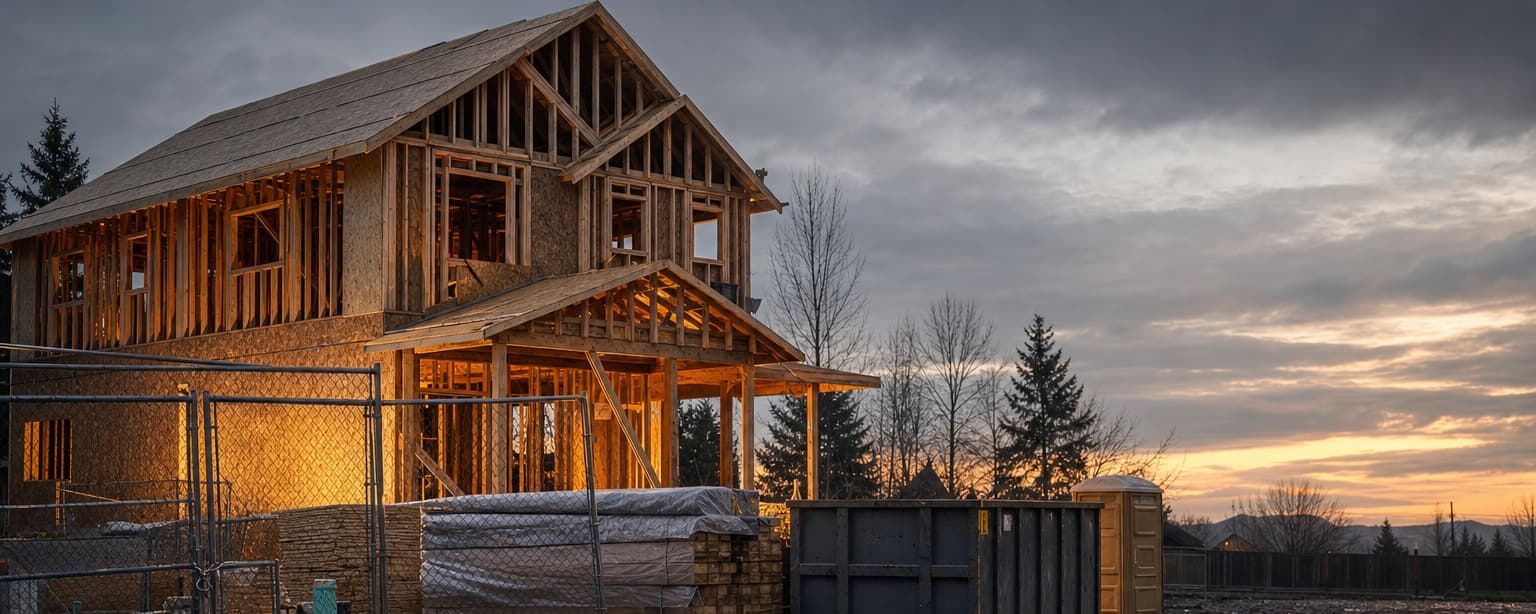
Covers the structure while it is going up, and stops at completion.
Builders risk insures a building under construction — the structure, the materials on site and often those in transit — for the length of the project rather than the year.
Tell us the situation.
One licensed human replies the same business day — not five agents, not an auto-responder. If the policy you have is already the right one, we will tell you.
We use this to quote and service your insurance, and we do not sell it or pass it to lead networks. Privacy policy.
Send us what you have. We’ll tell you if it’s right.
Your current policy paperwork, a renewal notice, or nothing at all. A licensed agent reads it and replies the same business day.
What builders risk actually covers.
The structure under construction
Fire, wind, theft and vandalism damage to the work in progress.
Without it — A fire two weeks before handover destroys work nobody’s property policy covers, not yours, not the owner’s.
Materials on site and in transit
Materials delivered and waiting to be installed, and often those on the way.
Without it — Stolen materials are replaced and the schedule slips with them.
Soft costs
Extra interest, fees and lost rent caused by a covered delay, where scheduled.
Without it — The financing keeps running through a delay it did not cause.
Where builders risk shows up.
- Contractor
A fire or storm mid-build destroys work you have already paid for and cannot invoice.
- Carpentry & Framing Contractors
A frame standing open is exposed to wind and fire before it is ever dried in.
- Roofing Contractors
An open roof overnight is exposed to exactly the weather it exists to keep out.
- Concrete Contractors
Weather or vandalism destroys a pour mid-cure that has been paid for and cannot be invoiced.
- Excavation & Grading Contractors
Storm water undoes completed earthwork that has been paid for and not yet invoiced.
- Drywall & Interior Finish Contractors
Board and finished walls destroyed by weather or a burst line mid-project are work already paid for.
- Masonry Contractors
Weather takes down uncured work that has been paid for and not yet invoiced.
- Vacant Property
Structural work usually needs builders risk rather than a vacant form.
- Real Estate Investors
A vacant or landlord form generally excludes the construction work.
- General Contractors
Nothing insures a half-built building except this.
What clients with builders risk ask us.
Who buys it, the owner or the contractor?
Either, and the contract says which. What matters more is that it is bought once and names everyone with an interest — owner, general contractor and subcontractors — because two overlapping policies argue at claim time and none at all is the more common outcome. Read the contract before assuming the other party has it.
What happens when the job finishes?
Coverage ends, and that is the point people miss. Builders risk terminates at completion or occupancy, whichever the form says first, and the finished building needs a permanent property policy from that moment. The gap between the two is a real and common exposure.
Do directional boring and underground utility contractors need builders risk?
Usually not for your own work. Builders risk insures a structure while it is built, bought once by the owner or general contractor. Your exposures sit elsewhere. The rig, locator, mud system and trailers go on a contractors equipment policy, an inland marine form. Pipe and conduit in your care before installation go on an installation floater. A strike on a gas line or fiber is general liability, and read that form, because some carriers exclude damage to underground property and that has to come off first.
Commercial insurance is 96% of what we do — it is not a department here, it is the whole business. Not ready to talk? The guides answer the questions this page raises in more depth. Already insured with us and need a certificate or a policy change? Ask the service team rather than starting a quote — it is faster and it goes to the people whose job it is. We also write home and auto, which is usually cheaper alongside the business policy than apart from it.
Handed a lease, a vendor packet or a client contract with insurance requirements? Paste it into the COI Requirements Decoder to see what each one means for your business, or read what the requirements mean.