
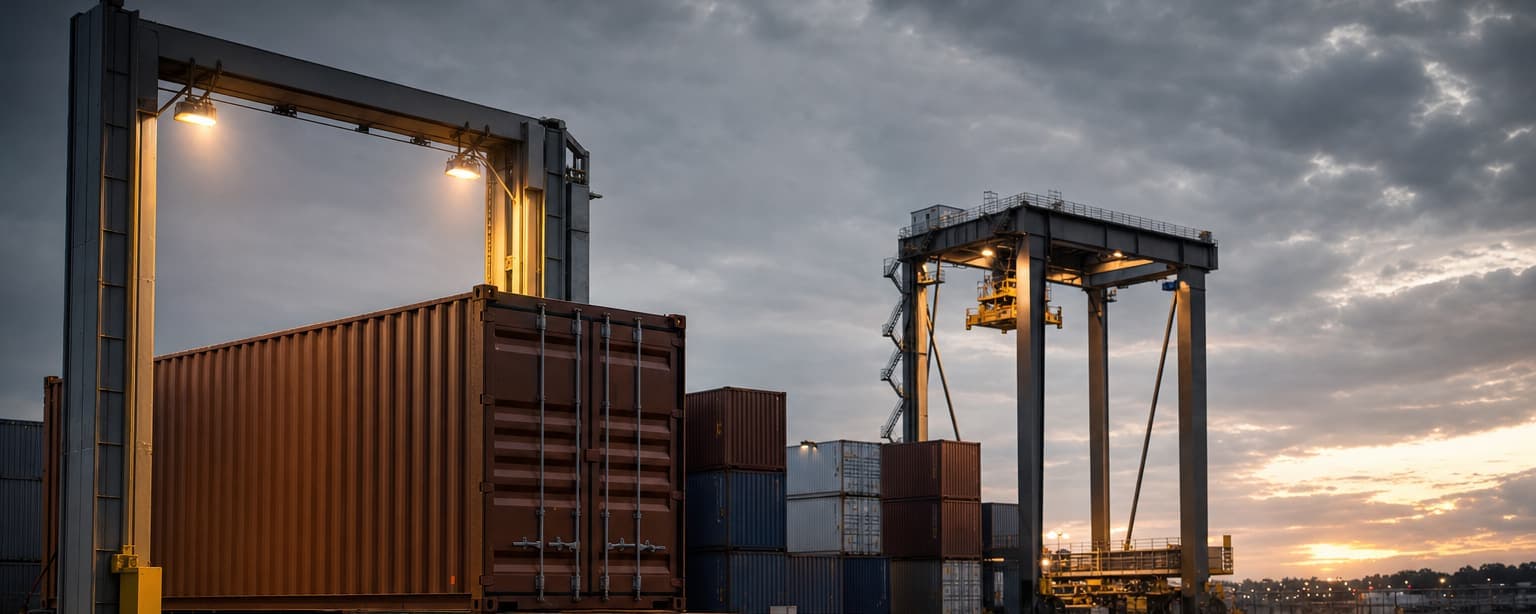
The chassis is not yours, and that is the whole insurance problem.
Intermodal narrows the market before anything else about you is read. We place motor carriers pulling containers under the UIIA, at the coverages the interchange agreement actually asks for.
Tell us the situation.
One licensed human replies the same business day — not five agents, not an auto-responder. If the policy you have is already the right one, we will tell you.
We use this to quote and service your insurance, and we do not sell it or pass it to lead networks. Privacy policy.
Send us what you have. We’ll tell you if it’s right.
Your current policy paperwork, a renewal notice, or nothing at all. A licensed agent reads it and replies the same business day.
What UIIA and intermodal coverage businesses actually need.
Trailer interchange
Damage to a trailer you are pulling but do not own, while it is in your possession under a written interchange agreement. Your own physical damage coverage follows equipment you own, so an interchanged trailer is unprotected without it.
Without it — The chassis belongs to the equipment provider, and damage to it is what the interchange agreement exists around.
Commercial auto
Vehicles the business owns and the people who drive them for work.
Without it — Auto liability at the limit the agreement specifies, with the filing that keeps your authority live.
Motor truck cargo
The freight itself while you are hauling it. Separate from the liability on the truck.
Without it — A sealed container you never loaded is still your cargo exposure while it is on your chassis.
Truckers general liability
General liability written for a motor carrier: the yard, the dock, loading and customer premises. The auto policy answers for the vehicle; this answers for everything else.
Without it — Terminals, ramps and yards are premises exposures the auto policy does not reach.
Auto physical damage
Damage to your own tractor and trailer. Primary liability pays for what you do to everyone else and nothing for your equipment, so without this a rollover you caused leaves you paying off a truck you can no longer run.
Without it — Your own tractor, which nothing in the interchange agreement covers.

Lori Adams, TRS
Commercial Trucking Insurance Advisor
Twenty-five years in trucking insurance. Knows the filings, the radius rules and the carriers that will actually take the risk.
Transportation Risk Specialist (TRS)
What the insurance company will ask about your UIIA and intermodal coverage business
We read 2 applications the markets use for this kind of business and pulled out what they actually ask. Have these answers ready and a quote takes a day instead of a week, because nobody has to come back to you for the missing piece.
About the business
- What type of business structure do you have (individual, corporation, partnership, or other)?
- How long have you owned this business?
- What is your annual revenue?
- What is your total annual payroll?
- Do you own any other businesses involved in trucking or commercial operations?
How you operate
- What commodities do you haul?
- Are your loads truckload size or less than truckload?
- What percentage of your loads come through freight brokers versus direct contracts?
- What percentage of your loads go to regular or fixed destinations?
- What states and major cities do you travel into or through?
Safety and controls
- Do your vehicles have GPS, cameras, or other tracking systems installed?
- Do you have Electronic Log Book systems in your trucks?
- Do you have someone or a system that tracks when drivers need their medical certificate renewals?
- Are drivers required to complete inspection reports on vehicle condition at the end of each shift?
- What are your hiring standards for drivers, and do you check references on driver applications?
Your history
- What claims or losses have you had in the last three years?
- Who was your previous insurance company for the last three years?
- If you did not have prior insurance, what business experience do you have?
Money and people
- What is the maximum cargo value per load you typically haul, and what is your average cargo value?
- What deductibles are you looking for?
- What cargo deductible amount do you prefer?
- What excess liability limits do you need?
- Do any of your customers require you to add them as additional insureds, waive subrogation, or agree to primary coverage?
Have these ready
- Your loss runs from your current insurance company for the last three years (showing any claims)
- Your driver list with each driver's name, date of birth, driver's license number, CDL expiration date, years holding a CDL, and any accidents or violations from the last three years
- A list of all your trucks with the year, current or projected value, and your preferred deductible for each
- A copy of any customer contracts that have insurance requirements or certificate of insurance requests
- A sample of your driver inspection report form if you use one
You answer what you can; a licensed agent fills the rest with you.
What our UIIA and intermodal coverage clients ask us.
Which markets are comfortable with intermodal at all?
It divides them sharply, which is why the question is worth asking before you submit rather than after. Nirvana permits intermodal and UIIA work as ordinary business, which is unusual for a program built on telematics. Berkshire Hathaway Homestate names intermodal container hauling in its appetite. Canal writes it, including for new ventures in a specific handful of states with conditions on equipment age and radius. Progressive excludes intermodal and UIIA outright. Others simply do not say, which in practice means asking. The split is not about your record. It is about pulling equipment you did not maintain, loaded by somebody else, at a weight you are taking on trust.
What is UIIA in trucking?
The Uniform Intermodal Interchange and Facilities Access Agreement, the standard contract between motor carriers and the ocean carriers, railroads and leasing companies that own containers and chassis. Signing it is what lets you pull their equipment, and it carries insurance requirements the equipment providers enforce before you can interchange. It is a contract requirement rather than a regulation, which is why it can ask for more than the federal filing does.
What limits does it require?
The agreement sets them, and it revises them, so the only safe answer is the current schedule rather than a number on a broker’s website, which is why there is not one on this page. Send us the requirement you have been given and your current declarations page and we will tell you plainly whether what you hold satisfies it. The coverage that most often falls short is trailer interchange, because it is the one an ordinary trucking policy is least likely to carry at the limit an equipment provider wants.
Why do carriers get funny about intermodal?
Because it changes the risk in ways that are invisible on an application. You are pulling equipment you did not maintain, loaded by somebody else, sealed, at a weight you are taking on trust, and ports and ramps concentrate a lot of low-speed damage. So intermodal narrows the market before anything about your driving record is read. Some carriers exclude it outright, Progressive among them. Others permit it as ordinary business, which Nirvana does. And Canal will write it for a new venture in a specific handful of states, with conditions on equipment age and radius.
Can I get UIIA coverage as a new authority?
It is one of the harder combinations, and there is a real door. Canal writes new-venture intermodal in Alabama, Georgia, North Carolina, South Carolina, Texas, Virginia and Washington, on units from model year 1997 onward, inside a three-hundred-mile radius, with the owner driving while the authority is under two years old. Outside that list a first-year intermodal operator is a genuinely difficult placement, and worth starting early rather than in the week the interchange is due.
What is a UIIA endorsement?
The UIIA does not require one named endorsement. It requires your auto liability policy to name the equipment providers you interchange with as additional insureds, which can be done with a blanket endorsement or a scheduled one, and it requires trailer interchange coverage for their chassis and containers and cargo coverage where the provider asks for it. The proof goes to IANA on an ACORD 22 certificate that your agent files. The current coverage schedule is published on intermodal.org and it changes.
How much does UIIA insurance cost?
There is no separate UIIA policy, so there is no separate UIIA price. The cost is the difference between the trucking policy you would buy anyway and one written to the UIIA schedule, meaning auto liability at the required limit with the equipment providers added, plus trailer interchange at the limit your providers require and cargo where they ask for it. Trailer interchange is the line that moves the number most, and the equipment provider sets that limit rather than you. The other driver is which markets will write intermodal at all.
Does Progressive offer a UIIA endorsement?
IANA’s own insurance requirements page lists Progressive among the insurers it accepts UIIA certificates from, with a note effective January 2026 that a Progressive policy needs the UIIE-1 or CA 23 17 endorsement and hired autos coverage on it. Whether Progressive will write your operation is a separate question, and the appetite guidance we have seen from them excludes intermodal, which is why we place UIIA-compliant policies with the markets above rather than there.
What does a UIIA and intermodal coverage insurance application ask for?
The applications for UIIA and intermodal coverage businesses ask about 4 things above all: what type of business structure do you have (individual, corporation, partnership, or other); what commodities do you haul; do your vehicles have gps, cameras, or other tracking systems installed; what claims or losses have you had in the last three years. Have your loss runs from your current insurance company for the last three years (showing any claims) and your driver list with each driver's name, date of birth, driver's license number, cdl expiration date, years holding a cdl, and any accidents or violations from the last three years ready and a quote takes a day instead of a week.
Commercial insurance is 96% of what we do — it is not a department here, it is the whole business. Not ready to talk? The guides answer the questions this page raises in more depth. Already insured with us and need a certificate or a policy change? Ask the service team rather than starting a quote — it is faster and it goes to the people whose job it is. We also write home and auto, which is usually cheaper alongside the business policy than apart from it.
Handed a lease, a vendor packet or a client contract with insurance requirements? Paste it into the COI Requirements Decoder to see what each one means for your business, or read what the requirements mean.