
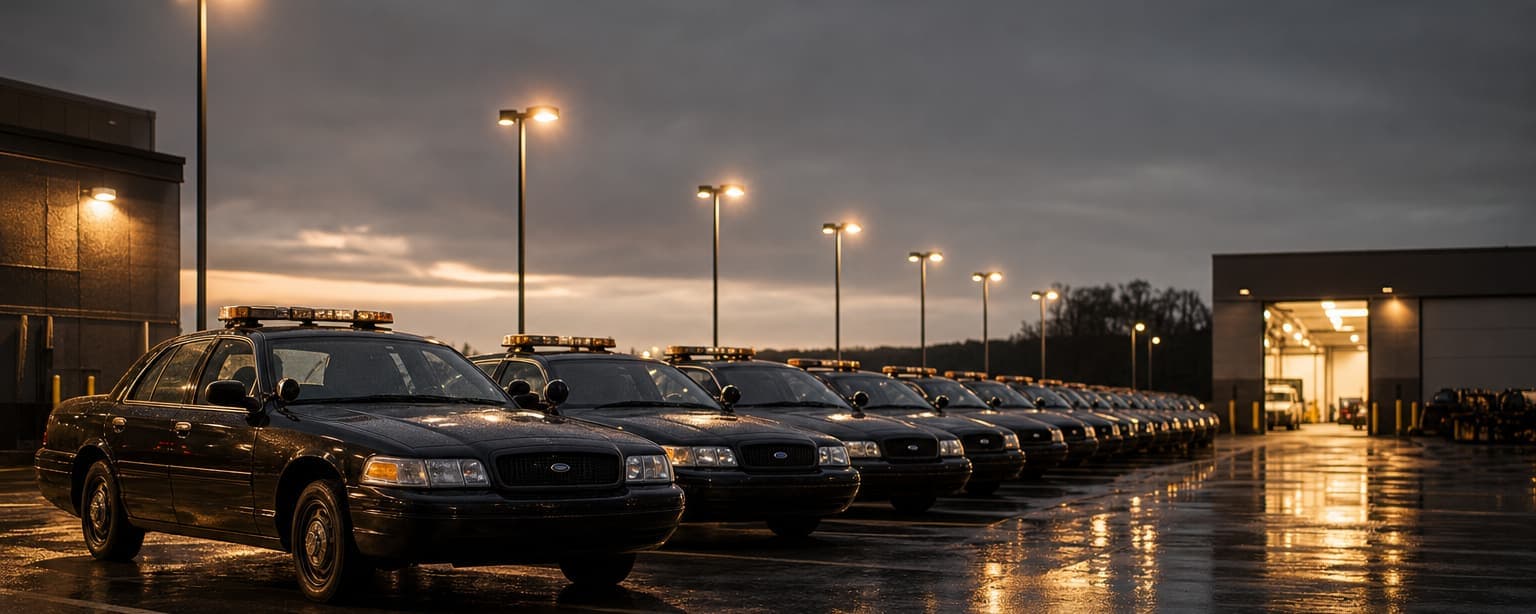
Stop-start urban miles, driven by people who change every month.
Commercial insurance for taxi, livery and rideshare fleet operators, including vehicles leased to drivers and the exposure that creates.
Tell us the situation.
One licensed human replies the same business day — not five agents, not an auto-responder. If the policy you have is already the right one, we will tell you.
We use this to quote and service your insurance, and we do not sell it or pass it to lead networks. Privacy policy.
Send us what you have. We’ll tell you if it’s right.
Your current policy paperwork, a renewal notice, or nothing at all. A licensed agent reads it and replies the same business day.
What taxi and rideshare fleet operations businesses actually need.
Commercial auto
Vehicles the business owns and the people who drive them for work.
Without it — High-mileage urban driving with continuous passenger pick-up is the highest-frequency exposure in public auto.
General liability
Third-party bodily injury and property damage. It is the line nearly every contract names by default.
Without it — Passenger boarding, the dispatch office and the lot are outside the auto policy.
Umbrella & excess liability
Extra limit stacked above general liability, auto and employers liability. Usually the cheapest million dollars on the policy.
Without it — City authority requirements and a serious passenger injury both push past primary limits.
Hired & non-owned auto
Covers vehicles the business does not own but its people drive on the job: rentals, and employees running errands in their own cars. Their personal auto policy will not cover a business trip, and the claim lands on the business. Pricing depends entirely on HOW it is bought: as an endorsement on a general liability policy we write, HNOA often costs a few hundred dollars; as a stand-alone (monoline) policy it runs $2,500 to $5,000, and association practitioner programs (CPH, CM&F and similar) generally cannot take the endorsement, so "add HNOA to my existing policy for $300-$800" is usually not a real option. A package carrying GL, professional liability and HNOA together is typically cheaper than the monoline.
Without it — Vehicles brought in by drivers, or leased out to them, sit outside the owned schedule without it.
Workers compensation
Required in almost every state the moment you have employees. Priced on payroll and class code, which is why the class code is worth arguing about.
Without it — Where drivers are employees rather than lessees, it is required and it is checked.
Auto physical damage
Damage to your own tractor and trailer. Primary liability pays for what you do to everyone else and nothing for your equipment, so without this a rollover you caused leaves you paying off a truck you can no longer run.
Without it — A fleet vehicle off the road earns nothing and still carries its finance.
Garagekeepers
Customer vehicles in your care, custody and control. Every repair shop and dealership has the exposure and most standard policies exclude it.
Without it — Vehicles parked on your lot between shifts are property in your care.

Lori Adams, TRS
Commercial Trucking Insurance Advisor
Twenty-five years in trucking insurance. Knows the filings, the radius rules and the carriers that will actually take the risk.
Transportation Risk Specialist (TRS)
What the insurance company will ask about your taxi and rideshare fleet operations business
We read the applications the markets use for businesses in this field and pulled out what they actually ask. Have these answers ready and a quote takes a day instead of a week, because nobody has to come back to you for the missing piece.
About the business
- What type of livery service do you operate (taxi, limousine, airport shuttle, tour bus, or other)
- Describe what you do at each location where you operate
- What cities and states do you serve
- Do you use any special equipment like wheelchair lifts or medical equipment
- Are you involved in ride-share applications like Uber or Lyft, and if so what percentage of your business is that
How you operate
- How far on average do your passengers travel from pickup to drop-off
- What is the farthest distance you operate from your base (0-50 miles, 50-100 miles, or 100+ miles)
- Do you own and maintain your own vehicles, or do drivers provide their own
- Do you rent vehicles to drivers on a daily basis
- Do drivers do a written vehicle inspection at the end of each shift
Safety and controls
- What are your written policies and procedures for driver hiring, background checks, drug testing, and experience requirements
- What cameras do you have installed in vehicles and what do they record
- How do drivers report accidents, and who handles accident management
- How do customers report problems or complaints, and who manages them
- What is your vehicle maintenance and inspection program to keep cars safe for passenger service
Your history
- How long has your business been operating
- Have you ever had an insurance claim or lawsuit
- Are you aware of any accidents or incidents that might lead to a claim
- Why are you looking for new insurance coverage
- Has your current insurer offered a renewal quote
Money and people
- What is your annual gross revenue
- What is your annual payroll
- Who are the owners and decision makers in your business
- Do you have more than one business location
Have these ready
- Your last five years of claims history from your current insurer, called loss runs
- A list of all your drivers with their names, addresses, phone numbers, birthdates, years of experience, driver's license numbers, hire dates, and any accidents or violations
- A list of all your vehicles with year, make, model, passenger capacity, VIN, garaging location, and current value
- Your written policies and procedures manual and employee handbook
- Copies of any driver contracts and customer service agreements
You answer what you can; a licensed agent fills the rest with you.
What our taxi and rideshare fleet operations clients ask us.
Does it matter whether my drivers are employees or lessees?
It matters a great deal, to the auto policy and to workers compensation. A fleet that leases vehicles to independent drivers has a different exposure from one employing them, and the arrangement determines who is insured while the vehicle is out. Getting this described accurately is the single most important thing on the application, because a mismatch between the paperwork and the practice is what unravels at claim.
Are city or authority requirements different from the state minimum?
Frequently yes, and usually higher. Municipal taxi and vehicle-for-hire regulations often set their own limits and their own certificate filing, separate from the state financial responsibility requirement. The binding constraint is usually the local one, and it is worth confirming before assuming the state minimum is enough.
How do underwriters look at driver turnover?
Closely, because it is the largest variable they cannot see. Annual MVR screening, a documented hiring standard and telematics or cameras move the price in this class more than almost anything else. Operators who can produce a current driver list with clean records get quoted; operators who cannot, often do not.
What does a taxi and rideshare fleet operations insurance application ask for?
The applications for taxi and rideshare fleet operations businesses ask about 4 things above all: what type of livery service do you operate (taxi, limousine, airport shuttle, tour bus, or other); how far on average do your passengers travel from pickup to drop-off; what are your written policies and procedures for driver hiring, background checks, drug testing, and experience requirements; how long has your business been operating. Have your last five years of claims history from your current insurer, called loss runs and a list of all your drivers with their names, addresses, phone numbers, birthdates, years of experience, driver's license numbers, hire dates, and any accidents or violations ready and a quote takes a day instead of a week.
Commercial insurance is 96% of what we do — it is not a department here, it is the whole business. Not ready to talk? The guides answer the questions this page raises in more depth. Already insured with us and need a certificate or a policy change? Ask the service team rather than starting a quote — it is faster and it goes to the people whose job it is. We also write home and auto, which is usually cheaper alongside the business policy than apart from it.
Handed a lease, a vendor packet or a client contract with insurance requirements? Paste it into the COI Requirements Decoder to see what each one means for your business, or read what the requirements mean.