
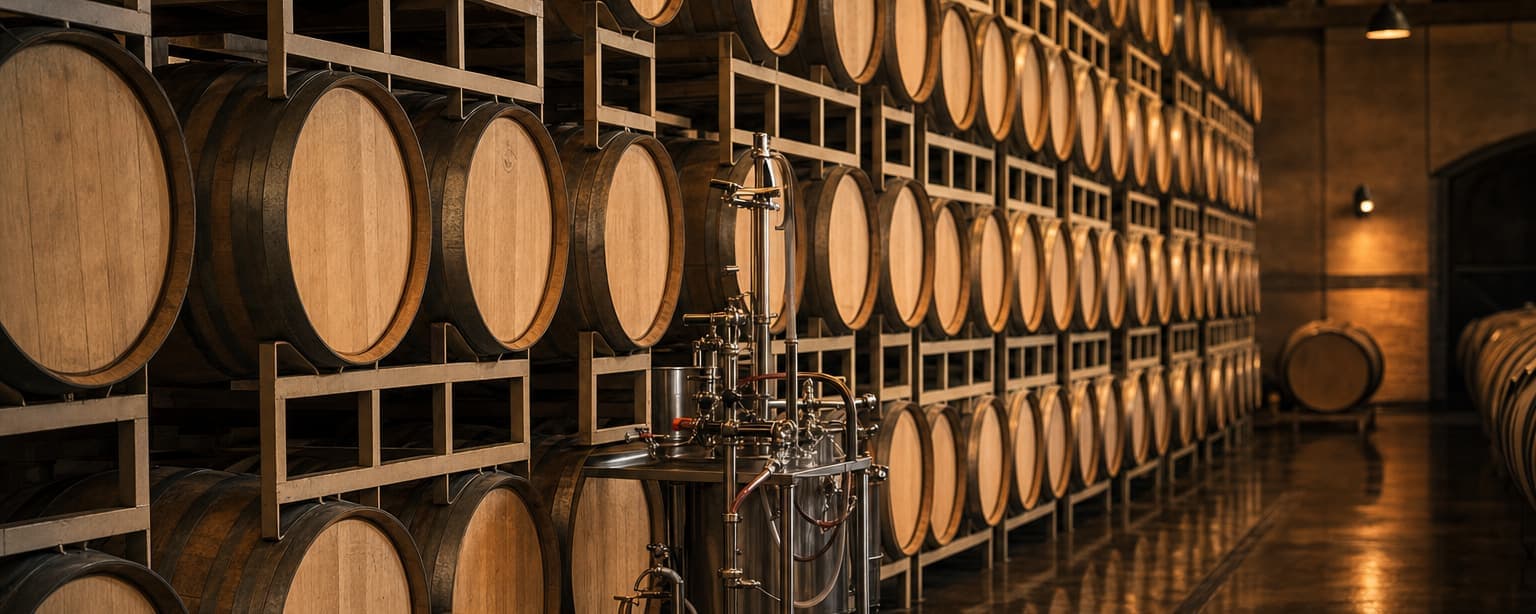
One harvest a year, and the wine gets more valuable the longer it sits.
We cover wineries and vineyards: the vines, the tanks and barrels whose value climbs as the wine ages, the tasting room, and the wildfire and smoke exposure that now defines the West.
Tell us the situation.
One licensed human replies the same business day — not five agents, not an auto-responder. If the policy you have is already the right one, we will tell you.
We use this to quote and service your insurance, and we do not sell it or pass it to lead networks. Privacy policy.
Send us what you have. We’ll tell you if it’s right.
Your current policy paperwork, a renewal notice, or nothing at all. A licensed agent reads it and replies the same business day.
What winery businesses actually need.
General liability
The tasting room, the events, the tours and anyone on the estate, including the weddings the barn now pays for.
Without it — Hospitality is where a winery’s claims actually come from, not the winemaking.
Workers compensation
Cellar and tasting-room staff, plus harvest labor, and whether the crew is yours or a contractor’s.
Without it — An uninsured harvest contractor’s injury is charged back to the grower who hired them.
Wine in process and in barrel
Bulk wine and bottled stock, valued for what it is worth now rather than at crush.
Without it — A vintage set at production cost is underinsured by multiples after three years.
Equipment breakdown
Presses, crushers, refrigeration, glycol and bottling lines.
Without it — A refrigeration failure mid-ferment ruins the tank, and property excludes the cause.
Tasting room and liquor liability
The public on site, and the alcohol you pour for them.
Without it — General liability excludes liquor for anyone in the trade.
Business income across a vintage
Income lost when a harvest or a season cannot be worked.
Without it — There is one harvest a year and it does not wait for a rebuild.
Wildfire and smoke taint
Fire at the property, and the smoke exposure that can render fruit unusable.
Without it — Smoke taint is a distinct and often separately-worded exposure.
Crime and social engineering
Stock and materials walking out, and a supplier payment redirected by a convincing email.
Without it — Invoice fraud is the everyday version, and it is excluded from cyber because the transfer was authorized rather than hacked.
Group health and benefits
Cellar and tasting-room staff, hired for a season and worth keeping for the next.
Without it — Harvest depends on people who have done your harvest before. Rebuilding that crew every year is the cost nobody puts on the P&L.
What our winery clients ask us.
How should wine inventory be valued?
On a basis agreed with the insurer in advance that reflects what the wine is worth as it ages, not what it cost to make. It is the same trap as barrel-aged spirits, and the most common underinsurance in the sector: a default policy values a tank at the price of the fruit, while three-year-old bottled wine is worth several times that. Get the valuation basis written into the policy, and revisit the limit each year as the cellar fills.
What is smoke taint and is it covered?
Fruit absorbing compounds from wildfire smoke, which can make wine unsellable without the vineyard ever burning. It is a live and contested area: some policies address it explicitly, many are silent, and silence is not coverage. Ask the question directly, and expect underwriters to ask about your distance from wildland, your defensible space and whether you have had testing done in prior smoke years.
Does the tasting room change the policy?
Yes, in two ways. It brings the public onto a working production site, which is a premises exposure a pure production policy does not contemplate. And pouring makes liquor liability mandatory rather than optional. It is excluded from general liability for anyone in the alcohol business, and dram shop statutes in many states extend it to what an over-served visitor does after they leave. Events, weddings and food service each get asked about on top.
Guides on winery.
Commercial insurance is 96% of what we do — it is not a department here, it is the whole business. Not ready to talk? The guides answer the questions this page raises in more depth. Already insured with us and need a certificate or a policy change? Ask the service team rather than starting a quote — it is faster and it goes to the people whose job it is. We also write home and auto, which is usually cheaper alongside the business policy than apart from it.
Handed a lease, a vendor packet or a client contract with insurance requirements? Paste it into the COI Requirements Decoder to see what each one means for your business, or read what the requirements mean.