
Good Samaritan laws are a defense. They are not a reason nobody sues you.
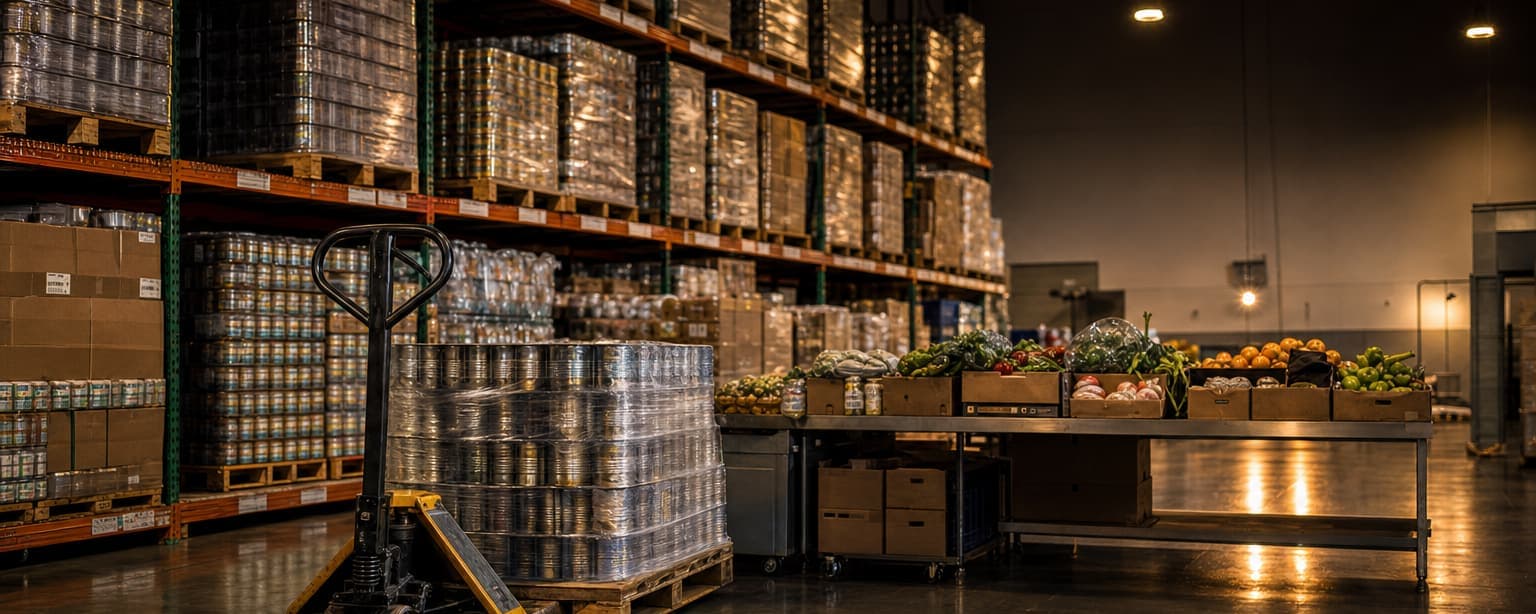
We cover food banks, pantries, soup kitchens and meal programs: product liability on donated food, the volunteers who handle and drive it, and the premises the public lines up at.
Tell us the situation.
One licensed human replies the same business day — not five agents, not an auto-responder. If the policy you have is already the right one, we will tell you.
We use this to quote and service your insurance, and we do not sell it or pass it to lead networks. Privacy policy.
Send us what you have. We’ll tell you if it’s right.
Your current policy paperwork, a renewal notice, or nothing at all. A licensed agent reads it and replies the same business day.
What food bank businesses actually need.
Product liability on donated food
Illness or injury alleged to come from food you distributed, however it was sourced.
Without it — Federal and state protections reduce liability for good-faith donation, but they do not stop the claim being brought or pay to defend it.
General liability and property
The warehouse, the distribution site, the queue outside and injury to anyone in it.
Without it — High public foot traffic, pallets, forklifts and cold storage in one building.
Workers compensation, including volunteers
Staff and volunteers who lift, pack, load and drive, elected onto the policy where the state permits.
Without it — Lifting injuries are the everyday claim here, and most of the lifting is done by volunteers.
Hired and non-owned auto
Volunteers collecting from stores and delivering to sites in their own vehicles.
Without it — Collection and delivery runs are constant, and personal auto policies exclude them.
Spoilage and equipment breakdown
Refrigeration failure and the stock lost with it, including failure from an internal cause.
Without it — A walk-in that fails overnight destroys the inventory, and property excludes internal breakdown.
Directors and officers
Board claims over governance, restricted funds and employment decisions.
Without it — Grant-funded organizations have documented obligations, and falling short of one is a claim.
Group health and benefits
The paid coordinators who hold a volunteer operation together.
Without it — Volunteers come and go by design; the staff who organize them cannot. Losing a coordinator disrupts everything below them.
What our food bank clients ask us.
Doesn’t the Good Samaritan act protect us completely?
It protects you substantially and it does not do what people think. Federal and state food donation protections limit liability for food given in good faith, and they are a real and strong defense, but a defense is something you raise after you have been sued.
Our volunteers drive their own cars to collect donations. Is that covered?
Not by their own policies, and that is the gap. A personal auto policy excludes use of the vehicle for business purposes, and collecting for an organization is a business purpose regardless of whether anyone was paid. If a volunteer causes an injury accident on a collection run, their insurer has grounds to deny and the organization is the party with assets. Hired and non-owned auto is inexpensive relative to the exposure and it is the coverage food programs most often do not have.
Commercial insurance is 96% of what we do — it is not a department here, it is the whole business. Not ready to talk? The guides answer the questions this page raises in more depth. Already insured with us and need a certificate or a policy change? Ask the service team rather than starting a quote — it is faster and it goes to the people whose job it is. We also write home and auto, which is usually cheaper alongside the business policy than apart from it.
Handed a lease, a vendor packet or a client contract with insurance requirements? Paste it into the COI Requirements Decoder to see what each one means for your business, or read what the requirements mean.