
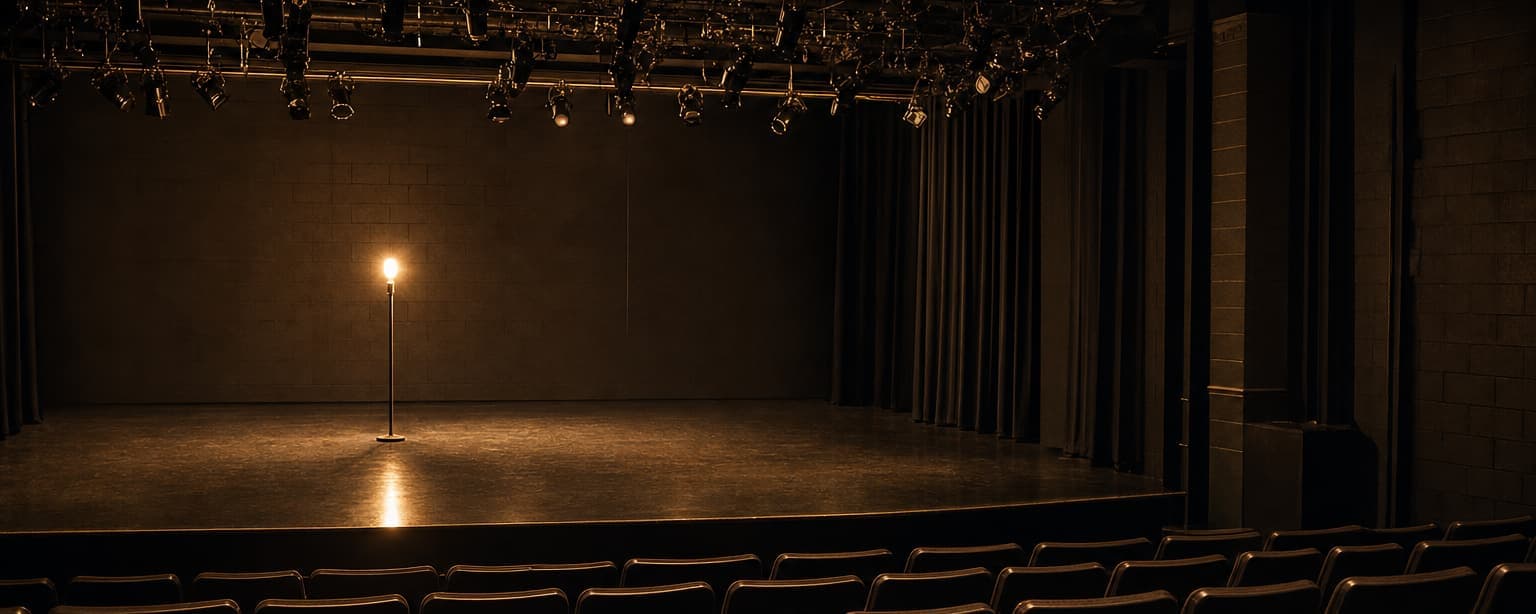
The audience, the volunteers on the ladder, and the work you do not own.
We cover theaters, museums, galleries, choirs and community arts organizations: public audiences, borrowed collections and works on loan, volunteer technical crews, and performance rights.
Tell us the situation.
One licensed human replies the same business day — not five agents, not an auto-responder. If the policy you have is already the right one, we will tell you.
We use this to quote and service your insurance, and we do not sell it or pass it to lead networks. Privacy policy.
Send us what you have. We’ll tell you if it’s right.
Your current policy paperwork, a renewal notice, or nothing at all. A licensed agent reads it and replies the same business day.
What arts nonprofit businesses actually need.
General liability
Audiences, visitors and participants at performances, exhibitions and workshops.
Without it — Public assembly is the core exposure, and every venue contract requires evidence of it.
Fine art and property in your care
Works on loan, borrowed collections and pieces in transit, property you do not own but are responsible for.
Without it — A property policy covers what you own, and a lender’s agreement makes their piece your liability.
Media and rights liability
Copyright, performance rights, defamation and clearance disputes over what you staged or exhibited.
Without it — Unlicensed music or an unlicensed script is a claim, and it is a common one in community theater.
Volunteer and participant injury
Technical crews, set builders and stewards, working at height with tools and mostly unpaid.
Without it — Set construction and rigging is the most dangerous thing most arts organizations do.
Event cancellation
Non-recoverable costs and lost income when a run or exhibition cannot go ahead.
Without it — A cancelled run still owes the venue, the crew and the marketing spend.
Directors and officers
Board claims over governance, funding, employment and artistic disputes.
Without it — Grant conditions and artistic direction are both frequent sources of board-level claims.
What our arts nonprofit clients ask us.
A gallery is lending us work. Whose insurance covers it?
Yours, almost certainly, and the loan agreement will say so: the standard position is that the borrower insures the work wall-to-wall, meaning from the moment it leaves the lender to the moment it returns, including transit and installation.
Do we need rights coverage for a community production?
You need the licenses, and you should carry the coverage. Performance rights for a play, a musical or the music in a production are licensed separately, and the commonest claim in community arts is not an accident at all. It is a rights holder discovering an unlicensed performance, an unlicensed cast recording, or photography used beyond what was cleared. Media liability responds to the allegation; nothing responds to simply not having bought the license. Do both, and keep the paperwork with the production file.
Commercial insurance is 96% of what we do — it is not a department here, it is the whole business. Not ready to talk? The guides answer the questions this page raises in more depth. Already insured with us and need a certificate or a policy change? Ask the service team rather than starting a quote — it is faster and it goes to the people whose job it is. We also write home and auto, which is usually cheaper alongside the business policy than apart from it.
Handed a lease, a vendor packet or a client contract with insurance requirements? Paste it into the COI Requirements Decoder to see what each one means for your business, or read what the requirements mean.