
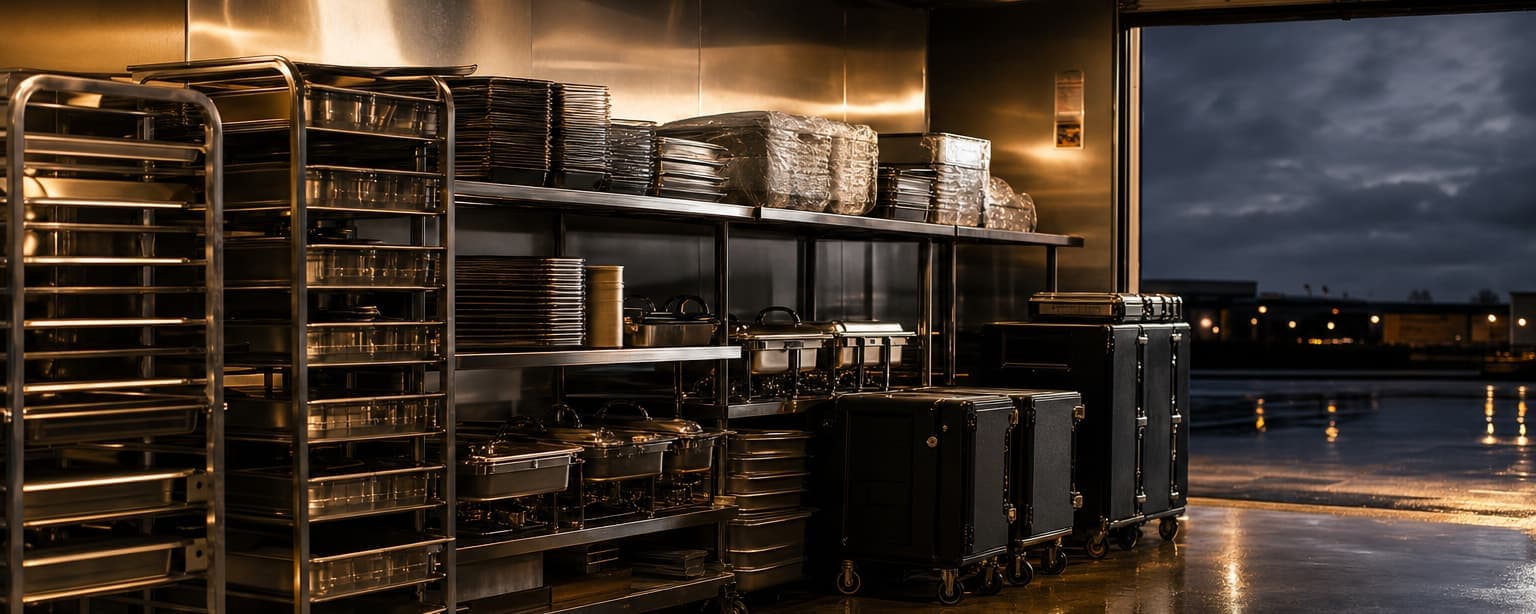
You are liable at a venue you have never seen, using equipment you carried in.
You work in venues you do not control, and the liquor exposure arrives the moment you pour. We cover caterers for both, and for foodborne illness.
Tell us the situation.
One licensed human replies the same business day — not five agents, not an auto-responder. If the policy you have is already the right one, we will tell you.
We use this to quote and service your insurance, and we do not sell it or pass it to lead networks. Privacy policy.
Send us what you have. We’ll tell you if it’s right.
Your current policy paperwork, a renewal notice, or nothing at all. A licensed agent reads it and replies the same business day.
What catering businesses actually need.
General liability
Injury and damage at the venue, and foodborne illness claims.
Without it — Venues require it before they will let you through the door.
Liquor liability
Serving alcohol, whether or not you supplied it.
Without it — Excluded from general liability, and serving is enough to trigger it.
Equipment in transit
Chafing units, ovens, refrigeration, glassware and linen, on the road and on site.
Without it — Your kit spends its working life away from your premises.
Damage to the venue
Damage to premises in your care while you occupy them.
Without it — A scorched floor or a damaged kitchen is charged straight back to you.
Spoilage
Product lost to refrigeration failure before an event.
Without it — A failed fridge the night before is the whole event’s food.
Crime and social engineering
Product and equipment lost between events, and an event deposit sent to the wrong account.
Without it — A deposit wired to a caller posing as the venue is not a theft your property policy recognizes. Crime coverage with social engineering named on it is what answers.
Group health and benefits
Chefs and captains who can run an event without you standing over them.
Without it — Event work is judged on the night, and a crew you have not worked with before is the biggest variable in it.
What our catering clients ask us.
Do we need liquor liability if the client supplies the alcohol?
Usually yes. Liability generally follows the act of serving rather than the act of selling, so a caterer pouring a client’s wine at a private event can still be brought into a dram shop claim if a guest is over-served and causes harm afterwards. Host liquor liability, the limited grant inside a general liability policy, is written for a business hosting its own occasional event, not for one serving as its trade. If you pour, price the real thing.
What do venues typically require?
A $1,000,000 general liability limit as a minimum, the venue named as an additional insured, liquor liability where alcohol is served, workers comp for your staff, and frequently a waiver of subrogation. Hotels and larger venues publish their requirements and will not negotiate them. Collect the requirement in writing when the booking is made rather than the week before, because a certificate in the wrong form is the commonest reason a caterer loses an event.
How are foodborne illness claims handled?
As general liability bodily injury, and they are difficult on both sides because causation is hard to prove and hard to disprove, because guests eat elsewhere too. What defends them is documentation: temperature logs, supplier records, HACCP-style procedures and staff food-safety certification. Those records are also what an underwriter reads, so the same discipline improves the price and the defense.
Also in this family
Commercial insurance is 96% of what we do — it is not a department here, it is the whole business. Not ready to talk? The guides answer the questions this page raises in more depth. Already insured with us and need a certificate or a policy change? Ask the service team rather than starting a quote — it is faster and it goes to the people whose job it is. We also write home and auto, which is usually cheaper alongside the business policy than apart from it.
Handed a lease, a vendor packet or a client contract with insurance requirements? Paste it into the COI Requirements Decoder to see what each one means for your business, or read what the requirements mean.