
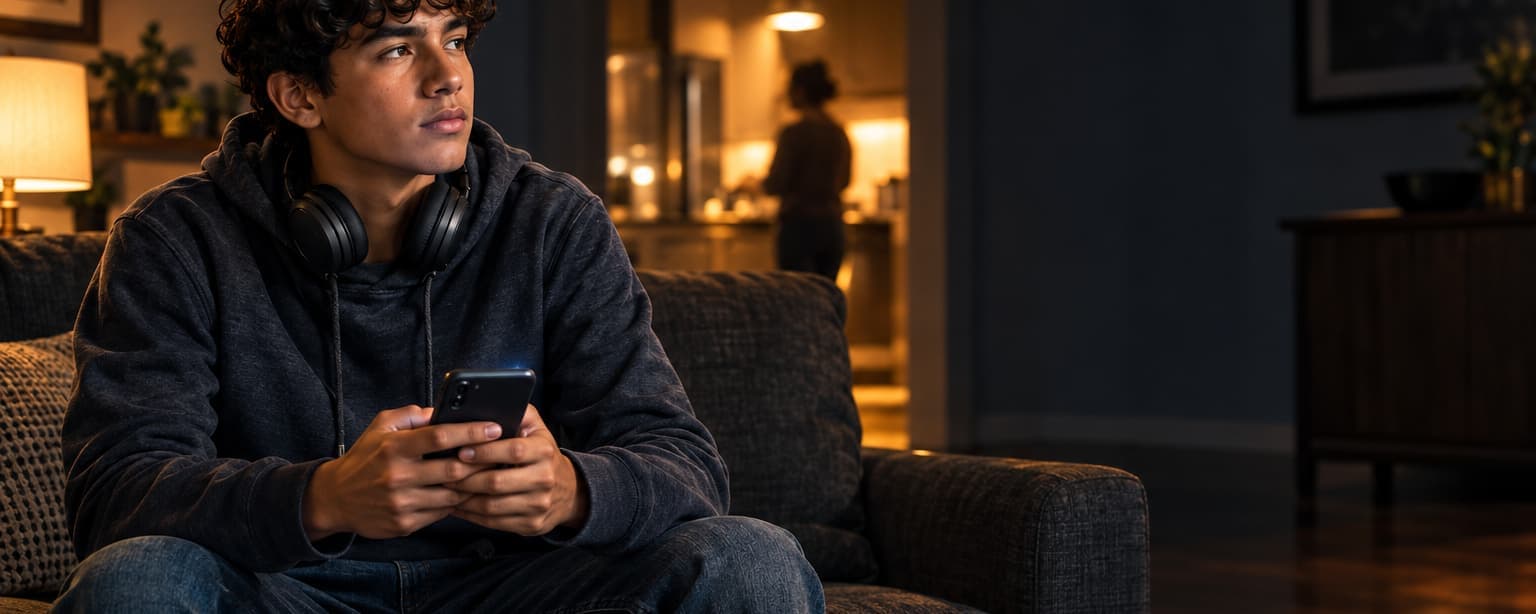
A court let a chatbot be sued as a product. Your policy may still call the harm excluded.Founded by a software developer who runs an AI app.
We insure companion, character, roleplay and friend chatbots, and the AI features in dating and social apps, with technology E&O that is read for product, minor and self-harm claims, plus cyber for the intimate conversations you store.
Tell us the situation.
One licensed human replies the same business day — not five agents, not an auto-responder. If the policy you have is already the right one, we will tell you.
We use this to quote and service your insurance, and we do not sell it or pass it to lead networks. Privacy policy.
The person placing your tech E&O runs an app with an AI coach of his own.

Kevin Kelsey
Founder | Principal Agent
Boring’s founder, Kevin Kelsey, owns and runs TrainRec, a fitness app with a built-in AI coach, and has placed insurance for AI apps. Insuring his own taught him how an underwriter reads a model. Personal guidance from an AI reads more like the work of a professional than like software, technology E&O forms commonly exclude bodily injury, and not every form will add it back. So whether your app answers money, health, hiring or farming questions, the gap between what it says and what the policy covers gets read by someone who has had to close it for his own product.
Send us what you have. We’ll tell you if it’s right.
Your current policy paperwork, a renewal notice, or nothing at all. A licensed agent reads it and replies the same business day.
What AI companion app businesses actually need.
Technology E&O with contingent bodily injury
Claims that your chatbot’s output harmed a user, including self-injury after relying on it, once contingent bodily injury is added.
Without it — The tech E&O form excludes bodily injury, and a grant written for errors in advice may not clearly reach a claim about how the app was designed. Ask for wording that covers both.
Cyber & tech E&O
Breach response, ransomware and the notification costs that follow. Technology errors and omissions sits on the same policy and covers the software or service itself failing a client, which is the half most tech companies find out about too late.
Without it — Companion chats are among the most personal data an app holds, and often belong to minors. A leak, or sharing them with an ad network, is a privacy claim before it is anything else.
General liability
Third-party bodily injury and property damage. It is the line nearly every contract names by default.
Without it — Read for a professional services or technology exclusion, and for abuse or molestation exclusions, which some forms apply to claims involving minors.
Media liability
Covers claims arising from what you publish (defamation, copyright and trademark infringement, invasion of privacy and misuse of a person’s likeness) on an annual policy for creators, podcasters, publishers and authors.
Without it — Characters built on a real person’s likeness or a studio’s fiction raise likeness and copyright claims that media liability answers and tech E&O may not.
Directors & officers
Protects the personal assets of the people running the company when they are sued over a management decision. It applies to private companies and nonprofit boards, not just public ones, which is a common and expensive misunderstanding.
Without it — The FTC’s inquiry into companion chatbots, state laws with private lawsuits and investors asking about child safety are D&O questions.
What the regulators actually wrote down.
In Garcia v. Character Technologies (M.D. Fla., filed October 2024), the court wrote in an order filed May 21, 2025 that it was “not prepared to hold that Character A.I.’s output is speech” at the motion to dismiss stage, while allowing the company to assert its users’ First Amendment rights.
Garcia v. Character Technologies, Inc., No. 6:24-cv-1903 (M.D. Fla.), Order on motions to dismiss, Doc. 115 (filed May 21, 2025) · checked 2026-11-01
The same Garcia order held that Character A.I. “is a product for the purposes of Plaintiff’s product liability claims so far as Plaintiff’s claims arise from defects in the Character A.I. app rather than ideas or expressions within the app.”
Garcia v. Character Technologies, Inc., No. 6:24-cv-1903 (M.D. Fla.), Order on motions to dismiss, Doc. 115 (filed May 21, 2025) · checked 2026-11-01
The Garcia order let the negligence, negligence per se, failure to warn, Florida deceptive trade practices and unjust enrichment claims proceed, dismissed the intentional infliction of emotional distress claim without leave to amend, dismissed Alphabet Inc. without prejudice, and found a component part manufacturer theory against Google sufficiently alleged. It decided the motions on the complaint’s allegations, not on proof.
Garcia v. Character Technologies, Inc., No. 6:24-cv-1903 (M.D. Fla.), Order on motions to dismiss, Doc. 115 (filed May 21, 2025) · checked 2026-11-01
The parents of a 16-year-old filed Raine v. OpenAI in San Francisco Superior Court on August 26, 2025, alleging that ChatGPT contributed to their son’s death and pleading strict product liability for design defect and failure to warn, negligence, a California Unfair Competition Law claim, wrongful death and a survival action. These are allegations in a complaint, not findings.
Raine v. OpenAI, complaint filed August 26, 2025, Superior Court of California, County of San Francisco (case CGC-25-628528), copy published by Courthouse News Service · checked 2026-11-01
California’s companion chatbot law, SB 243 (Business and Professions Code sections 22601 to 22605), signed in October 2025 and in force from January 1, 2026, requires an operator to disclose that a companion chatbot is not human where a reasonable person could be misled, to keep and publish a protocol for suicidal ideation and self-harm that refers users to crisis services, and, for users it knows are minors, to give a reminder at least every three hours to take a break and that the chatbot is not human and to take reasonable measures against sexually explicit material.
California Business and Professions Code sections 22601 to 22605 (SB 243, 2025) · checked 2026-11-01
Under California SB 243 a person who suffers injury in fact from a violation may sue for injunctive relief, damages equal to the greater of actual damages or $1,000 per violation, and reasonable attorney’s fees and costs, and operators must report crisis referral counts and protocols to the state Office of Suicide Prevention each year beginning July 1, 2027.
California Business and Professions Code sections 22601 to 22605 (SB 243, 2025) · checked 2026-11-01
New York’s AI companion law, article 47 of the General Business Law, has applied since November 5, 2025. It makes it unlawful to offer an AI companion without a protocol to detect and address suicidal ideation or self-harm that refers users to crisis services such as 988, requires a notice that the user is not talking to a human at the start of an interaction and at least every three hours, and lets the Attorney General seek civil penalties of up to $15,000 per day.
New York General Business Law article 47, sections 1700 to 1704 (S.3008-C, Part U, 2025) · checked 2026-11-01
New York’s governor confirmed that the AI companion safeguards were in effect on November 5, 2025.
Office of Governor Kathy Hochul, Governor Hochul pens letter to AI companion companies notifying them that safeguard requirements are now in effect (November 10, 2025) · checked 2026-11-01
On September 11, 2025 the FTC issued 6(b) orders (compulsory requests for information) to seven companies about AI chatbots acting as companions, asking how they test and monitor for harm, what they do to reduce harm to children, how they enforce age restrictions and how they use conversation data.
Federal Trade Commission, FTC Launches Inquiry into AI Chatbots Acting as Companions (September 11, 2025) · checked 2026-11-01
The FTC counted 64,003 reports of romance scams in 2023, with reported losses of $1.14 billion and a median loss of $2,000 per person.
Federal Trade Commission, business guidance blog “Love stinks when a scammer is involved” (February 13, 2024) · checked 2026-11-01
On at least one major insurer’s technology E&O form, contingent bodily injury is not available as a carve-back to the bodily injury exclusion, so the coverage has to come from a market that offers it.
Kevin Kelsey, agency placement experience (technology E&O form, insurer not named) · checked 2026-10-29
The claims we actually see.
Ordered by how often we see them, not by how dramatic they are. Each one names the coverage that answers it — and the policy people wrongly assume already does.
Less common, severe
A minor harms themselves after sustained conversations with a character
Covered by Technology E&O with contingent bodily injury, read for design defect claims
Plaintiffs plead the app as a defectively designed product, not only as bad advice. A grant written for errors in output may not clearly reach that, and the bodily injury exclusion still applies without it.
Common
A character has sexual or romantic conversations with a minor
Covered by Technology E&O or general liability, only if no abuse exclusion applies
Some forms exclude abuse and molestation and some apply the exclusion to non-physical conduct. Whether a chatbot’s conversation falls inside it is exactly the question to ask before a claim.
Common
A state attorney general or the FTC asks how you protect children
Covered by Technology E&O or D&O, only if regulatory defense is included
New York has a penalty up to $15,000 per day and California gives users a private right to sue. Many forms limit coverage for regulatory proceedings and fines, so read those provisions.
Common
Private chats are leaked or shared with an advertising network
Covered by Cyber, first-party response and privacy liability
Intimate content makes the harm and the notification list worse. Some cyber forms exclude claims from data you collected or shared unlawfully.
What our AI companion app clients ask us.
Can a chatbot be sued as a product?
A federal court in Florida let a product liability claim proceed against an AI chatbot app in 2025, in Garcia v. Character Technologies. It held the app is a product for those claims so far as they arise from defects in the app, not from ideas or expressions in it. That ruling came on a motion to dismiss and decided no facts, but it is why insurers now ask about design, not only about output.
What exactly did the court decide in Garcia v. Character Technologies?
In an order filed May 21, 2025 the court denied most of the motions to dismiss. It was not prepared to hold at that stage that the chatbot’s output is speech, treated the app as a product for design-defect claims, let negligence, failure to warn, deceptive practices and unjust enrichment claims proceed, and dismissed the emotional distress claim. It assumed the complaint’s allegations were true.
What does the lawsuit against OpenAI over a teenager’s death allege?
The parents of a 16-year-old filed Raine v. OpenAI in San Francisco Superior Court on August 26, 2025. The complaint alleges that ChatGPT contributed to their son’s death and pleads strict product liability, negligence, a state unfair competition claim, wrongful death and a survival action. These are allegations, not findings.
Does tech E&O cover a user who is harmed by our companion chatbot?
Probably not unless the policy says so. Tech E&O is written for financial loss and most forms exclude bodily injury, which includes self-harm. Contingent bodily injury can answer an injury caused by relying on your output, but ask whether it reaches a claim about the app’s design, a minor user and psychological harm, since those are the claims being filed.
Do abuse exclusions matter for a chatbot?
They can. Some general liability and professional forms exclude abuse and molestation claims, and some word the exclusion broadly enough to reach non-physical conduct. When a complaint says a character engaged a minor in sexual conversation, the insurer will read that exclusion first. Ask your agent to show you every abuse or sexual conduct exclusion on every policy you carry.
What does California’s companion chatbot law require?
SB 243, in force since January 1, 2026, requires disclosure that the chatbot is not human where a reasonable person could be misled, a published protocol for suicidal ideation and self-harm that refers users to crisis services, and for known minors a break reminder at least every three hours and measures against sexual content. A user who is injured by a violation can sue for the greater of actual damages or $1,000 per violation, plus attorney’s fees.
What does New York’s AI companion law require?
Article 47 of the General Business Law, effective November 5, 2025, makes it unlawful to offer an AI companion without a protocol to detect suicidal ideation or self-harm and refer users to crisis services such as 988. It also requires a notice that the user is not talking to a human at the start and at least every three hours. The Attorney General can seek civil penalties up to $15,000 per day.
What is the FTC asking companion chatbot companies?
On September 11, 2025 the FTC sent compulsory information requests, called 6(b) orders, to seven companies. It asked how they test and monitor for harm, what they do to protect children, how they enforce age limits and how they use conversation data. A 6(b) study is not a complaint, but it tells you what a regulator will ask you.
Our dating or social app has AI features. Where does that fit?
An AI profile writer, chat assistant or matchmaker is an AI feature inside a larger product, and the risks are privacy, deception and reliance on its advice. The FTC counted 64,003 romance scam reports and $1.14 billion in reported losses in 2023, so a victim of a fake profile may blame the platform. Describe each AI feature to the insurer separately.
If an AI matchmaker gives bad advice, is that a covered claim?
Mostly it is a financial or emotional complaint, which tech E&O is built for. A physical injury after a meeting it arranged is a different claim, and the bodily injury exclusion returns. If your app sets up in-person dates, ask the insurer how it treats safety claims and whether the contingent grant reaches them.
What will the underwriter ask a companion app?
Whether users can be minors and how you check age, what the characters may say about sex, self-harm and mental health, how a crisis is detected and what the app does next, and which model sits underneath. Then logging and retention of chats, content moderation, user counts, revenue, states and countries served, any regulator letters and prior claims.
Does a “this is fiction” disclaimer protect us?
It helps the defense and does not stop a claim being filed. The Garcia court was not prepared to treat the chatbot’s output as speech at the pleading stage, and several states now require specific notices. A disclaimer is one part of the file, and the insurer will still ask what happens when a user says they are in danger.
Does our policy cover a wrong or harmful AI output?
Do not assume so. Some forms exclude or limit generative AI claims in endorsements, and the bodily injury exclusion sits in the main form. Ask in writing whether AI output is covered in plain words, whether the grant reaches design as well as output, and whether defense costs erode the limit.
Which NAICS codes does this page cover?
Companion and character apps are usually 513210 Software Publishers or 541511 Custom Computer Programming Services, with 518210 Computing Infrastructure Providers, Data Processing, Web Hosting, and Related Services for the platform side. Social networks fall under 516210 Media Streaming Distribution Services, Social Networks, and Other Media Networks and Content Providers, and online dating services under 812990 All Other Personal Services. Use the code for what you earn revenue from.
How is this different from a fitness app?
In fitness the injury is physical and follows a plan the app wrote. Here the injury is usually psychological or self-harm, the user is often a minor, and the claim is pleaded as a defective product. The contingent bodily injury grant is central in both, but a companion app also has to ask about abuse exclusions and about design, not only output.
We built it with AI coding tools. Does that matter?
It changes the questions more than the policy. Insurers ask who reviewed the code and the security settings before the app held private conversations, and for an app with minors that review is the first thing a buyer asks.
We have users outside the US. Does our insurance follow?
Not automatically. Many tech E&O policies only promise to defend claims brought in the US or Canada and treat a claim filed elsewhere differently. Check where claims may be brought before you launch.
Where can I see the other industries you insure AI apps for?
The hub lists the AI app pages by industry. Each explains the claim that industry produces and the policy that is supposed to answer it.
Guides on AI companion app.
- Companion Chatbot LawsuitsWhat the Garcia ruling and the Raine complaint say, described strictly as holdings and allegations, followed by how product framing, the bodily injury exclusion, contingent bodily injury, abuse exclusions, minors and the duty to defend work for a companion or chatbot app.
- Bodily Injury vs Contingent Bodily InjuryGeneral liability pays for injuries you cause by accident, and E&O pays for money lost to your mistakes. An injury caused by a mistake in your app, software or advice falls between them, and contingent bodily injury on the E&O is how that gap is closed.
- Insurance for an App Launching WorldwideAn app store launch puts your app in front of users in dozens of countries on the first day. Your tech E&O may only defend claims filed in the US or Canada, and your cyber policy has to handle European privacy rules, where health and fitness readings are a special category of data.
- Vibe-Coded App InsuranceA vibe-coded app carries the same liability as any other, and the documented failures are security ones: open databases, exposed keys and an agent that deleted data. Here is which policy answers which failure, what the AI tool providers say about who is responsible, and what to check before you buy.
Commercial insurance is 96% of what we do — it is not a department here, it is the whole business. Not ready to talk? The guides answer the questions this page raises in more depth. Already insured with us and need a certificate or a policy change? Ask the service team rather than starting a quote — it is faster and it goes to the people whose job it is. We also write home and auto, which is usually cheaper alongside the business policy than apart from it.
Handed a lease, a vendor packet or a client contract with insurance requirements? Paste it into the COI Requirements Decoder to see what each one means for your business, or read what the requirements mean.