
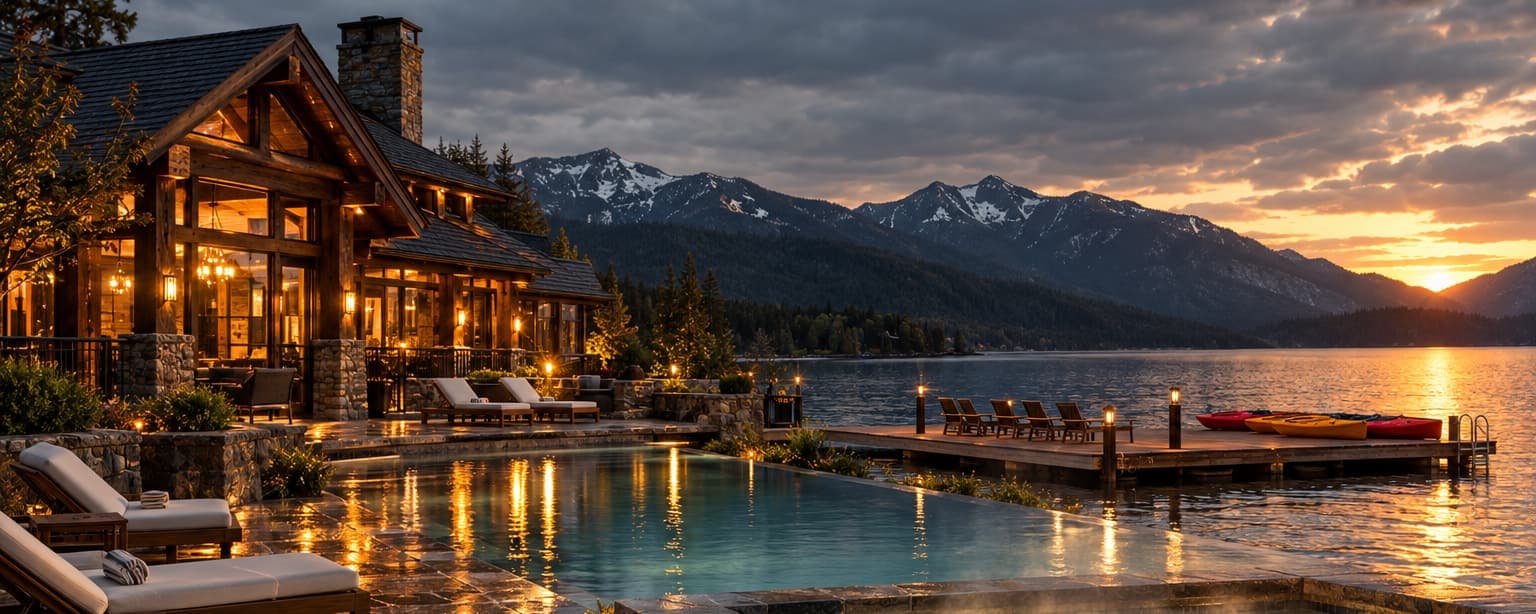
Guests come for the pool, the trail, the boat and the bar. The claims come from the same list.
A resort is a hotel with activities attached, and the activities are where the exposure lives. A guest falls off a rented kayak, a child is hurt on the water slide, a wedding guest leaves the bar and drives, a wildfire closes the road for a season. The property itself is often large, remote and timber-built, which sets the price of the property policy, and the amenities set the price of the liability. We place resorts, lodges and destination properties with pools, spas, marinas, ski hills, golf, equestrian and event operations, with liquor liability, business income and the waivers and contracts a carrier wants to see beside the application.
Tell us the situation.
One licensed human replies the same business day — not five agents, not an auto-responder. If the policy you have is already the right one, we will tell you.
We use this to quote and service your insurance, and we do not sell it or pass it to lead networks. Privacy policy.
Send us what you have. We’ll tell you if it’s right.
Your current policy paperwork, a renewal notice, or nothing at all. A licensed agent reads it and replies the same business day.
What resort businesses actually need.
Commercial property
The lodge, cabins, restaurant, pool house, docks and equipment, valued at what it costs to rebuild them where they stand.
Without it — A remote timber structure rebuilds at a premium; underinsure it and a fire leaves you with a fraction of what the season needed.
General liability
Guest injury anywhere on the property: the pool, the trails, the stairs, the dock, the play area.
Without it — Every guest is an invitee you owe a safe premises, and a drowning or a fall from a balcony is a seven-figure claim.
Liquor liability
Claims from serving alcohol at the bar, the restaurant and events, including a guest who drives after leaving.
Without it — Excluded from general liability wherever alcohol is sold; the wedding bar is the exposure the resort forgets it runs.
Business income
Lost revenue while the property is closed by a covered loss, and, where added, by a civil authority order such as a road closure.
Without it — A resort earns its year in a season; a fire in May with no income coverage is a lost year, not a lost building.
Watercraft and recreational vehicle liability
Boats, kayaks, jet skis, golf carts, snowmobiles and ATVs the resort owns or rents to guests.
Without it — Motorized watercraft and off-road vehicles are excluded from general liability; the rental fleet needs its own policy.
Workers compensation and auto
Employee injury across housekeeping, kitchen, grounds and activities, and the shuttle vans.
Without it — Seasonal staff, lifting, kitchens and vehicles make resorts a high-frequency compensation class.
The claims we actually see.
Ordered by how often we see them, not by how dramatic they are. Each one names the coverage that answers it — and the policy people wrongly assume already does.
Most common
A guest injured in the pool, hot tub or on a water feature
Covered by General liability
Lifeguards, fencing, depth markings and chemical logs are the defense. The application asks whether the pool is guarded and how it is inspected.
Common
An injury in a rented boat or vehicle
Covered by Watercraft or recreational vehicle liability
A signed waiver helps and is not a shield; carriers ask for a copy of every waiver you use and for the age and license checks on drivers.
Less common, severe
A drunk-driving crash after a wedding or the bar
Covered by Liquor liability
Server training and a policy of cutting off guests is what the carrier prices; a resort with a bar and no liquor policy is uninsured for its worst night.
Rare, catastrophic
Wildfire, flood or a road closure that empties the season
Covered by Property and business income, subject to the perils on the policy
Wildfire and flood are rated by location and sometimes excluded or sublimited. A mitigation plan and a defensible space are what keep a mountain resort insurable.
What the policy will not cover.
Pick a procedure to see what the exclusion actually means and whether it can be placed somewhere else.
The package covers the property and the activities you disclosed. Anything hazardous, motorized or off the map needs to be named, and the perils that follow the location are priced separately.
Where a resort policy stops
Activities you did not list
Zip lines, climbing walls, horseback riding, a ski hill or a shooting range each carry their own rating; one added mid-season without telling the carrier is uncovered.
Can it be placed? Yes, once declared, sometimes on a separate policy.
Flood and earthquake
Excluded from standard property forms and bought separately, with prices set by the flood zone and the fault map.
Can it be placed? Yes, as separate policies.
Concessionaires without their own insurance
An outfitter, a spa operator or a dive shop working on your property needs its own policy and a hold harmless agreement, or its claims become yours.
Can it be placed? Yes, by contract and certificate.
Employee-owned vehicles on resort business
Staff shuttling guests in their own cars is a hired and non-owned auto exposure the package must carry, with proof of their insurance on file.
Can it be placed? Yes, with hired and non-owned auto added.
What the insurance company will ask about your resort business
We read 3 applications the markets use for this kind of business and pulled out what they actually ask. Have these answers ready and a quote takes a day instead of a week, because nobody has to come back to you for the missing piece.
About the business
- What is your business name, website, and main contact email?
- Who owns and manages this resort, and how many years of experience do they have running this type of business?
- How many rooms does your resort have?
- What is the total square footage of your hotel building?
- How many acres does your property cover?
How you operate
- How many full-time and part-time employees do you have?
- What is your annual payroll?
- Do you use subcontractors, and if so, do they carry their own insurance and are they required to have the resort named as additional insured?
- How often do you rent vehicles for business purposes, what is the annual cost, and what are they used for?
- How often do your employees use their own vehicles for resort business, and do you verify they have adequate insurance?
Safety and controls
- What type of roof does your building have, and when was it last updated?
- Have you ever had ice damming problems, and if so, what did you do about it?
- What type of siding does your building have?
- Do you have any wood stoves or fireplaces (wood or gas)?
- How far is your property from the nearest fire hydrant?
Your history
- Who was your insurance company for the last three years?
- Have you or any previous owner or related business ever filed an insurance claim?
Money and people
- What is your FEIN (tax ID number)?
- Is the resort managed on-site by a general manager, by an off-site management company, or by the developer?
Have these ready
- Your last five years of claims history from your current and previous insurance companies (called loss runs) for property, general liability, auto, and umbrella coverage
- Most recent audited financial statements
- Most recent property appraisal showing the cost per square foot to rebuild
- Property management contract and copies of any waivers used for guest activities
- Plot map or diagram of your property
You answer what you can; a licensed agent fills the rest with you.
What our resort clients ask us.
How much does resort insurance cost?
Property is priced on rebuild value, construction and distance from a fire station; liability on revenue, room count and the list of amenities; liquor on alcohol sales. A small lodge with a pool and a restaurant can be a few tens of thousands a year across the package, and a full resort with a marina, ski operations and events is priced individually. Sprinklers, monitored alarms and waivers all move the number.
Does a resort need separate insurance for its activities?
Some of them. Pools, trails and a fitness room sit inside general liability. Boats, jet skis, snowmobiles and golf carts need watercraft or recreational vehicle liability, an equestrian center needs an equine policy, and a ski hill or zip line is rated on its own. The rule is that anything motorized, at height or involving an animal is asked about by name.
What does a resort insurance application ask for?
The application we work from asks how the resort is managed, what activities it offers (restaurant, aquatics, fitness, golf, equestrian, skiing, water slides), whether staff drive their own cars and licenses are checked, whether concessionaires carry insurance and sign hold harmless agreements, the sprinkler and alarm setup, distance to the fire station, roof condition, whether the site is in a wildfire, flood or earthquake zone, and the room count, floors, square footage and acreage. It wants five years of loss runs and your waivers.
Is a resort insured differently from a hotel?
The building is insured the same way. The difference is everything outside it: the water, the trails, the rentals and the events. A hotel policy assumes guests sleep, eat and leave; a resort policy is written for guests who stay for the activities, and the application is mostly about those.
Commercial insurance is 96% of what we do — it is not a department here, it is the whole business. Not ready to talk? The guides answer the questions this page raises in more depth. Already insured with us and need a certificate or a policy change? Ask the service team rather than starting a quote — it is faster and it goes to the people whose job it is. We also write home and auto, which is usually cheaper alongside the business policy than apart from it.
Handed a lease, a vendor packet or a client contract with insurance requirements? Paste it into the COI Requirements Decoder to see what each one means for your business, or read what the requirements mean.