
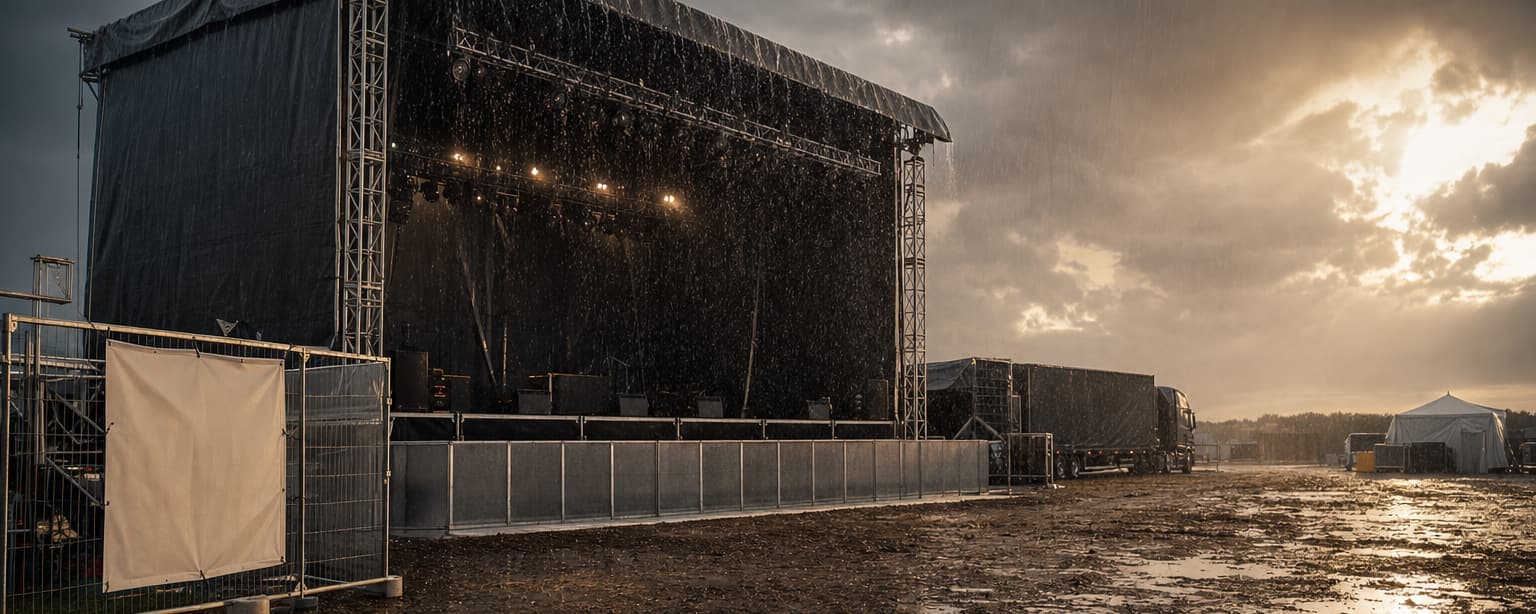
The costs are already spent when the reason to cancel arrives.Founded by an Emmy-nominated television editor.
Your exposure peaks the week before the gates open, not on the day. We cover the money a cancelled, abandoned or postponed event has already committed.
Tell us the situation.
One licensed human replies the same business day — not five agents, not an auto-responder. If the policy you have is already the right one, we will tell you.
We use this to quote and service your insurance, and we do not sell it or pass it to lead networks. Privacy policy.
We were editing television long before we were insuring it.

Kevin Kelsey
Founder | Principal Agent
IATSE Local 700 member
Boring’s founder, Kevin Kelsey, edited television for fifteen years before he sold a policy. He was Emmy-nominated for The Muppets Mayhem, cut Shark Tank, Big Brother, Dancing with the Stars and Wheel of Fortune, and handled compliance and risk for some of Hollywood’s largest production companies. So the person building your coverage has been on a crew list, dealt with the permit offices, and met network and streamer requirements from the production side, rather than working from a rate manual. He also builds post-production software. Manifest Post is the board episodic post teams use to track every episode, and B/side is a video editor for people who cut together. He holds a number of patents on that software. So he knows the post side of a production as a vendor to it. We insure productions from Los Angeles to Atlanta, New York and Toronto, with worldwide and foreign production coverage.
The work is placed with the markets that actually write film, television and live entertainment — Zurich through ISC Entertainment (formerly Abacus), Philadelphia Insurance Companies, Take1 and Alive Risk — rather than with a general small-business carrier asked to try.
Send us what you have. We’ll tell you if it’s right.
Your current policy paperwork, a renewal notice, or nothing at all. A licensed agent reads it and replies the same business day.
What event cancellation actually covers.
Cancellation and abandonment
Reimburses committed costs, and lost revenue where insured, when an event cannot proceed for a covered reason outside your control.
Without it — Every deposit, fee and build cost already paid is simply lost, and most of it is paid before a ticket is torn.
Adverse weather
Written as its own peril with its own trigger, usually a measured threshold rather than a judgment call about whether it was too wet.
Without it — Weather is the most likely cause of cancellation and the one most often excluded from the base form.
Non-appearance
Responds when the act that people bought tickets to see cannot perform through illness, injury, travel failure or death.
Without it — A headliner with pneumonia is a full refund liability against costs you have already paid.
Postponement and enforced reduced attendance
Covers the additional cost of moving an event, or the shortfall when an authority limits attendance.
Without it — A postponement is treated as a business decision rather than a loss, and the rebuild is uninsured.
Terrorism and civil authority
Bought back by endorsement, and increasingly a condition of the venue contract rather than an option.
Without it — An incident nowhere near your event closes it, and the base form excludes the reason.
Where event cancellation shows up.
- Music Festivals
The costs are already spent when the reason to cancel arrives, and weather is the most likely reason.
- Touring Artists & Bands
A cancelled run still owes the crew, the bus and the deposits.
- Event Promoters
Deposits, marketing, production and venue fees are committed long before the doors open.
- Podcasts
A live show is sold before it happens, and a host who loses their voice or a venue that floods does not refund the deposits you paid.
- Weddings
Deposits are non-refundable and are paid a year out, which is the whole exposure.
- Conventions & Trade Shows
Space, marketing and production are committed a year out and are not refundable.
- Teams, Tournaments & Sports Events
Entries, permits, timing, medical coverage and marketing are committed before race day.
- Motorsports
A meeting abandoned for weather still owes the marshals, the medical coverage and the hire.
- Event Planners
Deposits are paid long in advance and are rarely refundable.
What clients with event cancellation ask us.
When should I buy it?
As early as the event exists on paper, and certainly before the first non-refundable deposit. Coverage is priced on the costs at risk, so buying late does not save money. It simply leaves the earliest and often largest commitments uninsured. Underwriters also decline to write anything once a known threat is forecast, which is exactly when people ring.
Does it cover bad weather on the day?
Only if adverse weather is specifically insured, and only against the trigger written into the policy. That trigger is usually objective — a measured rainfall over a stated period, a sustained wind speed, a temperature — rather than a decision that conditions were unpleasant. Read the trigger before you rely on it, because "it rained and nobody came" is not by itself a claim.
What is almost always excluded?
Poor ticket sales. The class misunderstands one thing above all others: cancellation coverage responds to an event you could not hold, never to one you chose not to hold because it was not selling. Also commonly excluded or bought back separately: communicable disease, terrorism, and anything you knew about when you bought.
The venue is asking for it in the contract. Is that the same policy?
Usually not. A venue asking for insurance normally means general liability naming them as additional insured, which protects them from your event. Cancellation coverage protects your money and pays you. Both may be required and they are different policies with different limits, so send us the contract and we will tell you which clause is asking for what.
Commercial insurance is 96% of what we do — it is not a department here, it is the whole business. Not ready to talk? The guides answer the questions this page raises in more depth. Already insured with us and need a certificate or a policy change? Ask the service team rather than starting a quote — it is faster and it goes to the people whose job it is. We also write home and auto, which is usually cheaper alongside the business policy than apart from it.
Handed a lease, a vendor packet or a client contract with insurance requirements? Paste it into the COI Requirements Decoder to see what each one means for your business, or read what the requirements mean.