
Standard retail policies exclude tobacco and vapor products. The one you need is written by a specialist and it asks about batteries.
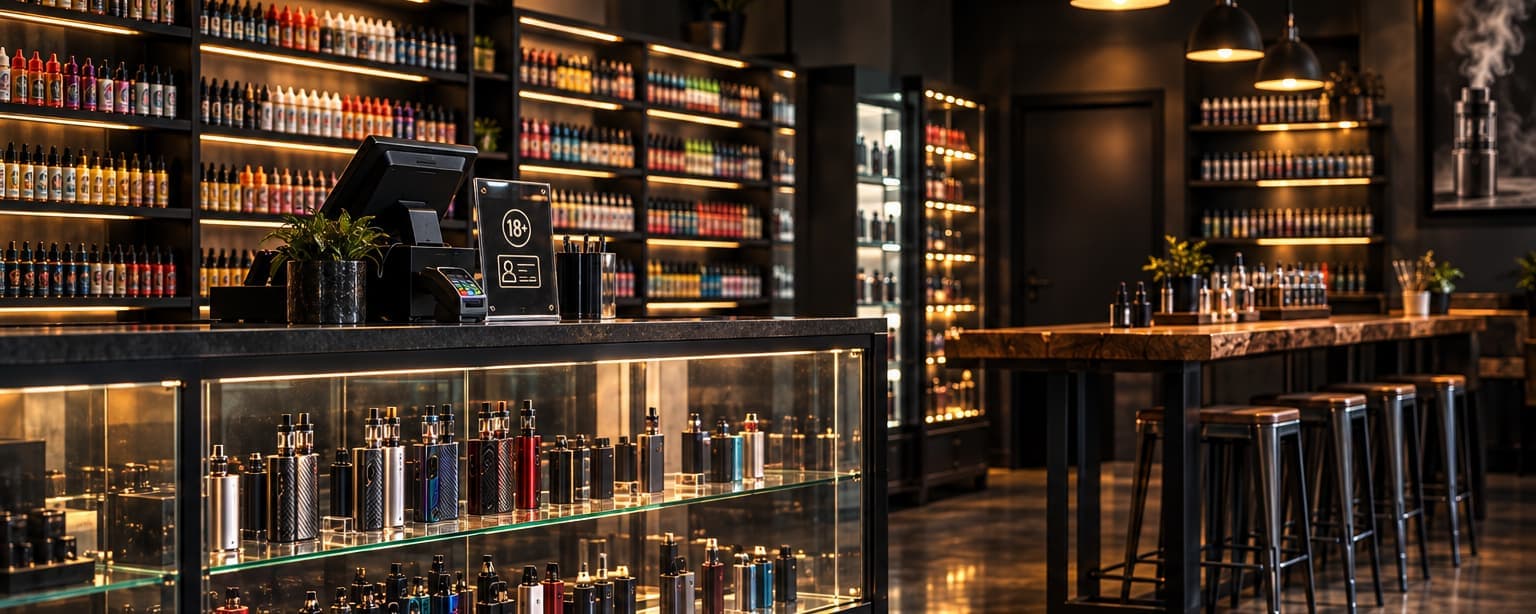
A vape shop is a retailer that most retail carriers refuse: the products are regulated as tobacco, the batteries catch fire, the e-liquid is ingested, and the customers must be verified as adults at every sale. The policy that works is a specialty package with products liability that names vapor products and lithium batteries, general liability for the store, property for the inventory, and cyber where online sales exist. The application is longer than a retailer expects because the carrier is underwriting the supply chain: where the devices come from, whether the batteries are branded and wrapped, whether the e-liquid is made in-house, and whether the shop ships. We place it for single stores, small chains, lounges and shops that mix vapor, glass and CBD.
Tell us the situation.
One licensed human replies the same business day — not five agents, not an auto-responder. If the policy you have is already the right one, we will tell you.
We use this to quote and service your insurance, and we do not sell it or pass it to lead networks. Privacy policy.
Send us what you have. We’ll tell you if it’s right.
Your current policy paperwork, a renewal notice, or nothing at all. A licensed agent reads it and replies the same business day.
What vape shop businesses actually need.
Products liability for vapor products
Claims that a device, battery, coil or e-liquid sold by the shop injured someone: burns, fires, poisoning.
Without it — The single exclusion that makes a standard retail policy useless for this class.
General liability
Customer injury in the store and, for lounges, the premises exposure of people vaping on site.
Without it — The lease requires it, and a lounge without it is uninsurable for the landlord too.
Property and inventory
Devices, e-liquid, glass and accessories, plus fixtures and the build-out, including theft.
Without it — High-value, small, easily resold stock makes vape shops a burglary target, and a battery fire in the stockroom is a total loss.
Business income
Revenue lost while a covered loss closes the store.
Without it — A fire from a charging device closes the shop for months, not days.
Cyber and online sales
Card data, customer age-verification records and the website, where the shop sells online.
Without it — A shop that ships holds identity documents for age verification, which is exactly the data a breach exposes.
Workers compensation
Employee injuries, including burns and exposure from handling batteries and liquid nicotine.
Without it — Required from the first employee in most states, and specialty carriers write it alongside the package.
What smoke, vape and tobacco shops we placed in 2025 and 2026 actually paid.
These are annual premiums from policies we bound, effective January 2025 to June 2026. We show the median and the middle half of what clients paid, never the cheapest or the most expensive, and only for lines where at least five shops stand behind the figure.
- Commercial property, written on its own
- $1,390median a year
- Middle half: $1,110 to $1,650
- 9 policies from 9 shops
- General liability, written without property
- $1,220median a year
- Middle half: $950 to $1,500
- 10 policies from 9 shops
Payroll moves workers compensation more than anything else, and the services you provide, your limits and your claims history move the rest, so treat these as a sense of scale rather than a quote. Source: Boring Insurance bound policies, cancelled policies and test records excluded, refreshed 2026-10-04.
The claims we actually see.
Ordered by how often we see them, not by how dramatic they are. Each one names the coverage that answers it — and the policy people wrongly assume already does.
Most common
A battery fire or explosion in a customer's pocket or hand
Covered by Products liability
Unwrapped or counterfeit cells and mechanical mods are the pattern. Carriers ask whether you sell loose batteries, whether they are branded and whether you inspect wraps.
Common
A minor buys, or is served in a lounge
Covered by General liability for the injury claim; fines are not insured
Regulators run sting purchases. A written age-verification procedure, ID scanners and training records are asked for on the application and demanded after a violation.
Less common, severe
A child ingests e-liquid
Covered by Products liability
Child-resistant packaging is required by federal law, and a shop that decants or mixes liquid takes on the manufacturer's liability.
Rare, catastrophic
A claim over a product later recalled or banned
Covered by Products liability, for the injury; not for lost inventory
A shop cannot insure against a product being withdrawn from the market. It can keep records of every supplier so a defense is possible.
What the policy will not cover.
Pick a procedure to see what the exclusion actually means and whether it can be placed somewhere else.
The policy covers a retail store selling finished vapor products from identifiable manufacturers to verified adults. Making product, shipping it and adding other regulated goods each change the risk.
Where a vape shop policy stops
Mixing or making e-liquid
In-house liquid is manufacturing, with federal registration and a manufacturer's liability most retail carriers will not write.
Can it be placed? Sometimes, on a manufacturer's policy, with the facility described.
Shipping to consumers
Federal law restricts mailing vapor products and requires adult signature delivery; a shop that ships is underwritten as an online retailer.
Can it be placed? Yes, with the carrier, the verification process and the volumes disclosed.
Cannabis, hemp and unregulated products
THC, delta-8 and similar products are excluded from a vapor policy and need their own.
Can it be placed? Yes, on a cannabis or hemp product policy, in states where it can be written.
Fines and license actions
Regulatory penalties for a sale to a minor or an unregistered product are never insured.
Can it be placed? No.
What our vape shop clients ask us.
Why was my vape shop declined by a regular business insurer?
Because most standard retail policies carry a tobacco and vapor exclusion, and the products liability on vaping devices and batteries is the whole risk. A handful of specialty programs write the class deliberately, and they ask a longer application in exchange. Declined is normal; uninsured is not.
How much does vape shop insurance cost?
Specialty packages for a single store commonly land in the low-to-mid four figures a year, rated on sales, inventory value, whether there is a lounge, whether batteries are sold loose and whether the shop ships or makes liquid. Products liability is the largest part of the price.
What does a vape shop insurance application ask for?
No vape-specific form is in our question bank yet, but applications for this class typically ask: annual sales split between devices, e-liquid, batteries, glass and other goods, your suppliers and whether products are from registered manufacturers, whether you sell loose lithium batteries or mechanical mods, whether you mix liquid, whether you ship and how you verify age online, your in-store age verification procedure and any violations, whether there is a lounge, security and fire protection, and claims in the last five years.
Does the policy cover CBD or hemp products we also sell?
Not under a vapor products policy. Hemp-derived products are a separate products exposure with their own regulatory picture, and it changes state by state. Tell us the share of sales and we place it where it can be placed, or advise you what cannot be.
Commercial insurance is 96% of what we do — it is not a department here, it is the whole business. Not ready to talk? The guides answer the questions this page raises in more depth. Already insured with us and need a certificate or a policy change? Ask the service team rather than starting a quote — it is faster and it goes to the people whose job it is. We also write home and auto, which is usually cheaper alongside the business policy than apart from it.
Handed a lease, a vendor packet or a client contract with insurance requirements? Paste it into the COI Requirements Decoder to see what each one means for your business, or read what the requirements mean.