
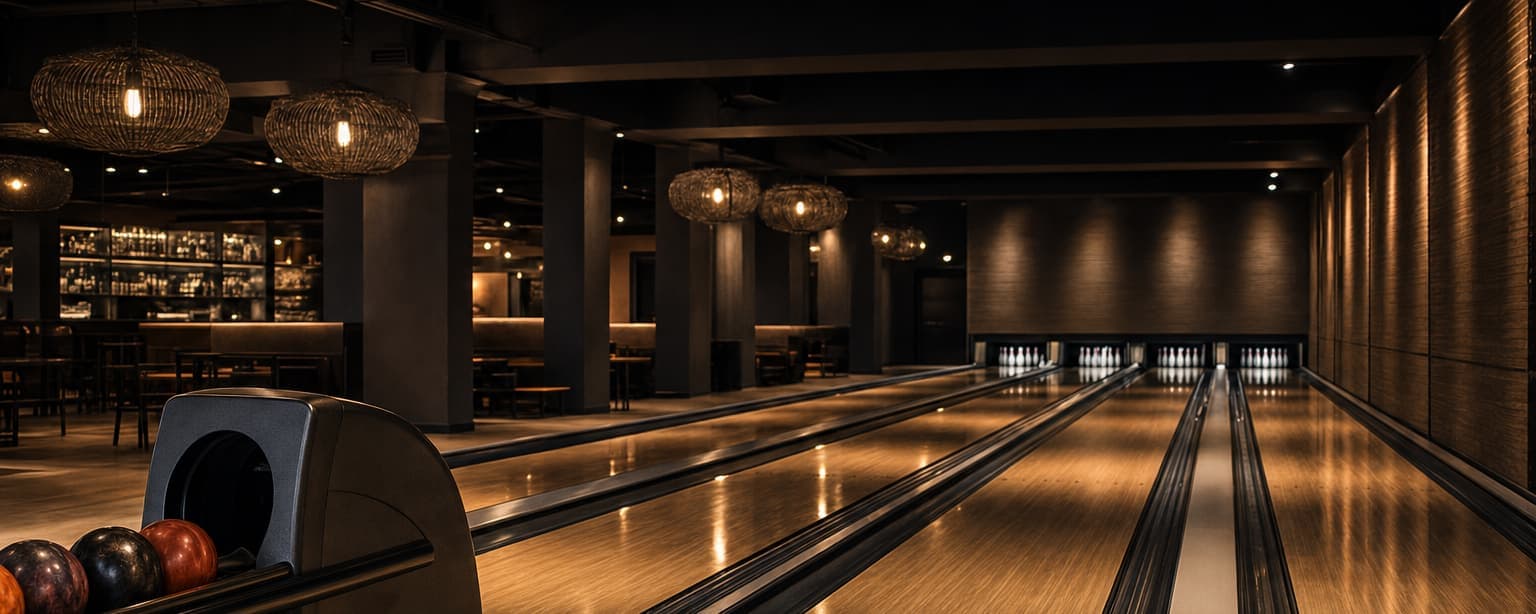
Half hospitality, half machinery, insured as neither.
A bowling center is really three underwriting conversations in one building. The pinsetters, the bar, and the leagues and parties that fill it are each priced apart.
Tell us the situation.
One licensed human replies the same business day — not five agents, not an auto-responder. If the policy you have is already the right one, we will tell you.
We use this to quote and service your insurance, and we do not sell it or pass it to lead networks. Privacy policy.
Send us what you have. We’ll tell you if it’s right.
Your current policy paperwork, a renewal notice, or nothing at all. A licensed agent reads it and replies the same business day.
What bowling center businesses actually need.
Commercial property
Buildings and contents, valued at what it costs to rebuild today rather than what you paid.
Without it — Lanes, pinsetters and the building, which are expensive and specialized to replace.
Equipment breakdown & spoilage
Covers the walk-in, the compressor and the line when they fail from the inside. A mechanical or electrical breakdown is excluded by property policies, and the stock that thawed goes with it.
Without it — A pinsetter failure closes lanes and the parts are not held locally.
General liability
Third-party bodily injury and property damage. It is the line nearly every contract names by default.
Without it — Approaches, returns, food service and a floor designed to be slippery.
Liquor liability
If you serve alcohol, your general liability almost certainly excludes what happens after you serve it.
Without it — The bar is a real revenue line and general liability excludes what it sells.
Business income
Replaces the profit and pays the ongoing bills while a covered loss keeps you closed. It is the part of a fire claim that is not the building.
Without it — League nights are contracted revenue that does not reschedule.
Participant accident
Pays the medical costs of a player, a camper or a rider injured while taking part, without anyone having to establish that the organization was at fault.
Without it — League and youth programs bring their own injury exposure.
Business owners policy
General liability and property packaged together. Cheaper than buying them separately when you qualify, and most small businesses do.
Without it — Most independent centers belong in a package rather than in separate policies.
Employment practices liability
Wrongful termination, discrimination and harassment claims brought by your own employees. General liability specifically excludes these.
Without it — Seasonal and student staff across food, bar and front desk.
What the insurance company will ask about your bowling center business
We read the applications the markets use for businesses in this field and pulled out what they actually ask. Have these answers ready and a quote takes a day instead of a week, because nobody has to come back to you for the missing piece.
About the business
- What is your annual gross revenue?
- How many years have you been operating?
- How many locations do you have?
- What type of business structure do you have (corporation, LLC, sole proprietor)?
How you operate
- Describe what activities and attractions you offer at your facility
- What is your operating season?
- Do you host special events or live entertainment? If yes, describe them
- Do you serve alcohol at any events?
- Do you hire outside security or entertainers?
Safety and controls
- Describe your employee training procedures for safety
- Do you have an emergency evacuation plan for events? Explain it
- Describe your first aid facilities and equipment
- Do you use liability waivers? If yes, have them ready
- Do you check IDs if serving alcohol? Explain how
Your history
- Have you ever had an insurance claim?
- Has your insurance ever been canceled?
- Is this a new business, or have you operated before?
- Who was your prior insurance carrier?
Money and people
- What is your annual payroll?
- Who owns the business and what is their experience?
- How many people work for you annually?
Have these ready
- Your loss history from the last four years from your current or prior insurance carrier
- Copies of any liability waivers you use
- Resumes of your manager or owner
- Your business auto policy if you own vehicles used for business
- Any contracts you have with entertainers or vendors showing they carry insurance
You answer what you can; a licensed agent fills the rest with you.
What our bowling center clients ask us.
Our bar is now most of our revenue. Does that matter?
A great deal, and it is the most common quiet change in this class. Once alcohol passes roughly half of receipts you are being underwritten as a bar with lanes rather than a bowling center with a bar, and that is a different market, a different rate and a different set of questions about hours, entertainment and crowd. Report the split accurately: the audit will use the real number regardless.
We are adding arcade, axe throwing or laser tag. Anything to know?
Tell us first. Arcade is usually incidental. Axe throwing is its own class with its own underwriting and, combined with a bar, a specific and much harder placement. Laser tag and ropes move you toward family entertainment center rating. Centers modernizing into entertainment venues frequently discover the change at renewal, which is the expensive order to do it in.
What does a bowling center insurance application ask for?
The applications for bowling center businesses ask about 4 things above all: what is your annual gross revenue; describe what activities and attractions you offer at your facility; describe your employee training procedures for safety; have you ever had an insurance claim. Have your loss history from the last four years from your current or prior insurance carrier and copies of any liability waivers you use ready and a quote takes a day instead of a week.
Commercial insurance is 96% of what we do — it is not a department here, it is the whole business. Not ready to talk? The guides answer the questions this page raises in more depth. Already insured with us and need a certificate or a policy change? Ask the service team rather than starting a quote — it is faster and it goes to the people whose job it is. We also write home and auto, which is usually cheaper alongside the business policy than apart from it.
Handed a lease, a vendor packet or a client contract with insurance requirements? Paste it into the COI Requirements Decoder to see what each one means for your business, or read what the requirements mean.