
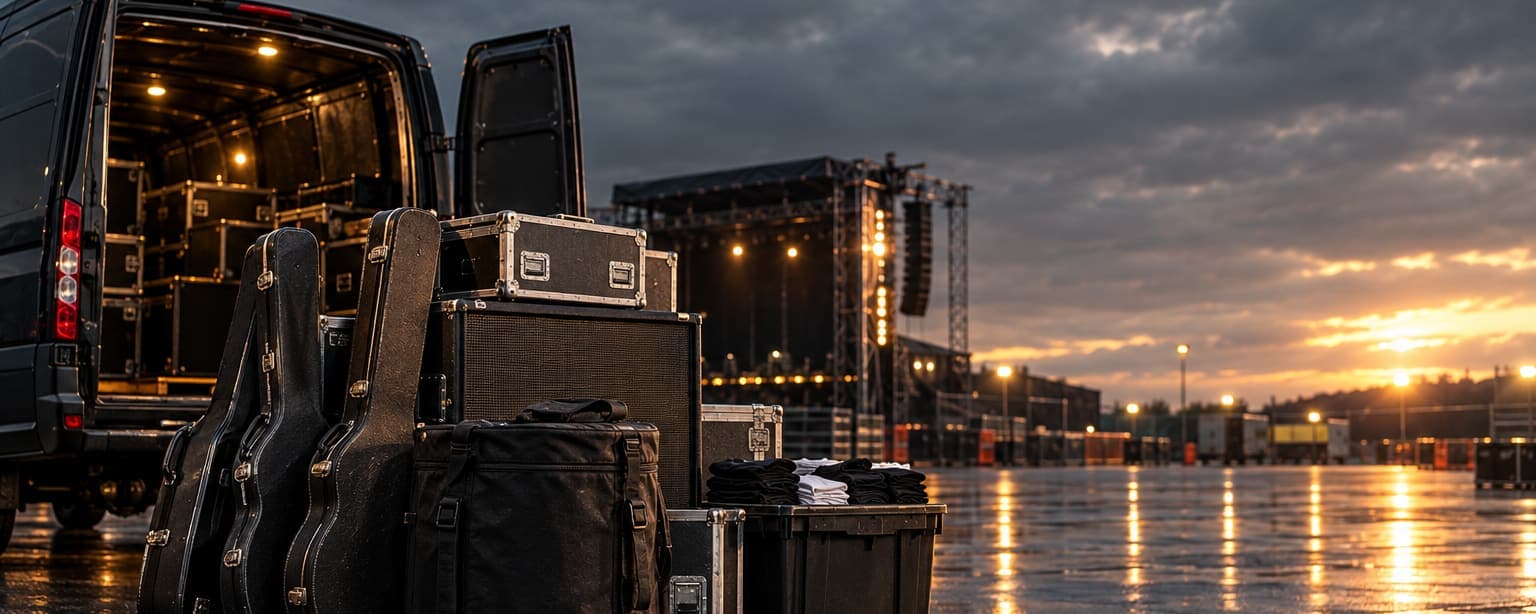
The venue wants a certificate, the van holds everything you own, and the gear is the whole band. Three policies, one page.
A working band is a small touring business: gear worth more than the van it rides in, contracts with venues that require proof of liability, and a crew of members and hired hands who get hurt loading in. The insurance is general liability for the venues, an instrument and equipment floater for the gear, and auto for the van, and the first two are inexpensive enough that most bands buy them the first time a festival asks. We place them for bands, solo artists, small touring acts and the production companies that grow out of them.
Tell us the situation.
One licensed human replies the same business day — not five agents, not an auto-responder. If the policy you have is already the right one, we will tell you.
We use this to quote and service your insurance, and we do not sell it or pass it to lead networks. Privacy policy.
Send us what you have. We’ll tell you if it’s right.
Your current policy paperwork, a renewal notice, or nothing at all. A licensed agent reads it and replies the same business day.
What band businesses actually need.
General liability
Injury or property damage at a show: a fan hurt by a falling monitor, a damaged stage, a fire from an effect. With the venue as additional insured.
Without it — Venue and festival contracts require it, and a cancelled booking is the immediate cost.
Instruments and equipment (inland marine)
Instruments, amplifiers, PA, lighting, cases and the merch, anywhere: on stage, in the van, in a hotel, in storage. Theft, drops, water, fire.
Without it — A homeowners or renters policy limits business property away from home to a few hundred dollars; a van break-in after a show is the classic total loss.
Commercial auto
The van and the trailer, with the liability of driving them between shows.
Without it — A personal auto policy excludes business use, and a band van with a trailer is business use on sight.
Hired and non-owned auto
Liability when a member drives their own car to a show or the band rents a vehicle for a tour.
Without it — The rental company's coverage is minimal and the driver's personal policy may exclude the use.
Non-appearance and cancellation
For larger acts: the fees at stake when a show is cancelled or a member cannot perform, for covered reasons.
Without it — A festival deposit clause is a promise, not insurance.
The claims we actually see.
Ordered by how often we see them, not by how dramatic they are. Each one names the coverage that answers it — and the policy people wrongly assume already does.
Most common
Gear stolen from the van or the trailer
Covered by Instruments and equipment
The auto policy covers the van, not the contents. Schedule the expensive instruments individually with serial numbers.
Common
A fan or a crew member is hurt at the show
Covered by General liability
The venue tenders the claim to the band under the performance agreement. Read the indemnity clause before signing.
Less common, severe
A van accident on tour
Covered by Commercial auto, and workers compensation where members are employees
Overnight drives after shows are the pattern. Some carriers ask about driving hours.
Common
A festival is cancelled for weather and the fee is lost
Covered by Cancellation coverage, when bought
Most small acts absorb it; acts with real fees at stake insure it per tour.
What the policy will not cover.
Pick a procedure to see what the exclusion actually means and whether it can be placed somewhere else.
A band policy is small and specific. These are the situations that need a different answer on the application.
What a band policy needs to be told
Pyrotechnics and effects
Anything that burns or sprays is excluded on standard forms and rated separately on a few.
Can it be placed? Yes, with a licensed operator and the venue's approval.
Promoting your own shows
Renting the venue and selling the tickets is a promoter exposure with its own policy.
Can it be placed? Yes, on a promoter or special event policy per show.
International touring
Most US policies stop at the border or limit coverage abroad.
Can it be placed? Yes, on a worldwide floater and a tour liability extension.
Members as employees
A band that pays members a wage owes workers compensation in most states; a partnership of equals usually does not.
Can it be placed? Yes, once the structure is clear.
What the insurance company will ask about your band business
We read 1 application the markets use for this kind of business and pulled out what they actually ask. Have these answers ready and a quote takes a day instead of a week, because nobody has to come back to you for the missing piece.
About the business
- How many band members do you have?
- How many years of experience do you have as a performer or entertainer?
- Do you currently have an album or CD in stores?
- Are any of your songs getting airplay on TV or radio right now?
- What is your website or internet address?
How you operate
- What types of venues do you perform at (nightclubs, bars, theaters, stadiums, concert halls, or other)?
- How many concerts or performances do you estimate per year?
- What is the smallest, largest, and average audience size at your shows?
- Do you handle your own promotion, or does a separate promoter book your shows?
- Who is responsible for audience safety liability at your performances?
Safety and controls
- Do you use any special effects, rigging, staging, or animals in your performances?
- What operations does your team or subcontractors handle (staging and lighting, audio and video rigging, security, merchandise sales)?
- How do you protect your equipment from theft and fire when it's in storage and when you're traveling?
- Do you have certificates of insurance from all subcontractors you work with?
Money and people
- What is your estimated annual payroll?
- What are your estimated annual record sales?
- What is the estimated cost to hire buses and other transportation?
Your history
- Do you have a current performance schedule to share?
Have these ready
- A copy of any lease or premises agreement you sign with venues
- Your performance schedule for the next year
- A list of your equipment and its value
- Copies of any contracts with transportation companies (buses or trucking)
- Certificates of insurance from any subcontractors you work with
You answer what you can; a licensed agent fills the rest with you.
What our band clients ask us.
How much does band insurance cost?
General liability for a band is inexpensive, usually a few hundred dollars a year, and equipment coverage is priced on the value scheduled. Auto for the van is the larger item and depends on the vehicle and the drivers. A working regional band insures all three for less than a single lost weekend of gear.
Do I need insurance to play a venue or a festival?
Most venues and nearly all festivals require a certificate naming them as additional insured, often for $1 million per occurrence. A single-event certificate can be bought for one show; a band that plays regularly should carry the annual policy, which issues unlimited certificates.
What does a band insurance application ask for?
The applications we work from ask the number of shows a year and the venues (clubs, festivals, private events, theaters), the largest audience, whether you use effects, whether you promote your own shows, the equipment schedule with values, the vehicles and drivers, whether members are paid as employees, international dates, and any claims. The equipment list takes the longest; keep serial numbers and receipts.
Is my gear covered on my renters or homeowners policy?
At home, partly, up to a business property limit that is small; away from home, usually a few hundred dollars at most, and professional equipment is often excluded outright. An instrument floater covers the gear at agreed values wherever it goes and pays for the drop as well as the theft.
Commercial insurance is 96% of what we do — it is not a department here, it is the whole business. Not ready to talk? The guides answer the questions this page raises in more depth. Already insured with us and need a certificate or a policy change? Ask the service team rather than starting a quote — it is faster and it goes to the people whose job it is. We also write home and auto, which is usually cheaper alongside the business policy than apart from it.
Handed a lease, a vendor packet or a client contract with insurance requirements? Paste it into the COI Requirements Decoder to see what each one means for your business, or read what the requirements mean.