
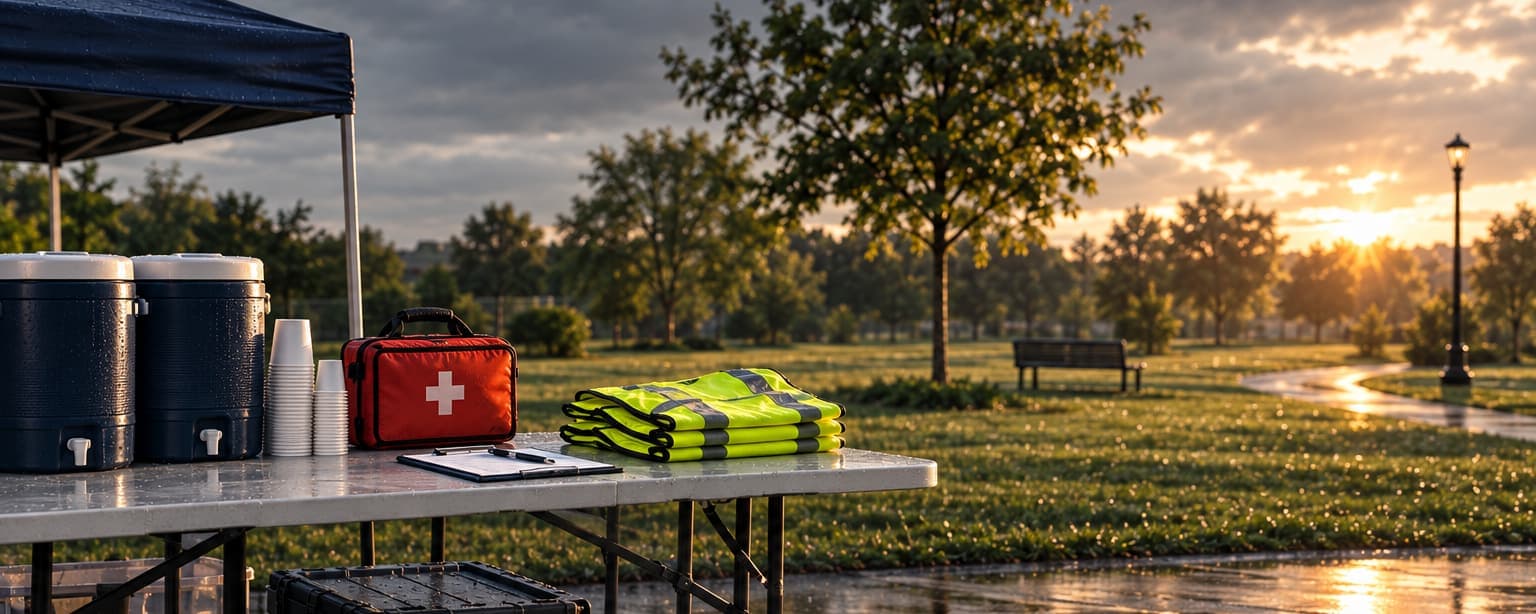
A volunteer who gets hurt is not an employee and not a customer. This is the policy written for the space between.
A nonprofit, congregation, league or event that uses volunteers needs volunteer accident insurance because neither of its other policies pays a hurt volunteer’s medical bills: workers compensation covers employees, and general liability pays only when the organization was at fault. The policy pays the volunteer’s medical costs after an on-duty injury, no fault required, usually as excess over their own health plan, and it is one of the least expensive policies an organization buys.
Tell us the situation.
One licensed human replies the same business day — not five agents, not an auto-responder. If the policy you have is already the right one, we will tell you.
We use this to quote and service your insurance, and we do not sell it or pass it to lead networks. Privacy policy.
Send us what you have. We’ll tell you if it’s right.
Your current policy paperwork, a renewal notice, or nothing at all. A licensed agent reads it and replies the same business day.
What volunteer program businesses actually need.
Accident medical
Medical expenses for a volunteer injured while performing volunteer duties, paid on top of or in the absence of the volunteer's own health insurance, up to a per-injury limit.
Without it — The volunteer's own health plan pays with its deductible and co-pays, or nothing if they have no plan, and a hurt volunteer with bills becomes a claimant.
Accidental death and dismemberment
A stated benefit to the volunteer or their family for a death or a loss of limb or sight from an accident on duty.
Without it — There is no other policy that pays a volunteer's family anything.
Volunteer liability
Often packaged with accident coverage: the volunteer's personal liability for injury or damage they cause while acting for the organization.
Without it — The organization's general liability may or may not extend to volunteers as insureds; many forms do not unless endorsed.
Excess auto liability for volunteer drivers
Liability above the volunteer's personal auto policy when they drive for the organization.
Without it — A volunteer's personal policy is primary and its limit is often the state minimum; the excess claim reaches the organization.
What the regulators actually wrote down.
The federal Volunteer Protection Act shields an individual volunteer of a nonprofit or government entity from liability for harm caused while acting within the scope of their responsibilities, unless the harm came from willful or criminal misconduct, gross negligence or recklessness, or from operating a vehicle the state requires to be licensed or insured.
Volunteer Protection Act of 1997, 42 U.S.C. § 14503(a) · checked 2026-10-04
The same section states that nothing in it affects the liability of the nonprofit organization or governmental entity itself for harm caused to any person.
Volunteer Protection Act of 1997, 42 U.S.C. § 14503(d) · checked 2026-10-04
In California, a nonprofit organization’s board may declare in writing, before any injury, that its volunteers are deemed employees for workers compensation purposes, which brings them under the organization’s workers compensation policy.
California Labor Code § 3363.6 · checked 2026-10-04
The claims we actually see.
Ordered by how often we see them, not by how dramatic they are. Each one names the coverage that answers it — and the policy people wrongly assume already does.
Most common
A volunteer falls at an event or while setting up
Covered by Accident medical
Without the policy the volunteer pays their deductible, or the organization pays it from goodwill, or a lawyer is called.
Common
A volunteer is hurt lifting, carrying or building
Covered by Accident medical
Back and shoulder injuries are the everyday volunteer claim, and they are excluded from workers compensation because there is no wage to replace.
Less common, severe
A volunteer driver is in an accident with passengers
Covered by Volunteer's personal auto first, then excess auto and accident medical
Passenger injuries exceed a personal auto limit quickly, and the organization that arranged the ride is named.
Less common, severe
A volunteer injures a member of the public
Covered by Volunteer liability or the organization's general liability, depending on the wording
If the general liability form does not name volunteers as insureds, the volunteer is defended by nobody.
What the policy will not cover.
Pick a procedure to see what the exclusion actually means and whether it can be placed somewhere else.
It is a medical benefit, not liability insurance and not workers compensation. Three situations are regularly mistaken for it.
What volunteer accident coverage is not
Paid staff
Anyone paid a wage is an employee and belongs on workers compensation, however small the wage; a stipend can be enough to make the difference in some states.
Can it be placed? Yes, on the workers compensation policy.
Participants and spectators
A player on the team or a guest at the event is not a volunteer; participant accident coverage is a separate policy.
Can it be placed? Yes, as participant accident coverage for sports and camps.
Sickness
Accident policies pay for injuries from accidents, not illness contracted while volunteering.
Can it be placed? Rarely; the volunteer's own health plan is the answer.
Off-duty injuries
The injury has to happen while performing volunteer duties, on the organization's schedule.
Can it be placed? No; that is what the volunteer's own health insurance is for.
What the insurance company will ask about your volunteer program business
We read the applications the markets use for businesses in this field and pulled out what they actually ask. Have these answers ready and a quote takes a day instead of a week, because nobody has to come back to you for the missing piece.
About the business
- What is your organization's main purpose?
- How many members does your organization have?
- How long has your organization been operating?
- What is your annual gross revenue?
How you operate
- Do you offer counseling services for a fee?
- Do you operate a school?
- Do you regularly transport people or deliver goods?
- How many employees and volunteers use their own vehicles for your work?
- Do your staff or volunteers work on drop-in center activities, and if so, where and how often?
Safety and controls
- Are there at least two accessible exits from your main building?
- Do you have policies for supervising employees and volunteers who work with minors?
- Do you verify employment and personal references for all new employees?
- Has your organization ever been involved in a lawsuit or claim related to abuse or misconduct?
- What kind of counseling services, if any, does clergy provide?
Your history
- What year was your main building constructed?
- What type of plumbing does your building have (copper or PVC)?
- Describe your building's cooling system
- Do you own your building or lease it?
- Have you had any insurance claims or losses in the past five years?
Money and people
- What is your total building value?
- What is your total fund balance (assets minus liabilities)?
- Do you currently have general liability insurance, and if so, with whom?
- Why are you looking for new or different insurance coverage?
Have these ready
- Your loss history for the last five years, including details of any claims or losses
- Information about your current insurance coverage: company name, types of coverage, limits, and annual premium
- A list and description of all property you want insured
- Proof that employees and volunteers have liability insurance before using their personal vehicles for your work
- Names of your pastor or executive leadership
You answer what you can; a licensed agent fills the rest with you.
What our volunteer program clients ask us.
Who needs volunteer accident insurance?
Any organization that puts unpaid people to work: food banks and pantries, congregations, youth leagues and booster clubs, animal rescues, build and cleanup days, fairs, festivals, races and charity events, and schools that rely on parent volunteers. It matters most where the work is physical, where volunteers drive, and where many volunteers have high-deductible health plans or none.
How does volunteer accident coverage fit with general liability and workers comp?
Each answers a different person. Workers comp pays employees. General liability pays someone the organization injured, so a volunteer has to show the organization was negligent to collect from it. Volunteer accident pays the volunteer’s own medical bills with no fault question at all. In California a nonprofit board can elect in writing to bring volunteers under its workers comp policy instead, which is broader and costs more.
Does the Volunteer Protection Act mean we do not need insurance?
No. The federal Volunteer Protection Act protects an individual volunteer from many negligence claims while acting for a nonprofit, but it says in terms that the organization’s own liability is unaffected, and it does nothing for a volunteer who is hurt. It also does not apply to harm from driving a vehicle the state requires to be insured. The organization still needs general liability, and a hurt volunteer still needs someone to pay the bills.
What limits should a volunteer accident policy have?
Three numbers decide it. The medical limit is the most the policy pays per injury. The deductible is what the volunteer or the organization pays first. Excess or primary decides whether it pays after the volunteer’s own health plan or ahead of it; excess is cheaper, and it pays as if it were primary for a volunteer with no health plan. Accidental death and dismemberment is a separate, stated benefit. Pick the medical limit by asking what an emergency room visit and a few weeks of physical therapy cost where your volunteers live.
What will an event organizer, venue or permit office require?
Usually general liability, with the venue, the city or the property owner named as an additional insured on the certificate. A venue or permit rarely asks for volunteer accident coverage. Where it is required, the requirement sits in an agreement with someone else, such as a league or national affiliate, a school, a grant or a company sending employees to volunteer, so read that agreement for the medical limit it names. A participant in a race or a game is not a volunteer and needs participant accident coverage instead.
Does workers compensation cover volunteers?
Generally no. Workers compensation is a wage-replacement system for employees, and most states exclude unpaid volunteers, with a few exceptions for volunteer firefighters and certain public bodies. A volunteer accident policy is the private equivalent for the medical part: it pays the bills without anyone having to prove fault.
How much does volunteer accident insurance cost?
It is priced on the number of volunteers and what they do, and it is inexpensive: a community organization with a few dozen volunteers doing ordinary work pays a small annual premium, and youth sports and fairs pay more because the activity is more physical. Many nonprofit package policies include it for little extra.
What does a volunteer accident insurance application ask for?
The applications we work from ask the number of volunteers and the hours they give, what they do (office work, events, construction, driving, caring for people, sports), whether any volunteers are under eighteen, whether volunteers drive for the organization, the medical limit and deductible wanted, and any prior injuries. It is a short form and the volunteer count is the rating.
Is volunteer accident coverage the same as volunteer liability?
No. Accident coverage pays the volunteer's own medical bills after an injury to them. Liability coverage defends the volunteer when they injure someone else or damage property while acting for the organization. Many programs bundle both, and an organization with volunteers needs to know it has each.
Commercial insurance is 96% of what we do — it is not a department here, it is the whole business. Not ready to talk? The guides answer the questions this page raises in more depth. Already insured with us and need a certificate or a policy change? Ask the service team rather than starting a quote — it is faster and it goes to the people whose job it is. We also write home and auto, which is usually cheaper alongside the business policy than apart from it.
Handed a lease, a vendor packet or a client contract with insurance requirements? Paste it into the COI Requirements Decoder to see what each one means for your business, or read what the requirements mean.