
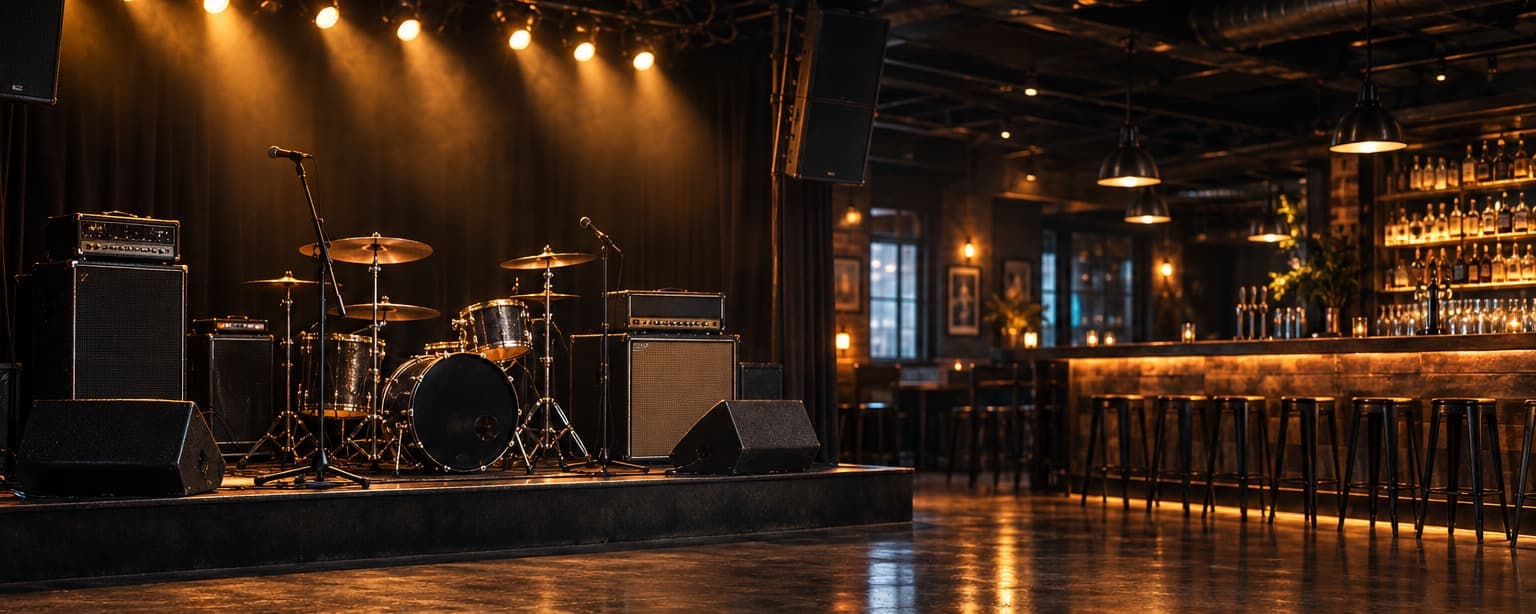
Does live music change my liquor liability?
Beyond a single performer, yes. One musician in the corner is generally treated as ambience. A band, a DJ with a following, or anything promoted as an event changes the attendance, often the age profile, and usually the drinking rate, and underwriters treat promoted events as a different exposure from background music.
Tell us the situation.
One licensed human replies the same business day — not five agents, not an auto-responder. If the policy you have is already the right one, we will tell you.
We use this to quote and service your insurance, and we do not sell it or pass it to lead networks. Privacy policy.
Send us what you have. We’ll tell you if it’s right.
Your current policy paperwork, a renewal notice, or nothing at all. A licensed agent reads it and replies the same business day.
What this means for you
- The threshold is promotion, not volume. What moves the rating is whether people came for the act. A quiet acoustic set that nobody advertised draws your regulars; a promoted DJ night draws a crowd who came to drink to that DJ, and may never have been in the building before.
- Frequency is a separate question from scale. Once a month and four nights a week are different risks even with the same act. Say which you are, because the application usually only asks whether you have live entertainment at all.
- A new crowd is an unknown crowd. Regulars are known to your staff, who know who to cut off. An event crowd is not, and the refusal-of-service conversation is harder with someone nobody recognizes. Underwriters know this, and it is the real reason event nights rate higher.
- Ticketed events pull in other coverages. Ticketing, cancellation, performer contracts and equipment on site are their own exposures, and a venue running regular ticketed nights has usually outgrown a plain bar policy without noticing.
- Capacity management is the evidence. Door counts, a stated capacity, and a policy for what happens when you reach it. A venue that can show it counts and stops is describing a materially different risk from one that cannot.
- Your event flyers are part of the file. Carriers look at your feed. A venue rated for occasional acoustic music whose Instagram shows a weekly packed DJ night has a mismatch that will surface at exactly the wrong moment.
Go deeper on any of these
Related questions
- We only do one band a month. Do we have to declare it?
Yes, and it is very likely fine. Occasional live music with an evidenced frequency is a small factor, and declaring it costs almost nothing. The expensive version is the venue that says no, has an incident on an event night, and then has to explain why the application said what it said.
- What happens when an application is wrong
- Does the performer need their own insurance?
For a solo acoustic act, rarely. For anything with rigging, pyrotechnics, staging or a touring crew, yes, and you should be named as an additional insured on it. Equipment brought into your venue, and injuries to a touring crew working in it, are exposures that belong with the act rather than with the bar.
- How production and touring risks are covered
- So can you actually place a venue like mine?
Usually, yes, and the ones we cannot place quickly are almost always the ones where the submission arrived as a declarations page and a renewal date. This class is placed on operating detail: the floor plan, the hours you actually keep as opposed to the ones your license permits, the revenue split, the training records, the written policies, and an explanation attached to every claim. Venues that look identical on an application place very differently once that detail is in front of an underwriter who writes the class.
- The full underwriting list, in order
Need this handled?
Reading about it and having it handled are different jobs, and the second one is ours. We place the accounts other brokers decline — claims history, a cancellation, an unusual operation, a business nobody wants to underwrite twice — and we will tell you when the policy you already have is the right one. Tell us the situation and a licensed human replies the same business day.
Written by the licensed brokers at Boring Insurance. Last updated 2026-08-22. See all guides.