
Does running karaoke affect my bar insurance?
A little, and less than operators are sometimes told. Karaoke reads as entertainment plus extended dwell time plus, usually, a later crowd, so it is on the underwriting list. It sits well below a dance floor or a late license in significance, and on its own it rarely changes which carriers will look at you.
Tell us the situation.
One licensed human replies the same business day — not five agents, not an auto-responder. If the policy you have is already the right one, we will tell you.
We use this to quote and service your insurance, and we do not sell it or pass it to lead networks. Privacy policy.
Send us what you have. We’ll tell you if it’s right.
Your current policy paperwork, a renewal notice, or nothing at all. A licensed agent reads it and replies the same business day.
What this means for you
- It is dwell time. People stay for their turn, and then for their friend’s turn. A karaoke night keeps a room full for longer than the same room would otherwise stay full, and consumption follows.
- It usually moves the closing time. Karaoke tends to run late, and the hours question is a bigger factor than the karaoke question. If your karaoke night is also your latest night, the hours are what is being priced.
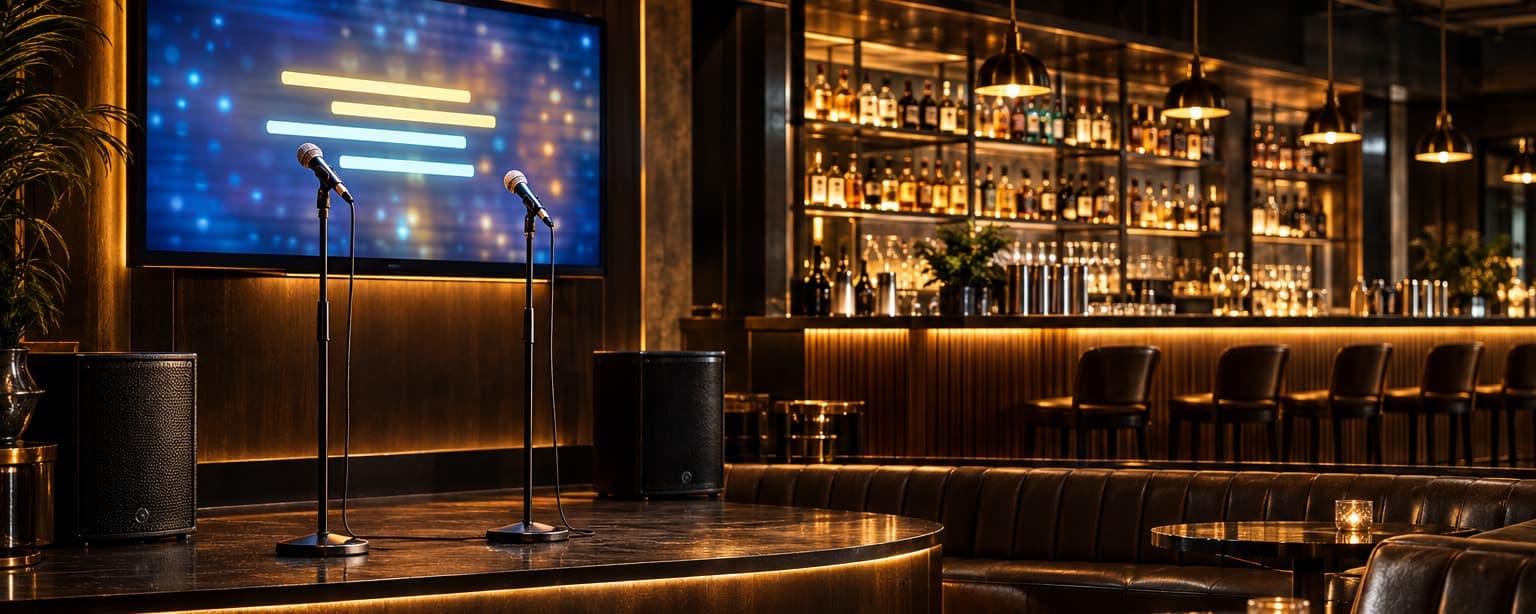
- The equipment is a separate, small exposure. Cables across a floor, a raised platform, a microphone stand in a walkway. Ordinary premises liability, easily managed, and worth a sentence in the submission because it shows you have thought about it.
- A hosted night beats an open mic. A KJ running the room controls the queue, the volume and, in practice, the crowd. "We have a host" is a better answer than "we put the machine on".
- It is not a dance floor, unless it is. Karaoke that regularly turns into general dancing is being rated as a dance floor whether or not one is marked out. If that is what happens on a Friday, price it honestly rather than discovering it after a claim.
Go deeper on any of these
Related questions
- Do I have to declare a weekly karaoke night?
Yes, and it costs very little to do so. It is a small factor declared and a credibility problem undeclared. Applications generally ask about entertainment in a single broad question, so answer it with the specifics — how often, how late, hosted or unhosted.
- Our karaoke night is our busiest. Does that change things?
It changes what is being rated. If Thursday is your biggest night, then the crowd size, the closing time and the drinking rate on Thursday are the exposure, and the karaoke is simply the reason they are there. Present the night as it actually runs — door counts, last service, staffing — rather than as a line item.
- How closing hours are priced
- So can you actually place a venue like mine?
Usually, yes, and the ones we cannot place quickly are almost always the ones where the submission arrived as a declarations page and a renewal date. This class is placed on operating detail: the floor plan, the hours you actually keep as opposed to the ones your license permits, the revenue split, the training records, the written policies, and an explanation attached to every claim. Venues that look identical on an application place very differently once that detail is in front of an underwriter who writes the class.
- The full underwriting list, in order
Need this handled?
Reading about it and having it handled are different jobs, and the second one is ours. We place the accounts other brokers decline — claims history, a cancellation, an unusual operation, a business nobody wants to underwrite twice — and we will tell you when the policy you already have is the right one. Tell us the situation and a licensed human replies the same business day.
Written by the licensed brokers at Boring Insurance. Last updated 2026-08-22. See all guides.