
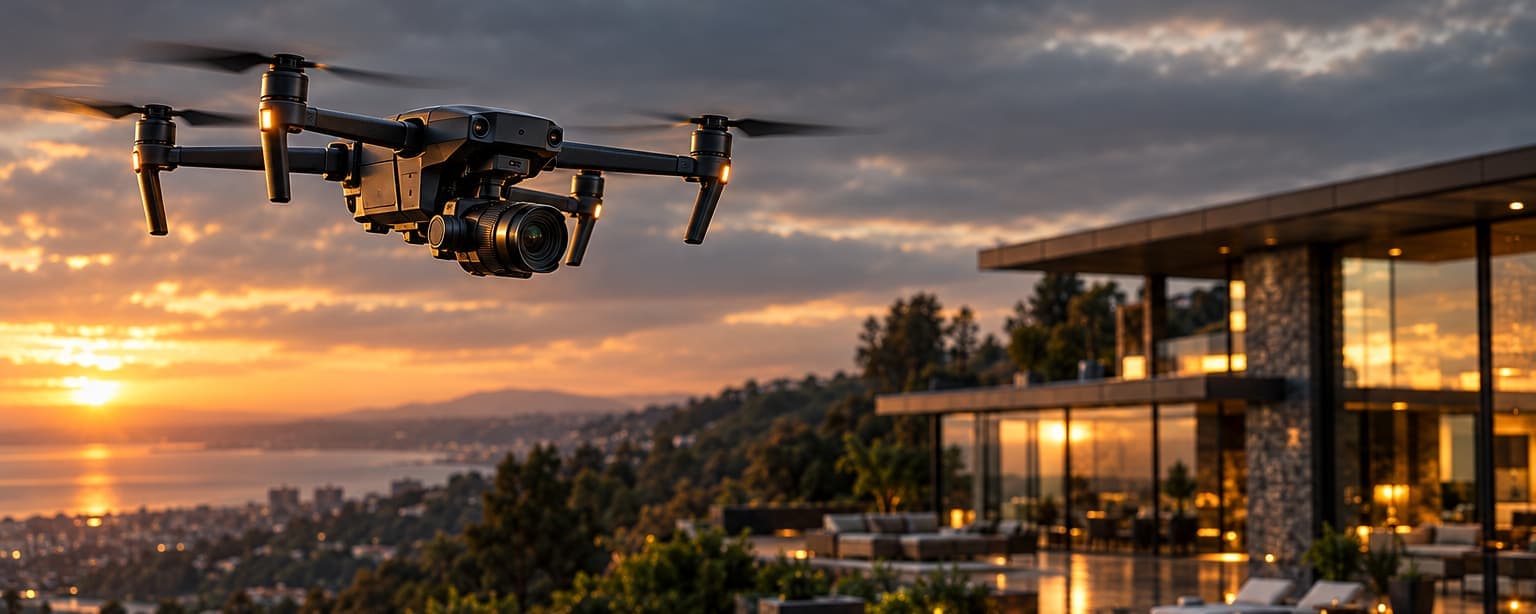
Does my production insurance cover drones?
Usually not by default, and general liability almost never. A general liability policy excludes aircraft, and for insurance purposes a drone is an aircraft, so the flight that damages a roof or injures a bystander falls outside the policy most video companies are carrying. Production packages can cover drones, but many require every flight to be scheduled with the underwriter in advance. If you fly on most shoots, a standalone unmanned aircraft policy on an annual fleet basis is usually the workable answer.
Get a production insurance review.
Send the policy you have and a list of what you shoot. We will tell you which of your likely claims it answers, in writing, before anything is quoted.
Get a production insurance reviewSend us what you have. We’ll tell you if it’s right.
Your current policy paperwork, a renewal notice, or nothing at all. A licensed agent reads it and replies the same business day.
The detail
The FAA classifies an unmanned aircraft as an aircraft, and commercial operation is governed by 14 CFR Part 107.
The ISO commercial general liability form excludes bodily injury and property damage arising out of the ownership, maintenance, use or entrustment to others of any aircraft, and the exclusion is not limited to manned aircraft.
ISO CGL form CG 00 01, aircraft, auto or watercraft exclusion
The same general liability form excludes damage to personal property in the insured’s care, custody or control, which is the exclusion that removes cover for the building or the contents a crew is working inside.
ISO CGL form CG 00 01, damage to property exclusion
ISO publishes an endorsement that excludes unmanned aircraft from general liability outright, CG 21 09, which some production packages attach as standard.
ISO CGL endorsement CG 21 09
What this means for you
- Count the claims your policy would actually pay.Write down the eight things most likely to go wrong in your business, then read your policy against them one at a time. A drone-heavy video company doing this exercise found that its general liability answered exactly one: a visitor tripping over a light stand. The drone was excluded as aircraft. The cameras were not insured at all. The homes it filmed in were excluded as property in its care. The foreign shoots were outside the policy territory. A cheap policy is not bad value because it is cheap; it is bad value when the list of what it answers is that short.
- Worldwide equipment is not foreign liability.These are two different coverages solving two different problems, and the first is often mistaken for the second. An inland marine form endorsed worldwide will follow your camera package abroad. It does nothing about a claim brought against you in another country, because a US liability policy generally responds to suits brought in the US and Canada. A crew working overseas regularly needs foreign liability, and usually wants foreign voluntary workers compensation and medical evacuation alongside it.
- Per-shoot drone scheduling is a compliance problem, not a coverage one.Several production markets will cover a drone if the production is scheduled with them in advance. That is workable at four shoots a year and unworkable at thirty, because the coverage now depends on an email being sent before every job. A standalone unmanned aircraft policy schedules the fleet annually instead. It also has a second effect worth knowing: production markets that will not touch a drone-heavy account will often quote it once the drones are insured elsewhere.
- Your footage is insurable, and the cover has a name.Negative film and digitized image coverage, with faulty stock, is written for exactly the claim every working videographer has had: the card corrupts, the drive fails, the file will not open, and the shoot has to happen again. It is a standard part of a production package and it is regularly left off. Ask what the limit is and whether it is enough to reshoot your largest job rather than your average one.
- Read the warranty on your equipment floater before you need it.Equipment policies commonly carry a locked vehicle warranty: gear stolen from an unlocked vehicle is not covered, however plainly it was stolen. Many also sublimit property in transit or away from your premises well below the policy limit. Neither is hidden and neither is unreasonable, but both decide claims, and a crew that has never been told about them will eventually breach one in a hurry at the end of a long day.
- A monetized channel is a media business.If you publish your own work and earn from it, you have taken on copyright, defamation and content exposure that general liability excludes by design. Producer’s errors and omissions is the policy written for it. Some liability markets now require a content policy to be in force as a condition of quoting a company that publishes, which is a reasonable way to find out you needed one.
- Keep a serialized inventory with end-of-day counts.It is the single most useful document a production company can maintain. It sets your limit honestly, it is the exhibit that answers an underwriter faster than any application, and at claim time it is the difference between a payment and an argument. Reconcile it properly: separate the gear you still own from units sold or crashed and still sitting on the spreadsheet, and keep computers separate from camera equipment, because the two are priced on different theories and blending them costs you money.
- Explain a clean claim rather than leaving it to speak for itself.A closed claim with no payment still appears on a loss run, and an unexplained entry reads worse than the incident was. One sentence of context on the submission, saying what happened and that nothing was paid, is worth more than hoping nobody asks.
- Never represent a control you cannot evidence.Alarms, certifications, storage arrangements. If it is written on the application it is a representation, and a representation that turns out not to be true is how a covered claim becomes a denied one. Say what you actually do, including where the answer is unflattering.
Go deeper on any of these
Related questions
- Why does my general liability exclude drones when I am the one flying it?
Because the exclusion is about the aircraft rather than about who is operating it. The general liability form removes injury and damage arising out of the use of any aircraft, and the FAA treats an unmanned aircraft as an aircraft. Some carriers attach a further endorsement removing unmanned aircraft specifically, which is a sign the question comes up often enough to be worth being explicit about. The policy is not making a judgment about your flying; aviation exposure is priced and underwritten somewhere else.
- What a drone policy covers
- I only fly a small drone. Is it really an aircraft?
Yes, for both the regulator and the policy. Weight changes your registration and your operating rules under Part 107; it does not change the exclusion. A sub-250g drone flown for a client is still commercial operation and still aviation exposure. The practical difference weight makes is to the hull value, which is what the aircraft is worth if you lose it, not to whether liability is excluded.
- What actually covers the house I am filming in?
Third party property damage, which is a specific part of a production package rather than something general liability provides. General liability excludes property in your care, custody or control, and a home you have been given access to in order to film it is squarely inside that exclusion. If you work in expensive residential property this is the coverage that protects the client relationship, and it is worth knowing the limit rather than assuming there is one.
- What sits in a production package
- Should I insure each production, or buy an annual policy?
It follows the number of shoots rather than their size. A one-off commercial or a single feature suits a short-term package written for the run of that production. A company doing twenty or thirty jobs a year is buying the same policy twenty or thirty times, paying a minimum premium each time and carrying the risk of the gap between them. An annual production policy rated on gross production costs covers the year, and the paperwork stops being a per-job task.
- Do I need workers compensation if my crew are contractors?
Probably, and the answer turns on facts rather than on what the paperwork calls them. States apply their own tests, and a regular crew that works when and how you direct is often an employee for workers compensation purposes whatever the invoice says. It matters twice over for a production company, because the classification that applies to a crew on location is not the one that applies to staff editing at a desk, and putting everyone in the first is a way of overpaying for years.
- How classification works
- Is a certificate from the homeowner’s agent enough to shoot?
No. Their policy covers their interests, not yours, and it will not respond to damage you cause or to an injury arising from your work. What the listing agent or the owner usually wants is your certificate, naming them as an additional insured for the shoot. If somebody offers you theirs instead, the conversation has gone the wrong way round.
- Certificate holder or additional insured
Need this handled?
Reading about it and having it handled are different jobs, and the second one is ours. We place the accounts other brokers decline — claims history, a cancellation, an unusual operation, a business nobody wants to underwrite twice — and we will tell you when the policy you already have is the right one. Tell us the situation and a licensed human replies the same business day.
Written by the licensed brokers at Boring Insurance. Last updated 2026-09-15. See all guides.