
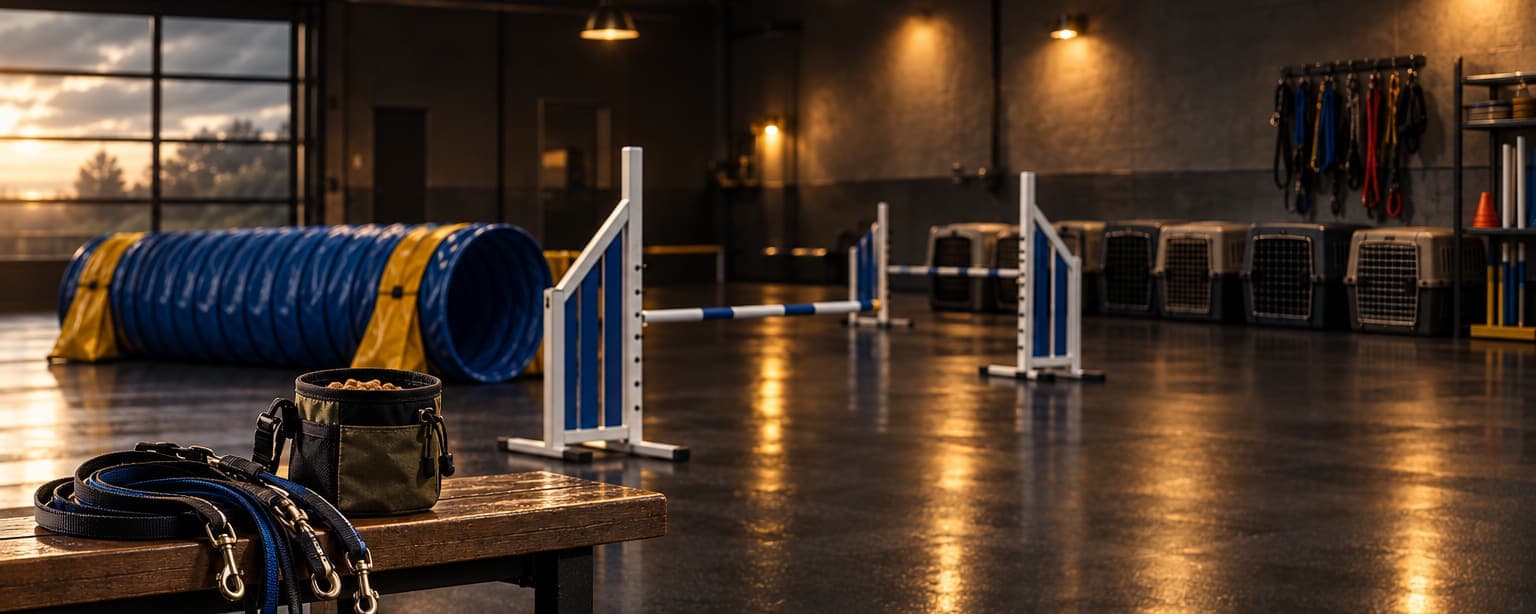
The dog was fine until it was not. The policy is for the bite, the escape and the dog in your care.
A dog trainer works with animals whose owners have already found them difficult, in other people's homes, in parks and in a facility, and the claims follow the animal: a bite to a client or a passer-by, a dog that got loose, a dog injured or lost while in the trainer's care. General liability for the bite, care custody and control for the dog itself, and a facility policy for trainers with premises are the pieces, and the application asks first whether you take aggressive dogs. We place them for private trainers, group class instructors, board-and-train facilities and daycare operators who train.
Tell us the situation.
One licensed human replies the same business day — not five agents, not an auto-responder. If the policy you have is already the right one, we will tell you.
We use this to quote and service your insurance, and we do not sell it or pass it to lead networks. Privacy policy.
Send us what you have. We’ll tell you if it’s right.
Your current policy paperwork, a renewal notice, or nothing at all. A licensed agent reads it and replies the same business day.
What dog trainer businesses actually need.
General liability
Injury to a client, a bystander or another dog caused by a dog in your session, and damage to a client's home or a park.
Without it — The dog's owner has homeowners coverage for their own dog; the trainer who had the leash does not.
Animal bailee (care, custody and control)
Injury, illness, death or escape of a client's dog while in your care, including veterinary costs.
Without it — General liability excludes property in your care, and a dog is property under the law.
Professional liability
Claims that your training advice or method caused harm: a dog that bit after training, a behavior plan that failed.
Without it — The general liability policy covers the bite in your session, not the bite three weeks later that the owner blames on you.
Property and facility
For trainers with a building: the premises, the equipment and the kennels, and the general liability for a facility open to clients.
Without it — A training facility is a place clients and dogs gather, and the landlord requires the coverage.
Hired and non-owned auto
Liability when you transport dogs in your own vehicle.
Without it — A personal auto policy may exclude business use and a loose dog in a moving car is a claim waiting.
The claims we actually see.
Ordered by how often we see them, not by how dramatic they are. Each one names the coverage that answers it — and the policy people wrongly assume already does.
Most common
A dog bites a client, a bystander or another dog during a session
Covered by General liability
A bite to a child's face is a large claim. Muzzle policies and a rule about children in sessions are on the application.
Common
A dog escapes or is injured while boarded for training
Covered by Animal bailee
Fence height, double gates and supervision ratios are the questions, and the vet bill for a dog fight is the usual claim.
Less common, severe
The owner says the training made the dog worse and it bit someone
Covered by Professional liability
Written training plans and session notes are the defense.
Less common, severe
A dog in your vehicle causes an accident or is hurt in one
Covered by Auto and animal bailee
Crates and restraints are cheap; an unrestrained dog in a collision is an injury claim and a bailee claim at once.
What the policy will not cover.
Pick a procedure to see what the exclusion actually means and whether it can be placed somewhere else.
Trainers are priced on what they do and which dogs they take. Each of these is a question and a rate.
What the dog training application rates separately
Aggressive dog rehabilitation
Bite-history dogs are the highest-frequency exposure, and some carriers exclude them or require protective equipment and protocols.
Can it be placed? Yes, with the protocols written down.
Boarding and daycare
Dogs kept overnight or in groups are a kennel exposure with supervision and facility questions.
Can it be placed? Yes, on a facility policy with animal bailee limits sized to the dogs on site.
Protection and police dog training
Training dogs to bite is excluded on standard trainer forms.
Can it be placed? Yes, on a specialty program.
Selling dogs or breeding
A separate products and animal exposure.
Can it be placed? Yes, disclosed.
What the insurance company will ask about your dog trainer business
We read 1 application the markets use for this kind of business and pulled out what they actually ask. Have these answers ready and a quote takes a day instead of a week, because nobody has to come back to you for the missing piece.
About the business
- What services do you provide (boarding, day care, grooming, training, or other)?
- How long have you been in business and at your current location?
- How many employees do you have?
- Do you sell any products under your own label?
How you operate
- How many pets do you have on site on an average day?
- How many kennels or compartments do you have?
- Are all pets monitored in common areas?
- Are all play yards and play areas fenced?
- If you transport animals, are they tethered or caged during transport?
Safety and controls
- Do you have functioning fire extinguishers on site?
- Do you have functioning smoke and heat detectors in all areas?
- For any building built before 1978, does it have aluminum wiring or knob and tube wiring?
Your history
- Have you had any property or liability losses in the past three years?
- Has your insurance coverage been canceled or non-renewed in the past three years?
Money and people
- What coverage limits do you want for pet liability (starting at $100,000 per incident)?
- What coverage limit do you want for pets themselves ($1,000 to $10,000)?
Have these ready
- Description of what your business does and how you operate
- Your loss history for the past three years (claims you or your current insurer know about)
- Information about anyone else with a financial interest in your business
You answer what you can; a licensed agent fills the rest with you.
What our dog trainer clients ask us.
How much does dog trainer insurance cost?
A private trainer doing obedience work pays a modest annual premium for general liability with animal bailee coverage, and the price rises with aggressive-dog work, boarding, a facility and staff. It is far cheaper than the veterinary bill from one dog fight.
Does a dog owner's insurance cover a bite during training?
The owner's homeowners policy may respond for their own dog, and it may also exclude the breed or a dog with a bite history, and it will look to the trainer who was handling the dog. A trainer who relies on the owner's policy is relying on a policy they have never read.
What does a dog trainer insurance application ask for?
The applications we work from ask the services (private lessons, group classes, board-and-train, daycare, behavior consultations), whether you take dogs with a bite history, the number of dogs a year and on site at once, where you train (client homes, parks, a facility), whether you transport dogs, your certifications and methods, fencing and supervision if dogs are kept, staff, and five years of claims. The aggressive-dog question sets the rate.
Is care, custody and control the same as general liability?
No. General liability pays for what a dog does to others while with you; care, custody and control pays for what happens to the dog itself while it is with you. A trainer who keeps dogs, even for a day, needs both, and the second is the one most often missing.
Commercial insurance is 96% of what we do — it is not a department here, it is the whole business. Not ready to talk? The guides answer the questions this page raises in more depth. Already insured with us and need a certificate or a policy change? Ask the service team rather than starting a quote — it is faster and it goes to the people whose job it is. We also write home and auto, which is usually cheaper alongside the business policy than apart from it.
Handed a lease, a vendor packet or a client contract with insurance requirements? Paste it into the COI Requirements Decoder to see what each one means for your business, or read what the requirements mean.