
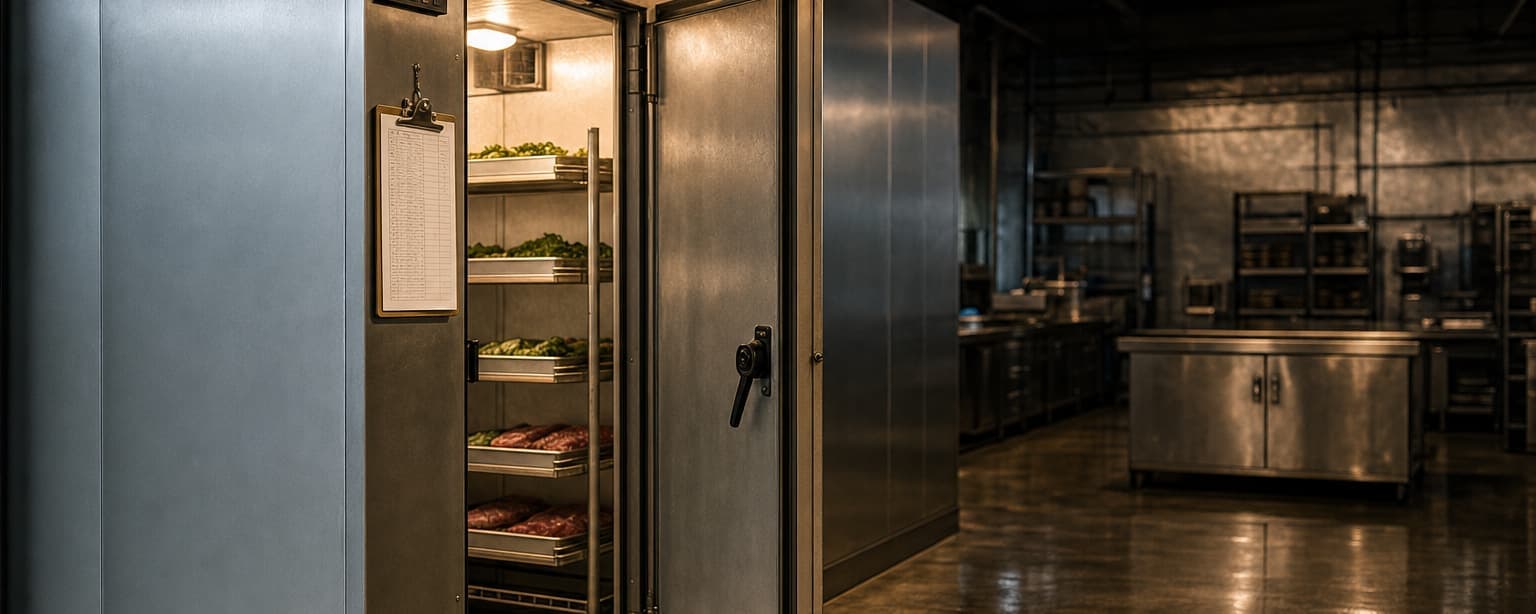
A health department closure is a cost general liability does not touch.
Food contamination coverage pays for destroyed stock, the deep clean, lost income and staff testing when a health authority closes you or an outbreak is traced to your kitchen.
Tell us the situation.
One licensed human replies the same business day — not five agents, not an auto-responder. If the policy you have is already the right one, we will tell you.
We use this to quote and service your insurance, and we do not sell it or pass it to lead networks. Privacy policy.
Send us what you have. We’ll tell you if it’s right.
Your current policy paperwork, a renewal notice, or nothing at all. A licensed agent reads it and replies the same business day.
What food contamination actually covers.
Stock destruction
Food condemned or discarded after a contamination event.
Without it — The entire kitchen’s stock is destroyed at your cost.
Cleaning and testing
The deep clean and staff medical testing a reopening usually requires.
Without it — You cannot reopen until it is done, and it is not cheap.
Lost income and reputation costs
Trading lost during the closure, and sometimes the PR to recover afterwards.
Without it — A publicised closure costs more in the following months than in the closed week.
Where food contamination shows up.
- Restaurant
A health department closure means destroyed stock, a deep clean and a dark dining room, none of which general liability pays for.
- Tavern
A health department closure means destroyed stock, a deep clean and a dark room, and general liability pays for none of it.
- Convenience Stores
Prepared food and hot counters bring spoilage, contamination and a health authority closure.
What clients with food contamination ask us.
Is this not covered by general liability?
General liability covers the claim from the customer who got sick. It does not pay to destroy your stock, clean your kitchen, test your staff or replace the income lost while you are shut, and those are usually the larger numbers. The two coverages answer opposite sides of the same incident.
Commercial insurance is 96% of what we do — it is not a department here, it is the whole business. Not ready to talk? The guides answer the questions this page raises in more depth. Already insured with us and need a certificate or a policy change? Ask the service team rather than starting a quote — it is faster and it goes to the people whose job it is. We also write home and auto, which is usually cheaper alongside the business policy than apart from it.
Handed a lease, a vendor packet or a client contract with insurance requirements? Paste it into the COI Requirements Decoder to see what each one means for your business, or read what the requirements mean.